• Skip to primary navigation
  • Skip to main content
  • Skip to primary sidebar
  • Home
  • About Us
    • Privacy Policy
    • Comment Policy
    • Disclosures & Disclaimers
  • Resources
    • Links, Essays & Articles
    • Fandomology!
    • CLAMP Directory
    • BlogRoll
  • Features & Columns
    • 3 Things Thursday
    • Adventures in the Key of Shoujo
    • Bit & Blips (game reviews)
    • BL BOOKRACK
    • Bookshelf Briefs
    • Bringing the Drama
    • Comic Conversion
    • Fanservice Friday
    • Going Digital
    • It Came From the Sinosphere
    • License This!
    • Magazine no Mori
    • My Week in Manga
    • OFF THE SHELF
    • Not By Manga Alone
    • PICK OF THE WEEK
    • Subtitles & Sensibility
    • Weekly Shonen Jump Recaps
  • Manga Moveable Feast
    • MMF Full Archive
    • Yun Kouga
    • CLAMP
    • Shojo Beat
    • Osamu Tezuka
    • Sailor Moon
    • Fruits Basket
    • Takehiko Inoue
    • Wild Adapter
    • One Piece
    • After School Nightmare
    • Karakuri Odette
    • Paradise Kiss
    • The Color Trilogy
    • To Terra…
    • Sexy Voice & Robo
  • Browse by Author
    • Sean Gaffney
    • Anna Neatrour
    • Michelle Smith
    • Katherine Dacey
    • MJ
    • Brigid Alverson
    • Travis Anderson
    • Phillip Anthony
    • Derek Bown
    • Jaci Dahlvang
    • Angela Eastman
    • Erica Friedman
    • Sara K.
    • Megan Purdy
    • Emily Snodgrass
    • Nancy Thistlethwaite
    • Eva Volin
    • David Welsh
  • MB Blogs
    • A Case Suitable For Treatment
    • Experiments in Manga
    • MangaBlog
    • The Manga Critic
    • Manga Report
    • Soliloquy in Blue
    • Manga Curmudgeon (archive)

Manga Bookshelf

Discussion, Resources, Roundtables, & Reviews

chitose is in the ramune bottle

Chitose Is in the Ramune Bottle, Vol. 7

October 22, 2025 by Sean Gaffney

By Hiromu and raemz. Released in Japan as “Chitose-kun wa Ramune Bin no Naka” by Gagaga Bunko. Released in North America by Yen On. Translated by Evie Lund.

Throwing up the spoiler warning here: I discuss the big revelations in this book, but not till the third paragraph.

I was expecting something else, to be honest. After the trauma of the last few books, the sturm und drang and Yua playing Baker Street over a sobbing Chitose, that we would sort of go back to everyone smiling, going back to their normal high school lives, and have a nice, relaxing 7th book. And, to be fair, so was the author. There is an extra-long afterword describing their thought process while writing this book, and you can see how the first, oh, third of the book is written by a very different person from the one who wrote the last two-thirds. Because the author is correct, that is what the characters want. It’s what the readers want. We do not want more angst. We want to relax. Unfortunately, for the sake of the story, the author cannot give that to us. And so… see the girl on the cover>? She’s a first-year. She’s spunky, cute, and loves the whole cast. And she’s also a bomb.

After the events over the summer, Chitose is hoping that everything will go back to normal. And, aside from Yuuko having the traditional “moving on” haircut, they do. Which means it’s time to plan for the culture festival, which is two months away and seems to involve both a sports day AND a culture day. Naturally, Chitose and company are very involved, especially since, in his first year, he was not in the right headspace to handle a festival. Now he and the rest of the group want to be on the cheer squad. They’re joined by Asuka, who is happy to do something with them before she has to graduate. They are also joined by Kureha, a first-year who has heard all the stories about the very famous Chitose and his very famous friends, and is star-struck. She rapidly becomes part of their group. A bit too rapidly. The reader gradually feels that things are about to go very, very wrong.

As our little bomb sent everyone into a coma over the course of the last third of the book, I noticed that Yuuko was pretty much absent. She’s not like all the others, after all. She actually confessed and was rejected. So Kureha can’t really do much about her. It’s worth noting that Kureha is being written as a horrible villain after the reveal, and the reader sees her as one long before that, but to all the other girls, she’s not. Particularly Yuzuki, who is on the cover of the next two books in this series, and I strongly suspect is going to step past Yuuko to steal the main girl spotlight. But the way that Kureha demolishes Haru, Asuka and Yua with “innocent” ease shows off that much as we’d like all the girls to be equal in their chances to win Chitose, that’s not how love works. You have to commit. You have to be ready to hurt others to get what you want. Yuuko understood that, and the hurt was devastating to her. Kureha is able to hurt far more easily, but so far only Yuzuki, who has always been the most aloof of the group, is ready to take things to the next level.

As the anime seems to be polarizing people, the novels are hitting another high point. Just… be ready for things to not be safe and fun.
Filed Under: chitose is in the ramune bottle, REVIEWS

Chitose Is in the Ramune Bottle, Vol. 6.5

September 21, 2024 by Sean Gaffney

By Hiromu and raemz. Released in Japan as “Chitose-kun wa Ramune Bin no Naka” by Gagaga Bunko. Released in North America by Yen On. Translated by Evie Lund.

To my surprise, this isn’t a normal short story volume, where the author inserts either stories that fit in in the earlier volume timeline, or uses the chance to officially release all those stories that came as bonuses with various giveaways in Japan. This says Vol. 6.5, but that’s mostly as it doesn’t feature Chitose’s POV in it. What we really get is the continuation of the fallout from the 5th book, in the form of four very long short stories. All the girls have “what now?” on their minds, either wondering how to interact with Chitose again after confessing and getting rejected (Yuuko) or realizing that just continuing to do what they’ve been doing and hope those days last forever isn’t really an option (everyone else). There’s a lot of talk of college and the adult world in this book. The future is coming. And these girls want Chitose in their future, even if he’s still not chosen them. So, they move forward. Bit by bit.

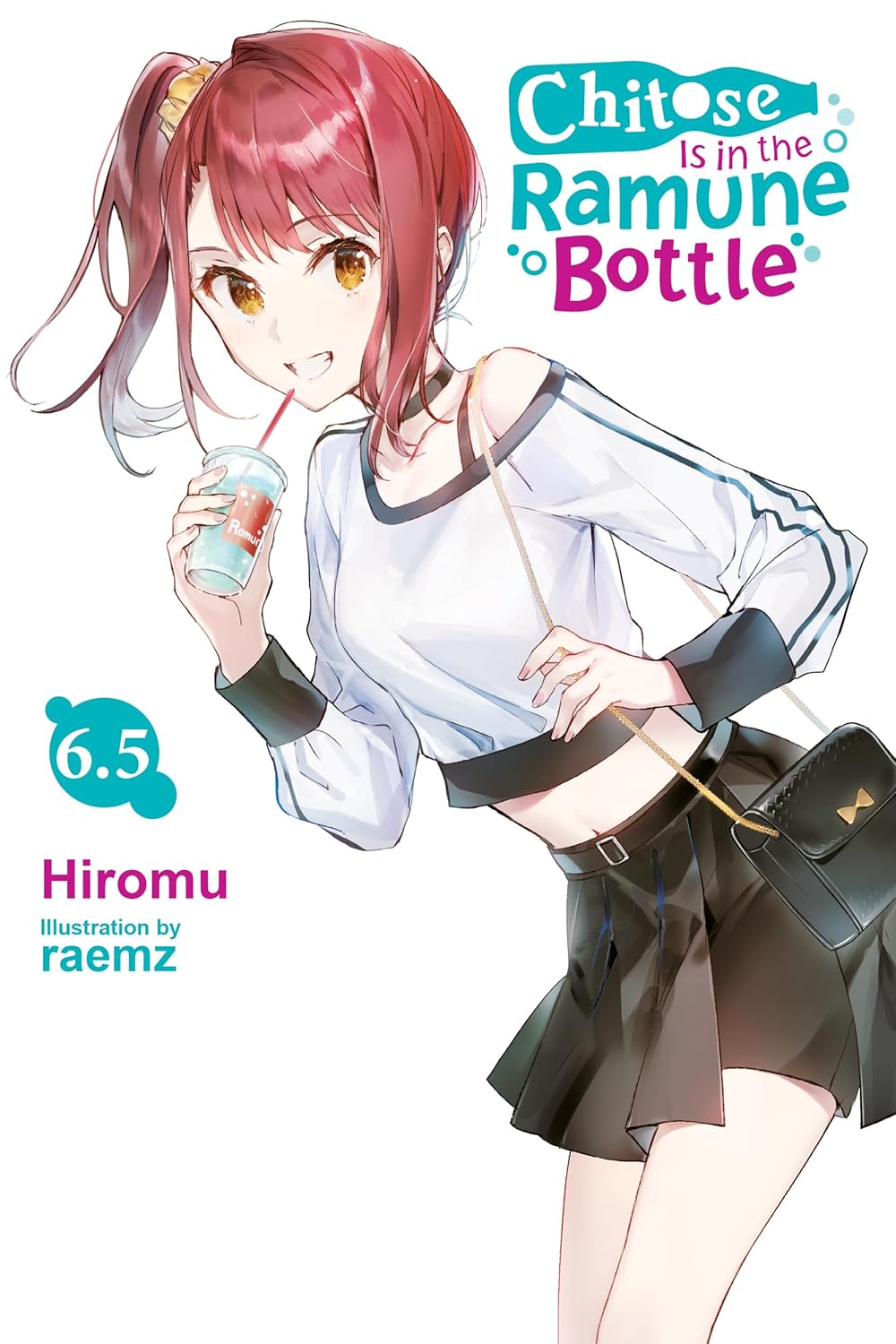
If you’re wondering who that is on the cover art, why it’s Nazuna, the girl who seems to clash with Yuzuki a lot and has been the one supporting female cast member who’s not in love with Chitose. She’s in the first short story, where Yuuko, after the events of the 6th book, is still struggling with reconnecting with her friends and figuring out how to treat Chitose, so invites Yuzuki and Nazuna on a shopping trip in a nearby city. The second story has Asuka get to see what editing is like in a local ‘style’ magazine, and she invites Chitose for moral support… only to come up against the giant wall she still has to climb. In the third story, we get the mirror image of Yuuko’s story, as now it’s Yua who is trying to figure out how to treat Chitose after the last book, and she decides to ask him on a date to try and shake things up. And in the last story Haru is a mess, and it’s affecting her basketball, so the coach asks some old graduates to stop back at high school and be incredibly mean to her until she snaps out of it. This… doesn’t work till she gets a “remember to actually like the sport you like” call from Chitose. Then it works.

The Asuka story was easily my favorite one in the book. In a volume discussing where everyone’s going to be headed in the future, it makes sense that it’s the one closest to that future that would resonate the most. The moment Asuka started to “interview” the editor on her time at the magazine, I winced, because I immediately recognized what she was doing wrong. Worse, when Chitose is given the chance, he doesn’t make the same mistakes, and gets a much better interview. But, as multiple people point out, she has passion, and feels the frustration and anguish at her inadequacy, whereas Chitose doesn’t really mind how he does. It’s the passion that she has to hold on to. I also enjoyed Yua’s story – she’s possibly my favorite at this point, despite the fact that I know she won’t “win” – where she tries to figure out what happens to her current role in Chitose’s life – being his wife figure – if he gets an actual girlfriend. The scene where Chitose meets Yua’s dad is also a big highlight.

So yes, this actually is a short story book you need to read. Next volume we’re back to the main plot, and with a girl I don’t recognize on the cover art, we’re sure to shake things up. One of the best romcoms out right now – well, romdram.

Filed Under: chitose is in the ramune bottle, REVIEWS

Chitose Is in the Ramune Bottle, Vol. 6

April 24, 2024 by Sean Gaffney

By Hiromu and raemz. Released in Japan as “Chitose-kun wa Ramune Bin no Naka” by Gagaga Bunko. Released in North America by Yen On. Translated by Evie Lund.

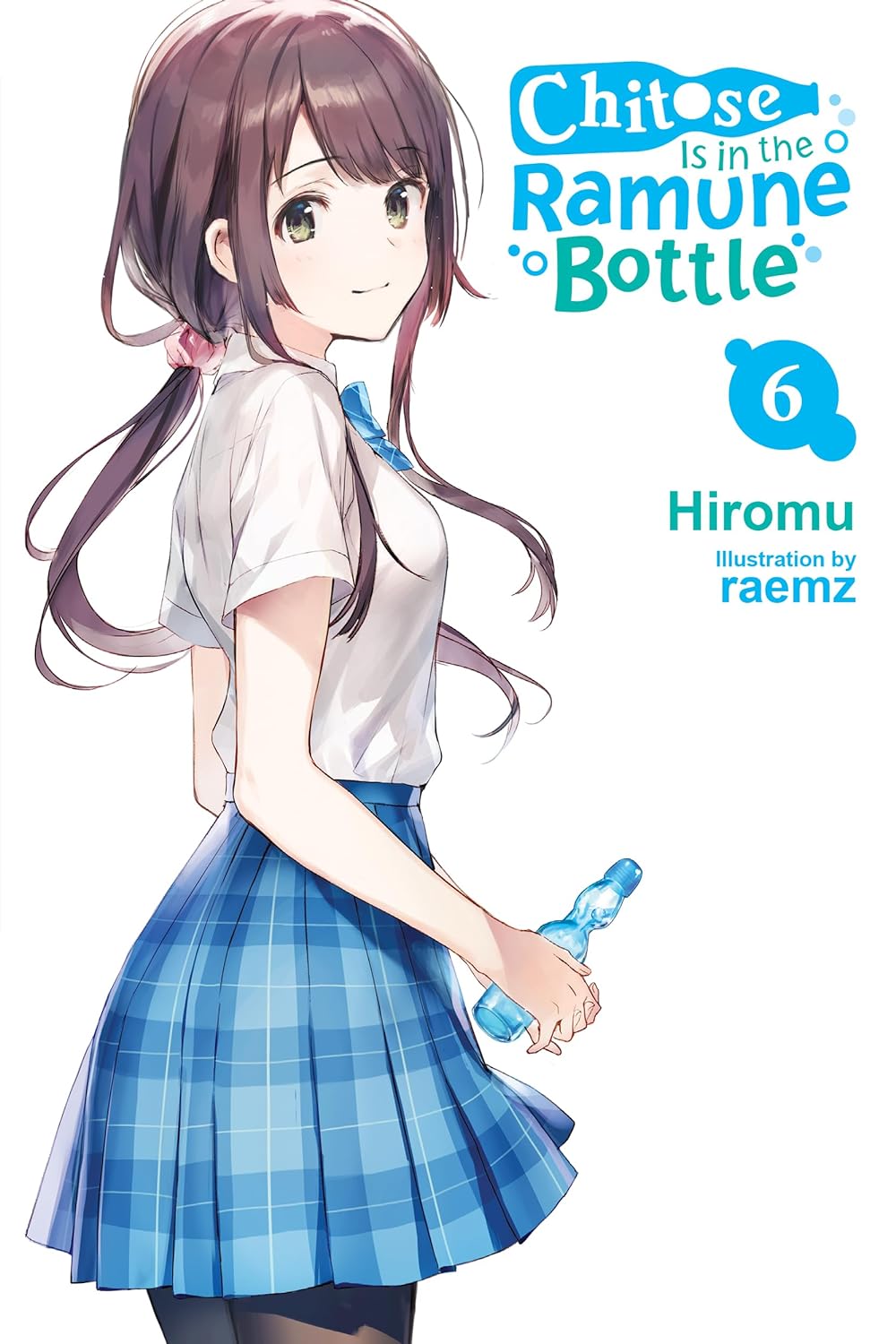
It does sometimes occur to me that my reviews are, of course, telling you my own opinions, which frequently do not match up with the opinions of other light novel fans. So let’s get this out of the way fast: I really loved this book, and was on the edge of my seat reading it. This is despite the fact that I can easily see about ten different reasons why it would piss off most readers who are not me. First of all, it’s 406 pages of nothing but teenage angst. You had better be ready for people to be sobbing, hating themselves, and talking about how they can never get those cherished days back ever again, everything is RUINED FOREVER. The book consists almost entirely of conversations by high school kids all trying to sound adult, and would be excruciating animated. This is especially true of our cover girl, who is trying her best to be the Tsubasa Hanekawa of this series. As for Chitose, oh my God, you want to punch him. That last one, at least, is deliberate.

We all knew this would be “the Yua book”, and indeed it is, and that’s her on the cover. While everyone else stays with a devastated Yuuka, Yua goes to comfort a broken Chitose, going back to his apartment and making sure that he does things like eat, bathe, sleep, and all the other things he would not do on his own because he wants to wallow in self-hatred. As this happens, we flash back to the start of their first year of high school, when we meet a Yua who is very good at putting on a mask of “normal girl who does not get close to others”, which she rationalizes as not wanting to make trouble for her family. Unfortunately for her, Chitose sees through this immediately, and proceeds to needle her out of that mask every chance he gets. And boy, does she hate him.

Yua’s backstory is very good, and explains a lot about her, but the bulk of the good stuff is in the back half. Chitose gradually starts seeing all his friends (bar Yuuko and Kaito) one by one, and attempts to awkwardly get back to some sort of equilibrium. This is helped by it being summer break. But this isn’t going to work unless he can address the elephant in the room, and Yua (who is MVP here, but I fear is far too similar to Chitose to end up with him by the end of this series) manages to literally blackmail both Chitose and Yuuko to meet up and rip all the bandaids off. Chitose learns that he is not responsible for the romantic feelings of every girl who likes him. Yuuko learns that perhaps kicking everything apart just because she was still being treated like “the best girl” really *was* a dumb idea. And Yua herself is told to try to be a little selfish, and manages to, slightly , succeed.

The upshot of these 400 pages of howling teenage grief and angst is that we’re back to status quo, sort of, except Yuuko has, of course, still confessed. The author says this is the end of the first half of the series, so I assume we have 6 volumes to go…. after the inevitable short story collection, which is what’s coming next. In my top tier of romdrams, but YMMV.

Filed Under: chitose is in the ramune bottle, REVIEWS

Chitose Is in the Ramune Bottle, Vol. 5

November 26, 2023 by Sean Gaffney

By Hiromu and raemz. Released in Japan as “Chitose-kun wa Ramune Bin no Naka” by Gagaga Bunko. Released in North America by Yen On. Translated by Evie Lund.

This has spoilers for the entire volume, sorry. They’ll be after the cover art.

We have been slowly working our way through the main female characters of this series. The second volume focused on Yuzuki, the third one Asuka, and the fourth one Haru. The cover of the first volume was Yuuko, but that volume was more an introduction to the entire cast, and the “heroine” of the volume was actually Kenta, the otaku “saved” by Chitose. So we haven’t really had a volume about Yuuko till now. The group seems to revolve around her and Chitose, and much of the time when she suggests something everyone automatically agrees to it. As we learn here, that’s been the case pretty much her entire life. She’s a spoiled princess, but unlike a lot of these characters remains kind and likeable. That said, she really wants people to treat her normally, and when someone does (Chitose), she falls for him hard. How’s that work out this book? Let me put it this way: she AND Chitose both think “I wish these happy days could last forever”.

It’s summer vacation, and there’s a lot of fun things Chitose could choose to do. He could go on a “we’ve agreed not to date but are still clearly hung up on each other” date with Asuka. He could play catch with Haru some more, who confessed to him last time if you recall. He could go see the fireworks with everyone, and have Yuzuki steal him away for a moment all to herself. He could meet Yuuko’s mom, who’s one of those “gosh, she’s so young-looking she looks like an older sister” types. Heck, he can even stay at home and have delicious food cooked for him by his not-wife Yua. But the back half of the book is dedicated to the cast going on a study camp, a 3-day outing where students and pick teacher’s brains while studying in a beachfront hotel. Studying does get done, I promise. That said, of course there’s beach time as well. In the midst of all this, Yuuko, who is very aware that she has not had a “plot” with Chitose to herself by now, takes drastic measures.

This book is written like a tragedy, with the wait for the other shoe to drop being excruciating. I kept waiting for Yuuko to tell everyone she’s moving to America or that she’s dying. But no, she’s just in love, very aware that all her other best friends are in love, and it’s killing her inside. The most devastating scene in the book has her asking Yuzuki, Haru and Yua if there are any guys they like, because they’re at a study camp getting ready to sleep, and that’s when you talk about boys. But the others girls, knowing Yuuko is in love with Chitose and “has dibs” because she’s the obvious choice – first girl we meet, got the first cover, etc. – all say they’re not in love with anyone. And that kills it. That makes her decide to knock it all over. So she confesses, knowing Chitose, who is absolutely not ready for this, will reject her. Which he does.

The book ends with Yuuko, surrounded by everyone else in the group, sobbing, and Chitose, also sobbing, surrounded by just Yua, who plays the saxophone to try to cover up his incoherent grief at the loss of his static but wonderful high school days. I bet she gets the next book, she’s the only one left. This is a great series, but the romcom aspect is definitely romdram this time.

Filed Under: chitose is in the ramune bottle, REVIEWS

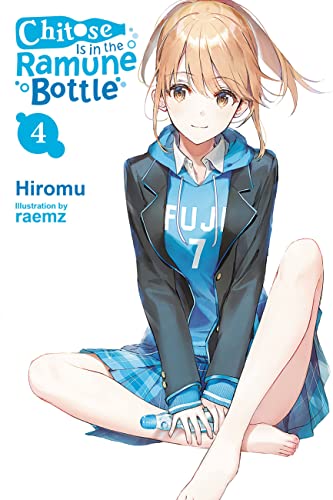
Chitose Is in the Ramune Bottle, Vol. 4

June 26, 2023 by Sean Gaffney

By Hiromu and raemz. Released in Japan as “Chitose-kun wa Ramune Bin no Naka” by Gagaga Bunko. Released in North America by Yen On. Translated by Evie Lund.

It was once said, a couple decades ago, that no one would ever license a sports manga because it wouldn’t sell. Nowadays, given the enormous number of people who obsess over series like Haikyu!, that seems a bit ridiculous, but it was true. I’m not entirely sure if there are a large number of unlicensed light novels that follow baseball or basketball teams the way that manga does, but I’m inclined to say probably not. And we certainly don’t have them licensed over here. You’re allowed to dungeon crawl, or try to break off your engagement so you don’t die, but please don’t mention the K word. And by K I mean Koshien. That said, Chitose Is in the Ramune Bottle is notable for having a LOT of jocks in its cast, by the nature of its premise. And it’s this fourth volume that drills right down to the heart of the jock, showing us what it means to dream big, and also balancing the harem again with its shortest member.

We’ve known since the start of the series that Chitose used to play baseball but quit. Now the team is back, begging him to come back as their star is injured, and won’t be ready in time for the first knockout game. Chitose, needless to say, is rather pissed off about this, as he had reasons for leaving the team – which, you’ll be grateful to hear, we finally hear about. He’s also dealing with the girls’ basketball team, which has a new captain, Haru, who’s a taskmaster and is pushing the others past their limits – which they hate. It’s needed in order to make them a better team, but it also makes Haru a very convenient target. Will Chitose manage to help Haru to reconcile things with her basketball team, and can he do that by giving in and playing his last ever baseball game? Even if it means breaking himself to do it.

The series’ best feature remains its ability to convince you, in each new volume, that the girl being focused on is definitely the one who should “win” the Chitose romantic partner sweepstakes. Last volume I said that Asuka was written out in the third book as she was so far ahead of the others. (As it turns out, she’s still around, though Chitose is mooning over her less.) In this volume, it feels like he and Haru also really belong together – they’re birds of a feather, basically, and a reminder that “opposites attract” is not always true. The book is also very good at showing the frustrations of the high school athlete. Haru is a fantastic basketball player. But she’s 4’9″, and there’s simply no way to make up that difference in height in a sport like that. As for Chitose, well, he’s cool. The best scene may have been when he’s wavering back and forth on what to do, and when he tries to do an uncool option Haru chimes in “I don’t like this Chitose.” It was adorable.

So yes, the light novel for normies remains excellent. We’ll see what the next volume brings – Yuuko is on the cover, will she be the lead girl?

Filed Under: chitose is in the ramune bottle, REVIEWS

Chitose Is in the Ramune Bottle, Vol. 3

February 26, 2023 by Sean Gaffney

By Hiromu and raemz. Released in Japan as “Chitose-kun wa Ramune Bin no Naka” by Gagaga Bunko. Released in North America by Yen On. Translated by Evie Lund.

One problem I have with reading light novels that are “high school romcoms”, is that I tend to regard them as taking place in “generic Tokyo suburb”. That’s actually rarely the case. There are a few exceptions – My Youth Romantic Comedy Is Wrong As I Expected will not shut up about Chiba long enough for me to put it anywhere else – but most of them fall into “generic place”. So I was a bit surprised with the subplot here, which is that our hero and heroine-of-the-book head off from their “big city”, Fukui, which has about 275,000 people, to Tokyo, which is 14 million people. I was even more surprised with the message that the story was giving us, which is that the big city can be awesome, despite its huge number of people and occasional creep. If your dream requires you to be in the biggest city in Japan, go there. Because chasing dreams is important. Even if it means giving up on a potential series-killing romance.

Our cast of second years are getting guidance from their seniors as to what to expect in regards to future plans, and one of those seniors is Chitose’s friend/crush Asuka. She has a dream of being an editor at a Japanese publishing house, but there’s just no way that you can do something like that in someplace like Fukui. Her parents are also dead set against it, and want her to become a librarian or civil servant. Chitose is determined to help her, even though he knows that her heading to Tokyo likely means that any relationship they might have would be dead in the water. So he comes up with an idea: visit Tokyo, and see what it’s really like, to find out if it’s overwhelming to her. Of course, to do that, he’s going to have to essentially kidnap her.

The back half of this book finally gives us the full backstory, with one exception, of Chitose, and we also see why much of it was elided – it was being saved for the book focusing on Asuka. I can certainly see why the author is writing Asuka out of the series (though she doesn’t quite leave for Tokyo yet, as it’s still months before graduation), as in a series that prides itself on Chitose balancing his “harem” of four girls fairly equally, Asuka is simply too powerful. That said, there are a few flaws here, The book is much longer than it needed to be, for one. And Asuka gaining all of her strength and coolness that we’ve seen in the series to date by essentially imitating the boy she liked may not sit well with some viewers, though Chitose is quick to point out that that sort of imitation is what everyone does, and eventually it becomes second nature.

In any case, Asuka may not be in Tokyo yet, but she and Chitose have “broken up”, which leaves him free to solve someone else’s problems in the next book. And that also seems to answer my question from last time about the plot of this series: Chitose solves problems, at great expense (his own).

Filed Under: chitose is in the ramune bottle, REVIEWS

Chitose Is in the Ramune Bottle, Vol. 2

August 21, 2022 by Sean Gaffney

By Hiromu and raemz. Released in Japan as “Chitose-kun wa Ramune Bin no Naka” by Gagaga Bunko. Released in North America by Yen On. Translated by Evie Lund.

I’m enjoying the Chitose series a great deal, but if there’s one thing that worries me it’s that I don’t know what the series’ overall plot is. Other series have ‘each volume has a girl in distress” about them, most notably Rascal Does Not Dream Of (insert girl here), but we know by the end of Book 2 what the basic thread of the series is (the supernatural manifestations of psychological trauma). I suppose it veers closest to My Youth Romantic Comedy Is Wrong As I Expected, which also features a lead guy who will throw himself under the bus to solve a problem, but I think if I tried comparing Chitose with Hachiman the latter would be very angry with me. The question is, are we meant to be figuring out who is “best girl” in a romantic sense? Is this about ripping Chitose’s mask off? Or is it just a series where a group of high schoolers give an excuse for a plot of the week, like many TV shows?

As you might have guessed, the girl on the cover is the main girl of this book, Yuzuki Nanase. She’s lately been worried that she has a stalker, and asks Chitose to pretend to be her boyfriend in order to either drive them off or draw them out. He’s the obvious choice as the two of them are extremely similar, and so she knows he won’t be getting any misconceptions about what this relationship is about. Unfortunately, her fears turn out to be quite justified, as delinquents from a different school are forcing her to revisit an incident from her past that she’s been trying to bury. In the meantime, the fact that he’s now dating Nanase has Chitose in a spotlight he’d rather avoid, and he ends up having ANOTHER guy that he tries to give life advice to.

The other similar series I didn’t mention in the first paragraph is Bottom-Tier Character Tomozaki, and there is an element of that here in Chitose’s trying to hammer home the idea that girls are not pure fantasy creatures and fart and masturbate and everything else that’s normal. But, as with the first book, one of the big draws here is that the popular kids are the leads, allowing the ability to tell a different kind of story. Even something like Tomozaki relies on the outsider who has a past where he always thought “goddamn normies” to get past. Kenta, the nerd from the first book, is still here and is now part of their group, but he’s not the narrator and doesn’t drive the plot. This is a story of popular kids dealing with a specific popular girl problem in a way that, say, Hachiman would be unable to pull off. Good thing, too, as this book also gets more serious towards the end, with suggestions of sexual assault in both past and present.

So I’m still not sure where this series is going, but I’m greatly enjoying the ride. That said, I suspect that all the potential romantic interests for Chitose, including Nanase, are going to have to take a back seat to his upperclassman crush, and the cover for Vol. 3 suggests we’ll get a lot more of her next time.

Filed Under: chitose is in the ramune bottle, REVIEWS

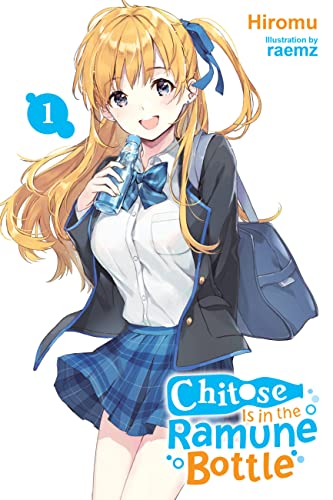
Chitose Is in the Ramune Bottle, Vol. 1

March 17, 2022 by Sean Gaffney

By Hiromu and raemz. Released in Japan as “Chitose-kun wa Ramune Bin no Naka” by Gagaga Bunko. Released in North America by Yen On. Translated by Evie Lund.

Manga and light novel trends tend to feel into each other, with parodies, homages, and deconstructions of the hot new thing happening three years later and becoming the next hot new thing. Nowhere is this more apparent than the halls of Gagaga Bunko, home to the cover art where every series looks exactly the same. Gagaga, I’m sure, must also have fantasy and isekai titles… but those aren’t licensed here. Instead we started with My Youth Romantic Comedy Is Wrong As I Expected, where a cynical so-called loner psychoanalyses the nature of high school cliques. Then we saw Bottom-Tier Character Tomozaki, easily the most popular of the subgenre of “the popular kids can even turn you, a loser, into one of their own”. And now we get Chitose Is in the Ramune Bottle, where the main character IS the popular kid, and you will be surprised and shocked that he too has something to say on the nature of popular kids and high school cliques. Everyone’s riffing on someone else.

No, that’s not Chitose on the cover – Chitose Saku is our hero, a handsome cool high school kid who enjoys school and hanging out with his equally popular friends. He has several girls who are interested in him. He’s almost immediately made class president. He’s living the good life. And now he has a job to do, as the teacher has asked him to try to get Kenta, an otaku nerd type, to come back to school – he’s stopped going after getting shut down by a girl he confessed to. Chitose goes along with this, managing to get Kenta out of his room with a nice combination of encouragement, hot girl and good old fashioned violence. But Kenta, who whines about how Chitose gets everything handed to him and an easy life as a popular kid, decides to show Kenta how to actually make an effort.

As you can see, this synopsis bears more than a little resemblance to Tomozaki (Kenta is even named Yamazaki), and we do indeed get the “let’s shop for clothes that are not otaku schlub” and “here is how to actually converse with another person” scenes. At the same time, it also mocks that trend of “self-help” books as unrealistic, showing how difficult it can be to try to change your image and personality and not immediately get attacked. There’s a whole lot of jerks in this book, and the way Chitose and his friends handle them is a good look at “don’t punch down”. As for Chitose himself, he’s a protagonist who cries out for more than one book, so it’s a good thing this won an award and got a series. There’s hints of his past as well as his need to live up to his reputation that might get darker in later books. But overall, he and his friends are very likeable, fun people. If you’re reading this as you heard it was “romcom starring the popular kids”, you won’t be disappointed.

I will note that Chitose can come across – deliberately, he’s clearly doing it on purpose – as smug much of the time, and this may grate on readers who are more used to cynical sad sack narrators. That said, I am very curious to see how this handles being an ongoing series and how much we can peel back Chitose’s hero complex.

Filed Under: chitose is in the ramune bottle, REVIEWS

 | Log in
Copyright © 2010 Manga Bookshelf | Powered by WordPress & the Genesis Framework