• Skip to primary navigation
  • Skip to main content
  • Skip to primary sidebar
  • Home
  • About Us
    • Privacy Policy
    • Comment Policy
    • Disclosures & Disclaimers
  • Resources
    • Links, Essays & Articles
    • Fandomology!
    • CLAMP Directory
    • BlogRoll
  • Features & Columns
    • 3 Things Thursday
    • Adventures in the Key of Shoujo
    • Bit & Blips (game reviews)
    • BL BOOKRACK
    • Bookshelf Briefs
    • Bringing the Drama
    • Comic Conversion
    • Fanservice Friday
    • Going Digital
    • It Came From the Sinosphere
    • License This!
    • Magazine no Mori
    • My Week in Manga
    • OFF THE SHELF
    • Not By Manga Alone
    • PICK OF THE WEEK
    • Subtitles & Sensibility
    • Weekly Shonen Jump Recaps
  • Manga Moveable Feast
    • MMF Full Archive
    • Yun Kouga
    • CLAMP
    • Shojo Beat
    • Osamu Tezuka
    • Sailor Moon
    • Fruits Basket
    • Takehiko Inoue
    • Wild Adapter
    • One Piece
    • After School Nightmare
    • Karakuri Odette
    • Paradise Kiss
    • The Color Trilogy
    • To Terra…
    • Sexy Voice & Robo
  • Browse by Author
    • Sean Gaffney
    • Anna Neatrour
    • Michelle Smith
    • Katherine Dacey
    • MJ
    • Brigid Alverson
    • Travis Anderson
    • Phillip Anthony
    • Derek Bown
    • Jaci Dahlvang
    • Angela Eastman
    • Erica Friedman
    • Sara K.
    • Megan Purdy
    • Emily Snodgrass
    • Nancy Thistlethwaite
    • Eva Volin
    • David Welsh
  • MB Blogs
    • A Case Suitable For Treatment
    • Experiments in Manga
    • MangaBlog
    • The Manga Critic
    • Manga Report
    • Soliloquy in Blue
    • Manga Curmudgeon (archive)

Manga Bookshelf

Discussion, Resources, Roundtables, & Reviews

Sean Gaffney

Showa 1926 – 1939: A History Of Japan

November 15, 2013 by Sean Gaffney

By Shigeru Mizuki. Released in Japan as “Comic Shouwashi” by Kodansha. Released in North America by Drawn & Quarterly.

The one thing that will strike you as you read this manga history of Japan by one of its preeminent creators is how it should not remotely work the way that it does. This book is over 500 pages, and a great deal of it is simply laying out the facts – they’re about 2/3 of the book, with the other third devoted to Mizuki’s own autobiography. It should be dry, didactic and boring. And yet it’s utterly compelling. Partly this is simply due to what’s going on – this is a dark and chilling time in Japanese history, and the facts really don’t need embellishment or excitement, as presented by themselves they can carry a book. But partly this is due to the fact that Mizuki isn’t just famous because he talked about a lot of yokai – he is a genius craftsman, writing a cyclical narrative where we constantly spiral back to see what’s happening in the most concise way possible.

showa

The narrative starts out as third-person omniscient, but Mizuki quickly comes to realize that an actual character voice is needed to help explain some of what’s going on. (He also does this via conversations between two people on the issues of the day, many of which point out how much of a narrative device this is. “Let me tell you about this.” “I know about it already, but tell me anyway.) As a result, Nezumi Otoko from Gegege No Kitaro insinuates himself into this narrative, so quietly that it takes a good 20 pages before he has to introduce himself. As D&Q point out in their endnotes, not only does this allow any children reading to get their narrative from a beloved character, but Nezumi Otoko is essentially untrustworthy, shifty, and always out for himself. Thus the narrative voice is skewed so that we aren’t meant to be quite as trusting of the facts as we would be if it were still Mizuki narrating. (He also gets in a few slaps, which pleased me.)

We also, as I noted, get the story of Shigeru Mizuki growing up during Showa, which provides relief from the historical facts. Some of this narrative will be familiar to those who’ve read Nonnonba, but this continues beyond that, and the yokai that appear here are few and fleeting. What struck me most about Mizuki’s story is how harshly critical he seems to be of his boyhood self. We’re presented with a young boy who goes off to do his own thing, doesn’t like school, gets involved in gangs, and by the end of the volume seems to be unfit for even the smallest and most menial jobs. His artistic talent is mentioned, but it’s described as sort of a side hobby that interferes with his ongoing life. This is not a likeable Mizuki, and it’s a striking choice.

Then again, it also fits with the bleak narrative as a whole. Growing up in the period covered here in this book meant knowing poverty, and hunger, and endless fatigue. It meant repression, and being imprisoned or executed for having the wrong views. It meant a military buildup that seemed to happen without the permission of any of the government, and reading about assassinations and murders seemingly every day. Mizuki needed to include the scenes with his family, as even if they are bleak, they still remind us that there are still good people at heart in the country, even as they get swept up in a tide of nationalistic fury. By the time the book ends, Tojo is making speeches, and Mizuki notes that he “is a man who never smiles, and because of that he takes away the smiles of the Japanese people.” This is almost a cliffhanger ending, leading into the events of the 2nd World War that will be covered in 1939-1944, due out this spring.

Make no mistake, this book can be very dry and factual. And yet there was no time when I ever felt the need to put it down and do something else. Reality makes for the best stories, even if they can be scary and oppressive. This book shows once again why Mizuki is one of the best creators in all of Japan. Highly recommended.

Filed Under: REVIEWS

Inu x Boku SS, Vol. 1

November 13, 2013 by Sean Gaffney

By Cocoa Fujiwara. Released in Japan by Square Enix, serialization ongoing in the magazine Gangan Joker. Released in North America by Yen Press.

I hear there are spoilers for later volumes. Please don’t discuss them in comments.

A lot of times when there is a series that piles up a lot of cliches – be they plot, character, action sequences, or all three – you have to pick your tolerance level. I’m I’m going to be reading this, what’s the big draw that pulls me in and allows me to tolerate some otherwise generic stuff, even if it is well-written? In general, for me if a heroine is grumpy and sarcastic, I’m willing to forgive it a lot. And dropping such a heroine into a world of butler bodyguards is the basic premise of Inu x Boku SS, which also manages to be a yokai manga to boot.

inuboku

I have to say it – I kept thinking that the heroine was Rika from Higurashi. It doesn’t help that this began in Gangan Joker around the same time the final Higurashi arc was going. Rika was never quite as cutting and vicious as this, though. Ririchiyo simply can’t stop herself from saying what she thinks, and what she thinks is usually acidic and nasty. This has led her to have few friends. (Perhaps she should join a club… wait, wrong manga.) She moves to a high-rise complex, but finds that it comes with a loyal servant and bodyguard who will do anything for her. He’s nice and sweet to her, slowly coaxing her out of her shell of disinterest and loneliness, but he also has a dark secret which is hinted at towards the end of Volume 1.

See what I mean? The description of that bodyguard could fit any one of 2,000 shoujo manga. (This is shonen, but Square Enix has never quite been as caring about genre as the other companies, and I’d argue the pretty butler is as much a draw for female readers as Ririchiyo’s show of thigh is for the males.) We also get a goofy older brother guy, a perverse lesbian (well, faux-lesbian – because she’s perverse, nothing really ever happens. But one assumes…), and a quiet, shy girl. Also, one of the bodyguards is Walker from Durarara!! with bunny ears. (DRRR is also a Square Enix title… sometimes it’s really easy to notice the incestuous nature of the business as you read things.)

That said, this is quite competently drawn and written. You care about Ririchiyo, and want to both have her improve her social skills while not losing the biting retorts that make her interesting. The manga doesn’t take itself too seriously (at one point two of the male bodyguards flirt, and the yuri girl goes “eeew, disgusting”, a lovely hypocritical moment called out immediately), though there is also a hint that there is much darker stuff still to come. It’s just… there’s a lot of stuff here you’ve seen before in many other titles. If you enjoyed those types of works, Inu x Boku SS is definitely the manga for you. If not, I think it depends on how much you like Ririchiyo. I quite liked her, so will see what another volume brings.

Filed Under: REVIEWS

Pick of the Week: PictureBox & Other Stories

November 11, 2013 by Ash Brown, Sean Gaffney, Michelle Smith, Anna N and MJ Leave a Comment

potw-11-11ASH: Though there aren’t quite as many titles coming out this week as there were in the past couple of weeks, there are still plenty of manga to choose from. Personally, I’m torn between two releases: the first omnibus in Shigeru Mizuki’s Showa: A History of Japan from Drawn & Quarterly and the first volume in PictureBox’s new series Masters of Alternative Manga, Gold Pollen and Other Stories by Seiichi Hayashi. In the end, I think I’m leaning slightly more towards the beautiful hardcover edition of Gold Pollen. Alternative and underground manga aren’t often released in English; I’m happy to show PictureBox my support because I’d love to see more of it.

SEAN: I was going to pick Showa anyway, so no worries about it not appearing here. I’ve loved the Mizuki manga we’ve gotten so far from D&Q, and seeing a history of one of the most volatile periods of modern Japan, interspersed with more awesome yokai folklore, is simply too good to pass up. A must buy.

MICHELLE: I’m awfully glad we’ve got things like Gold Pollen and Showa coming out, but I can’t lie—my heart belongs to Blue Morning, volume three. Definitely my pick for best BL of the year.

ANNA: I’m glad we have those things coming out too, but to be honest, I’m probably going to read the latest volume of 07-Ghost before I read other things that are being released this week. So that is my pick!

MJ: It’s so tempting to fall back on an enduring standby this week, with the sixth 3-in-1 edition of Fullmetal Alchemist making its way to the shelves. There are few shounen manga that have occupied such a prominent place in my heart, and my admiration for its brilliant creator, Hiromu Arakawa, is steadfast and true. But comfort of old favorites is, this week, overshadowed by my excitement over PictureBox’s new collection of Seiichi Hayashi manga, Gold Pollen and Other Stories, so I must echo Ash’s pick. Not only does this release offer me a prolonged glimpse at an era of manga from which I’ve read very little, but it’s also a gorgeous, high-end release—large trim, hardcover, full-color. I can’t wait to take a close look at it. I’m thrilled, too, that this is just the first in PictureBox’s alternative manga series.

What looks good to you this week?

Filed Under: PICK OF THE WEEK

Bookshelf Briefs 11/11/13

November 11, 2013 by Sean Gaffney, Anna N and Michelle Smith Leave a Comment

This week, Sean, Anna, & Michelle look at recent releases from Viz Media and Vertical, Inc.


knights5Knights of Sidonia, Vol. 5 | By Tsutomu Nihei | Vertical, Inc. – There is quite a good space battle towards the end of this, but as usual I’m focused on other things. The reason that I keep coming back to Sidonia is the balance it maintains between different aspects. I will never get over how this is still a wacky harem manga, complete with Nagate being a clueless dope and Izana running off in best cliched “I hate you!” form. But I will also never get over the scene with Tahiro’s possession – and, I have to assume, death – which is some of the sickest body horror I’ve ever seen, and is done slowly and silently so that you revel in its horribleness. These are both in the same manga! And yes, there is also a great Star Wars-style battle with SPEED GAUNA and Nagate showing off his awesome skills as well. It’s become a must-read title. – Sean Gaffney

Knights of Sidonia, Vol. 5 | By Tsutomu Nihei | Vertical, Inc. – I honestly never thought I’d love a mecha-centric manga like I do Knights of Sidonia, but then again, this is not your average mecha manga. Humanity’s desperate fight for survival never lets up—which isn’t to say the series is devoid of light moments, only that they are few and far between—and just when it seems they’ve possibly got a leg up on the enemy, the enemy grows more clever while an unknown threat begins to grow within Sidonia itself. The characters have become even more endearing, too, especially Izana Shinatose, Tanikaze’s “middle-gendered friend,” and this is the kind of series where people can easily end up dead—dead en masse, in fact—so watching them fly into battle can be a somewhat stressful reading experience, but oh so addictive and rewarding. I’m counting the days until volume six! – Michelle Smith

oresama15Oresama Teacher, Vol. 15 | By Izumi Tsubaki | Viz Media – The class trip that I thought would take the entire volume only took half of it, but things are all the better for it. First, we get just enough time devoted to Mafuyu trying once again to hide her past, Yui realizing that his deep cover role is a lot deeper than I suspect he’s truly comfortable with, and Saeki once again being ridiculous. To my surprise, though, I also loved the second half. I didn’t think much of Shibuya when he was introduced, as he was putting up a very false front. Now, with everyone else off on the trip, we can delve closer into that, and see what happens when he runs up against someone he can’t read like a book. As for our latest mini-villain, Komari… well, she’s finding the exact same thing happening to her. Clearly these two are made for each other. Depth is always welcome in my favorite shoujo comedy. – Sean Gaffney

Oresama Teacher, Vol. 15 | By Izumi Tsubaki | Viz Media – I’m a bit in awe of the capacity of this series to seem absolutely silly and hilarious even as the cast grows and almost nothing happens in terms of forward-moving plot. The class trip is funny, and I especially enjoyed Saeki’s unholy obsession with ping pong. While sometimes the large cast gets a bit tricky to keep track of, the story shift in the latter half of the volume to Shibuya fending off Komari’s aggressive cuteness is both amusing and intriguing from a character development standpoint. It is always nice to have a manga to turn to that always makes me smile, and Oresama Teacher delivers every time. – Anna N

slamdunk31Slam Dunk, Vol 31 | By Takehiko Inoue | Viz Media – The final volume! It feels a bit like the end of an era. I didn’t think this basketball game could get any more intense, but the tension and strain were palpable as the underdog heroes of Shohoku High face the final minutes of their battle against Sannoh. There’s a bit of bittersweet resolution as Sakuragi and Rukawa acknowledge each other as teammates in the closing moments of the game. I feel like this series has just been a wonderful gift, seeing Inoue’s style and storytelling skills evolve and grow over the 31 volumes of this series serves as a master class in manga appreciation. I would happily have read 31 more volumes of this series, yet it is utterly appropriate that Sakuragi gets the last word, delivered with his characteristic confidence to conclude the volume. – Anna N

strobeedge7Strobe Edge, Vol. 7 | By Io Sakisaka | Viz Media – I would like to note that it is starting to beggar belief that every single ex of every single character is converging on the same school now. But, having gotten that out of the way, this was a solid volume of Strobe Edge. The focus on Sayuri was appreciated, and showed how experiences (and indeed lack of communication) from past relationships can affect future ones. I’d argue that even more than most shoujo manga, this series reads like a primer for first love, with the characters talking about their feelings out loud far more than we normally see. Sadly, Ninako and Ren are rather static right now, as they enjoy their close friendship and think “This is enough, right?” Well, no, it’s really not, and I think Ren is going to be the first to break. We shall see… – Sean Gaffney

vn17Vampire Knight, Vol. 17 | By Matsuri Hino | Viz Media – For the past several volumes of Vampire Knight, I’ve noted that I’ve enjoyed its mood and flavor, but really haven’t been able to follow the plot from one volume to the next. That’s getting worse and worse, and this volume can only coast on style for so long before I start to skim. We’re clearly in endgame, but most of what’s happening involves Kaname trying to kill Sara and Yuki trying to stop him, and everything else here is pretty much added window dressing to those two things. There’s some attempt at development for Ichijo, and some romantic sacrifice by Souen, but honestly it’s been 17 volumes, I should not still be turning to the back to remember who everyone is. Still, the art is gorgeous, and everyone suffers beautifully. It’s the manga equivalent of Rococo art. – Sean Gaffney

Filed Under: Bookshelf Briefs

K-On! High School

November 11, 2013 by Sean Gaffney

By Kakifly. Released in Japan by Houbunsha, serialized in the magazine Manga Time Kirara Carat. Released in North America by Yen Press.

And so at last we come to the end of the K-On! gravy train, with the sequel that never really made sense. With the college series, at least we had several things going for it: it had the original characters we’d loved from the start, we could see their continued development and growth as a band, and they could finally stop telling school jokes. Well, that last one didn’t really happen, but still. But with the High School volume, we have one remaining main character, whose best moments came when she was interacting with Yui, who’s gone. She’s put together with a few of the supporting cast and two new girls. It’s not really that much of a surprise to see this is the less compelling of the two stories.

konhs

That said, Kakifly is making an effort, and this isn’t a total slog. Probably the best joke in the entire book comes right at the start, with Azusa deciding to ditch the pigtails to give herself a more mature, sempai-esque image. This doesn’t last long at all. Then Ui, who we all recall is identical to Yui despite not being a twin, takes her hair down and starts to glomp Azusa. The gag is then carried further when Ui announces she’s really Yui, who snuck back to high school just to snuggle some more. As Azusa herself notes, this makes perfect sense because Yui only thinks with her senses. Of course, it is still Ui in the end, having mastered the art of taking a joke to its logical conclusion. (I could do without the dumb bust-size capper, though.)

We get two new characters added to the threesome (sorry, did I forget to mention Jun? It’s because she makes that little impression on me), one of whom is there to emphasize similarities and one of whom is there to be different. The moment Sumire appeared we were going to compare her to Mugi just based on appearance alone, so it was a good choice to actually make her be Mugi’s maidservant. They’re both sweet and mellow, but Sumire tends towards the shy end of the spectrum, whereas Mugi… tends more towards the yuri end. As for Okuda, the quiet stoic girl is a type we hadn’t yet seen in the series, and it’s amusing to see her total lack of ability at singling or playing instruments, as well as seeing how she brings something to the club anyway.

Of course, this title was always going to be short-lived by virtue of 3/5 of its cast already being third-years. Azusa and company do their one big concert, it goes pretty well… but that’s it, it’s time for them to graduate. I’d hoped we’d get a better sense of whether Azusa would try to continue a band with Ui and Jun or just join back up with Afterschool Tea Time, But there’s not even that much closer, the series just sort of stops. There’s nothing actively boring or bad about this, and it was reasonably fun to read. But you forget most of it 90 minutes later, and the problem is that of all the K-On books, this one was the least necessary.

Filed Under: REVIEWS

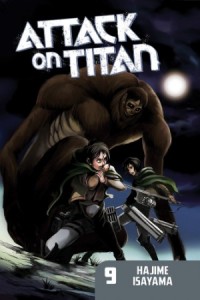
Attack on Titan, Vol. 9

November 9, 2013 by Sean Gaffney

By Hajime Isayama. Released in Japan by Kodansha, serialization ongoing in the magazine Bessatsu Shonen Magazine. Released in North America by Kodansha Comics.

(Note: This review is based on a review copy provided by the publisher. So was the Sailor Moon review yesterday, come to think of it. Also, DO NOT discuss spoilers for Vol. 10-present in the comments, even if it is legal on Crunchyroll now. Also, this review spoils shamelessly everything before Vol. 10.)

There’s so much to talk about in Volume 9 of Attack on Titan that there’s no way I can get to everything. So I apologize to Mike, who tried to have an awesome battle scene but showed off his human frailty instead, and Beast Titan, who is fascinating and clearly very important from here on out, and the horrible tragedy of Connie’s village, and Eren, who finds new resolve – again – in finding ways to destroy titans. Because I’m going to talk about Sasha right now.

attack9

It’s not exactly a secret that I am very fond of Sasha. Her scene in Volume 4 was not only funny, but came at a point where the author was finally trying to differentiate the non-stars from each other and help us remember who they were. We saw her resolve even in the face of stark terror when she chooses to join the Survey Corps, and see that resolve fail in action when she begs for her life after a Titan gets the upper hand. She, along with Connie and Jean, represent the “normal folks” of the 104th Trainees. And now she’s on a mission to notify the Northern villages that Titans are coming – including her own village.

The way this chapter is framed is fascinating, though I do wonder if I only see that because of extracanonical knowledge. The author apparently planned in this chapter to kill Sasha off, only to have his editor say “Doesn’t it feel like the wrong time to do that?”. And really, up until the moment Sasha slips out of the Titan’s wet, bloody grip, the whole chapter feels like an epic farewell. She was able to rescue the kid, and now she goes out fighting in a glorious death scene that contrasts against Mike’s stand against Beast Titan in the previous chapter.

We get a flashback to her father, which establishes Sasha as conservative, set in the old traditional ways, and (of course) ravenous. He calls her a “bit of a coward”, which apparently sticks in her craw, as it doesn’t seem like too long after that she’s joining up. We also get another flashback, seeing Sasha interacting with Krista and Freckled Girl Always With Krista, showing Sasha has been trying to hide her natural accent and talk formally so she doesn’t sound like a hick. Freckled Girl objects to her not being herself, while Krista notes that no matter how she acts, Sasha IS herself by definition. It’s a cute flashback, even if Sasha is somewhat puzzled as to why she’s thinking it as she heads for her death. We even get the “yes, my life was filled with moments like these” musings we always see before a character is killed off.

Except she doesn’t. She uses her hunting skills to get arrows in the Titan’s eyes, has a narrow escape, and meets up with the one survivor of the village, a little kid who has met up with… her own village, who are alive and OK. Including her father, who is rather stunned that the cool woman who took down a Titan as his daughter. So instead of going out in a blaze of glory, the entire chapter is recontextualized as a women coming into maturity, realizing what is selfish and what is selfless, and gaining the respect of her family. Love it.

By the way, Freckled Girl is actually relevant enough to get a picture in the front of the book now, though she’s listed as “Name Unknown”, which might surprise anyone reading this volume, who has forgotten that her name was never revealed till now. It’s a surprise as THE ENTIRE INTERNET knows her name. Luckily, we learn it here as well, in Sasha’s flashback, as Krista calls her Ymir. Hrm… where have we heard that name before? Not since Vol. 5, so the reader might be forgiven for forgetting. Hange doesn’t forget, though, and is stunned to find that someone named Ymir is among the 104th Trainees… especially as Krista seems to be hiding a big secret as well.

The Attack on Titan manga tends to veer back and forth between big revelations that are well signposted in advance (Annie’s true identity, Ymir) and things that come pretty much as “Wait, WHAT?” moments. Krista having a secret identity and being the one person who can choose to say why the Walls Are Full Of Titans is the latter. I suppose you can connect her general kindness to all things to a religious upbringing, but it still seems a bit much. That said, I like that we are slowly giving the rest of the squad their own backstories and motivations, and presumably we’ll hear about Reiner and Bertholt at some future date.

In the meantime, everyone wants to find Krista, which is a problem, as she and Ymir are trying to figure out where the wall is broken and how Titans got in. (The wall isn’t broken, but let’s leave that aside for now.) We get a nice little character sketch of her and Ymir here: Ymir wants Krista safe, and if that means being a coward or acting like an obnoxious jerk, well, that’s what it takes. Krista, meanwhile, placed 10th in the trainee exams, and knows that Ymir should have been there – indeed, may have been higher – but slacked off so Krista could get the choice to go with the MPs. Krista, of course, didn’t. Krista suspects that Ymir is always next to her because of her family, but Ymir notes no, it’s for her own sake.

The two search squads, having not found a hole in the wall, and forced by Titans to hole up in an old abandoned castle. This includes Ymir, Christa, Bertholt, Connie, and Reiner. First, off, we have an amazingly over the top scene where Connie, who has seen the devastation of his village with no actual bodies, and also a Titan who looks a lot like his mother, starting to wonder if his village all became Titans, similar to Annie. Ymir promptly laughs and starts mocking Connie in an amazingly loud voice while sweating, changing the subject away from humans who can turn into Titans entirely. It’s hard not to see this as incredibly suspicious.

They go scrounging for food, and we now hit the scene that forced the yaoi and yuri fandoms to unite as one in one giant pile of squee. Reiner sees Ymir in a storeroom looking at cans, and she jokes about guys creeping into a girl’s room at night. Ymir says she didn’t think that Reiner was the sort to be interested in girls, to which he responds that he didn’t think Ymir was the sort to be interested in guys. Attack on Titan is, at heart, a military-themed sci-fi thriller, with romance really, really low on the list. So seeing two characters casually joking about being gay in a non-romantic setting is just amazing. And if we weren’t guessing that Ymir was always around Krista because she was in love with her, we certainly are now. Also, she can apparently read ancient writing that no one else can.

Sadly, a Titan assault interrupts this before we can find out more, and we finally get to a cliffhanger. What a volume. I’m not sure the pacing always works (admittedly Ymir has been in the background since the start, but her sudden rise to main character status is still a bit of a shock), and there are still the usual art issues. But this is an amazing page-turner, and I fully support any shoehorned-in characterization as long as it deepens and expands their relationships with each other. And it’s nice to see an expanded sexuality in the series as well. In the end, how much did I enjoy this volume? Well, I wrote a review that’s almost three times as long as my normal reviews. Get it.

Filed Under: REVIEWS

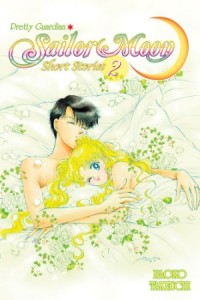
Pretty Guardian Sailor Moon Short Stories, Vol. 2

November 8, 2013 by Sean Gaffney

By Naoko Takeuchi. Released in Japan as “Bishoujo Senshi Sailor Moon” by Kodansha, serialized from various sources. Released in North America by Kodansha Comics.

And so we come to the final final volume of the Sailor Moon manga. Kodansha has indicated there’s an artbook coming along, but for the moment, this is it. And I really wish that it ended better. I’ve been a huge supporter and preacher for this entire series, pointing out how awesome it is, and thus it saddens me that this collection of three short stories has only one that really measures up to the standards set by the series in the past. And no, that’s not the one the anime chose to adopt into a movie. (I do give big props for that cover, though, which has a post-coital Usagi and Mamoru in bed, with Usagi winking at the viewer. Fourth-wall breaking has always been in the Sailor Moon manga to a degree, but this really takes it in new directions of cute.)

smss2

Let’s start with the story that takes up over half this volume, Princess Kaguya’s Lover. This was adapted into the 2nd of the 3 Sailor Moon movies, Sailor Moon S. And indeed that’s quite deliberate: Takeuchi wrote it with a movie in mind. I don’t think it ran in a magazine, but instead appeared straight in the original tankobon. It also stars Luna. Luna, Artemis, and Diana have gotten dramatically less focus in the manga than they did in the anime, which ironically helps the story a bit here. We’ve never seen Artemis pining over Luna quite as much as we do in animated form, so there’s less bafflement at Luna’s treatment of him. And the invasion of yet another female villain poised to destroy the world is handled with the usual Sailor Moon aplomb. At heart, though, this is a love story about a cat and a human, and that’s just sort of uncomfortable, even if Sailor Moon does transform Luna into a human so she can say goodbye to her (already in love with his childhood friend) crush. (Also, Venus and Jupiter have birthdays 6 weeks apart! Throw them separate parties, sheesh.)

Casablanca Memory is the reason to pick up this volume, as it’s excellent. Given Rei had to share a short story with Minako last time (and that really was Minako’s more than Rei’s), it’s fitting she gets one of her own. This takes place early on in the Senshi’s lives, around the time they first met Jupiter. Rei’s background has been quietly mentioned before, but this story is all about it: her father is a prominent politician with no time for family, and has assistants to remember things like “when is Rei’s birthday” and “get her something nice.” Her mother was a quiet supporter of her father, but fell ill and died, which Rei has never forgiven him for. Then there’s Kaido, the assistant of Rei’s father, who’s like an older brother to her… or maybe something more. The story isn’t perfect – it’s never clear if Kaido is possessed or was posing as a Dark General all this time, and his death is also very ambiguous. But it really gives you a good sense of Rei, and is at least very much in character.

And so we come to Parallel Sailor Moon, the final story in the manga, and the nadir of the series. This was written a couple of years after the series ended for an artbook, and the author noted it was in an alternate universe AND THANK GOD, because everyone in this is shallow and awful. Takeuchi has, throughout the manga, had a bad habit of making her characters shallow and annoying for the sake of humor. Since this story is all humor, that’s all we get. The premise has our heroines all grown up and married, with kids of their own, and apparently not senshi as they all live in modern-day Tokyo. They’re all noted to be daughters of prominent families who had arranged marriages, and the kids are “wise above their years” cynics who would not be out of place on an 80s ABC sitcom. Usagi has had a 2nd child, Ko. Ko is hyper-annoying and loves to eat, and everyone hates her. There’s not even the “we love Usagi for all her faults” here, except for one panel where they realize she’s in trouble. It’s just “Ugh, her.” I just… I identify with the characters more than anything, so seeing them portrayed like this hurts my soul. I laughed once the entire story, when Hotaru remarked about how they were going to take over the world as civil servants. That was it.

There are a few extras here, with a timeline for the series (real-life timeline, i.e. publishing dates) and Takeuchi’s description of visiting Cape Kennedy to see space shuttle launches. But overall, despite Rei being cool and beautiful, this book is for those who want t have the complete collection, and I suspect that of all the re-releases it will be the one I dip into least. Still love Sailor Moon, though.

Filed Under: REVIEWS

Manga the Week of 11/13

November 7, 2013 by Sean Gaffney, Ash Brown, MJ, Anna N and Michelle Smith 2 Comments

SEAN: This week isn’t quite as bad as the previous two, but there’s still a chunky bit of stuff coming onto the shops.

Dark Horse has the 3rd of their Lone Wolf & Cub omnibuses. That’s a chunky item hitting the shops all by itself, and very good value for money it is too.

ASH: I’m happy to see Lone Wolf & Cub being re-released. The larger format means I have a better chance of actually being able to read the text, too.

MJ: I’ve been so happy to have a fresh opportunity to fall in love with this series. And fall in love, I have!

ANNA: Nice! I need to check this out again, I think I only read the first five or so volumes of the original series but I did enjoy it.

SEAN: We have a trio of releases from DMP. Lies Are A Gentleman’s Manners certainly wins the title of the week award, but I know nothing else about it. The description seems to involve LSD and blackmail.

ASH: I don’t know much about this one, either. But, megane alert!

MJ: Thanks to David Welsh, I’m thrilled to see anything from Opera, so count me in!

Moon and Blood 4 is still doing its mini-manga thing.

And Triton of the Sea finishes up with its 2nd omnibus. Are we getting near the end of print Tezuka releases, headed for a digital-only future?

ASH: I think we’re getting close. There are only two forthcoming Tezuka print releases that I’m currently aware of: The Mysterious Undergound Men and The Crater.

showa

SEAN: Drawn & Quarterly has been putting out a lot of Shigueru Mizuki lately, and this is one of his big magnum opus projects. Showa 1926-1939: A History of Japan seems to actually be half history book and half yokai (come on, can we really expect no yokai in a Mizuki book?), as we switch between his childhood and the events that shaped Japan. I can’t wait for this one. There’s a sequel, covering World War II, out in the spring.

MICHELLE: Oh, that *does* sound interesting.

ASH: I’m very much looking forward to this series. If the first two omnibuses do well, we should see two more.

MJ: Ditto!

ANNA: This looks cool.

SEAN: Kodansha has Cage of Eden 12, with more extinct animals, action sequences, and naked teenage girls bathing in rivers.

Another intriguing debut is Black Bard, which One Peace Books is putting out as a done-in-one omnibus. From Media Factory’s oddball shoujo magazine Comic Gene, and the plot sort of sounds like Shoulder-A-Coffin Kuro, only less depressing.

ASH: I’m definitely checking this one out. I just can’t pass up the music and magic combo.

MJ: Again, what Ash said!

ANNA: I am reserving judgement until the first reviews get posted, but it does sound interesting.

SEAN: One Peace also has the 4th of the reissue volumes of Crayon Shin-chan, which has been their main manga product to date, though with Black Bard they’re starting to expand. Shin-chan is pure kiddie fun, though be aware it’s a kid’s idea of fun, not a parent’s.

Picturebox has been known for having some old-school seinen, and this week is no different with the release of Gold Pollen and Other Stories. Actually, instead of seinen, it’s more pure alternative, and sounds quite interesting in an “indie comix” way.

ASH: I’ve already got my copy of this one! Picturebox has been doing some really interesting manga releases this year and the production quality has been top-notch. Gold Pollen is the first volume in its Masters of Alternative Manga series; I’m very curious to see what else will be picked up.

MJ: I’m pretty anxious to see this!

SEAN: SubLime has the 3rd volume of Blue Morning, which I understand has garnered some praise from other corners of the Manga Bookshelf. Anyone want to chime in?

MICHELLE: I described it as “more like a genuine period drama than BL romance with some token period frills.” The characters are well developed and complex, too, and I really couldn’t recommend it more highly.

MJ: I’m really enjoying this series, and Michelle’s recent review has made me anxious to dig into this volume!

police1

SEAN: “I am hot.” “I am also hot.” “And naked.” “I too am naked.” “We fight crime.” “In an erotic way.” “We are… Spiritual Police.” “From SubLime Manga, November 6.” “Revel in our hot bods.” “And sultry gazes.”

MICHELLE: Bwa-ha-ha!

MJ: <3

SEAN: Vertical dips into the world of post-apocalyptic sci-fi with From the New World Vol. 1. I really didn’t like the first volume, but others may disagree with me.

ASH: I’ve been told the manga follows the novels more closely than the anime adaptation, but I’m really not sure what to think about this series yet.

SEAN: 07-Ghost Vol. 7 comes as close as it ever will to being symmetrical.

MICHELLE: Sigh. Somehow I am now really, really far behind on this.

MJ: I’m mesmerized by the near-symmetry.

ANNA: I need to get caught up! I enjoy this series.

SEAN: Fullmetal Alchemist 3-in-1 Vol. 6 introduces Olivier Armstrong, which is the best possible reason to buy it, as she is amazing.

MJ: Yes. Yes she is.

Speaking of omnibuses, Inu Yasha’s VizBIG Edition is up to Vol. 17, which I’m sure is also an exciting and thrilling part of the story, probably.

MICHELLE: I have actually never finished InuYasha. I have the last ten volumes hanging around, ready for me to read them, but I have been delaying it for years now. Kind of like how I never watched that one episode of TNG and thus it is not actually finished for me.

SEAN: Lastly, Rin-Ne ambles slowly along with lucky Vol. 13. Perhaps Sakura will show an emotion this time around… nah, never gonna happen. Still, it’s enjoyable spirit comedy.

MICHELLE: I have a warm spot in my heart for RIN-NE despite its lack of forward momentum of any kind.

SEAN: Any favorites?

Filed Under: FEATURES, manga the week of

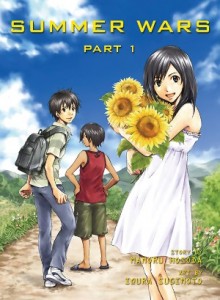
Summer Wars, Vol. 1

November 6, 2013 by Sean Gaffney

By Mamoru Hosoda, Iqura Sugimoto, and Yoshiyuki Sadamoto. Released in Japan by Kadokawa Shoten, serialized in the magazine Young Ace. Released in North America by Vertical.

Adaptations of something into another form, be it a manga, anime, novel series, or movie always carries an inherent risk that it won’t recapture the moments you loved from the original material, or that people will say it’s dumbed down or exaggerated. And yet the appeal is there as well – I really loved this in one form, so why not take a look at it from a different angle? Certainly companies hope you’ll spend your money to check something out that you liked before. Luckily, with Summer Wars, I seem to be one of the few people who never saw the original movie this is based on, so I came at this adaptation fresh. And now I really want to see the movie, and worry the original won’t match up. As this first volume was just terrific.

summerwars1

Things start off looking like a very typical shonen romantic comedy. Kenji is a high schooler, somewhat shy, good at math but not good enough to be in a national competition. He has a crush on Natsuki, who takes kendo and is the pure awesome Japanese high school student. One day she asks for a favor, though is cagey about the details. Those with experience in such stories won’t be surprised by what happens next: he’s pretending to be her boyfriend, so that she can get through a huge family reunion without a lot of hassle. And a lot of the beats that follow are familiar as well, though they’re all handled deftly. Some of the family like the kid, some don’t. There’s an older cousin that Natsuki has a crush on, which makes Kenji feel awkward. And her awesome old grandma sees right through both of them, realizing that Natsuki made this up, but also that Kenji is a good kid.

But that’s only half the story, and this is also a techno-thriller. Much of the world works in the manga via a virtual reality network. One day the network is hacked, and it’s put out on TV that it was Kenji who did it. (This turns out to be false, and there are many culprits who were conned into doing this, which I think is a shame. I loved the joy on Kenji’s face as he solved the math problem that ended up being a hack, and wish he had been more culpable later on.) And now the world is slowly spiraling into chaos by an AI that turns out to be far smarter than it was previously thought. Natsuki’s family, who are huge, positioned in just the right places, and can work together awesomely, try to stop the AI… so the AI kills off Natsuki’s grandmother, in a way that reads “this could be a coincidence, but really probably isn’t.) Now things are at a crisis point.

This is a two-volume manga in the Vertical edition (originally 3 in Japan), and it’s paced almost perfectly, with every scene having meaning. Even the Summer Wars title works well – the Summer and the Wars balancing each other out – romantic comedy with heartwarming family, and computers destroying everything we must now stop them. I didn’t mention Kazuma, another of Natsuki’s cousins who’s a young (and androgynous -I thought he was a she for a while) prodigy who will no doubt have a larger part to play in Vol. 2, which also suggests that Kenji will find his inner General. This manga really makes me want to see the original, one of the best things you can say about an adaptation, but also works great as its own story. And the couple’s cute, too. Highly recommended.

Filed Under: REVIEWS

Quick License Roundup

November 4, 2013 by Sean Gaffney

I hate doing these for only one title, but the other one that’s on Amazon already hasn’t quite been announced, so it will have to be content with a tweet or two. In the meantime, we have another Shonen Jump series, though this one is not going to be featured in the weekly online magazine.

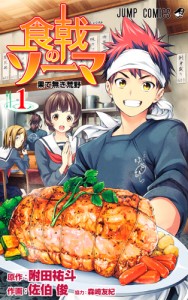
foodwars1

Shokugeki no Soma, which is getting the prefix Food Wars added to it for North America, is a Weekly Shonen Jump series that’s about 4 or 5 volumes so far. It is another manga about food creation but, like another Jump series, Toriko, I suspect this is not so much for the foodie manga reader as it is for the typical Jump manga fan. A young man is challenged by his chef father to go to an elite chef high school where it’s all battles all the time. It has very few graduates. Oh, and the head of the school’s granddaughter hates him. Can he survive just by being the hero of a Shonen Jump manga?

This sort of series has been called Food Porn, and apparently this particular series takes that wording a bit literally. Like many manga artists before they hit it big, Saeki Shun got his start in hentai doujinshi, and it shows in the abundant amounts of fanservice that this title has. Indeed, I was rather surprised at the announcement, not because it’s a battle manga – indeed, that’s likely the lure. It’s because ecchi harem series had been on the decline in North American recently. Strawberry 100%, an earlier Viz Jump title, is on permanent hiatus. Nisekoi is a romantic comedy, but its main thrust is not so much “panties!” the way the classic shonen harem title is. Food Wars (and I haven’t read it, so please correct me if I’m wrong) is combining a cooking manga with harem fanservice in much the same way Toriko combines it with One Piece-esque shonen ludicrousness.

As for whether it succeeds, well, I admit I’m intrigued at what the future will bring if it does. We shall see.

Filed Under: NEWS, UNSHELVED

Pick of the Week: Addictive Shoujo

November 4, 2013 by Michelle Smith, MJ, Anna N, Ash Brown and Sean Gaffney 3 Comments

shoujopotwMICHELLE: I’m caught between two equally compelling options. On the one hand, there’s Skip Beat!‘s sixth 3-in-1 omnibus, but I’ve literally been telling people to read this for years, so even though it’s terrific, perhaps I should instead go for option number two, Strobe Edge. It’s more of an unknown quantity for me, but I’ve personally been enjoying it a lot. So… my official pick is… Strobe Edge (but also Skip Beat!).

MJ: As I’m having trouble choosing something this week, I’ll also go with Strobe Edge! I was unimpressed by this series at first, but it had me hooked by the end of the first volume, and that has only intensified over time. It’s become a book I gobble up immediately upon the arrival of each new volume. Nothing quite beats addictive shoujo.

ANNA: I also adore both Strobe Edge and Skip Beat, but I’ll go ahead and make Skip Beat my pick, simply because I’m a big fan of omnibus editions for these long-running series. Skip Beat is the rare long series that manages to keep everything compelling and fresh.

ASH: I haven’t read any of Strobe Edge yet, but I have read and adored Skip Beat!. Great comedy, great characters, and a the omnibuses are a great way of getting into the series. So, despite some of the other intriguing titles being released this week, my vote goes to Skip Beat!, too.

SEAN: And instead of breaking the tie I will choose Oresama Teacher, which not only is that rare series about teenage delinquents that’s licensed in North America, and not only has an entire *cast* that can rival Special A for being dense and not understanding any nuance, and not only manages to have a reverse harem love quadrangle without making me actually take any sides about who will win, but is simply funny as hell. Will always love this.

What looks good to you this week?

Filed Under: PICK OF THE WEEK

Bookshelf Briefs 11/4/13

November 4, 2013 by Sean Gaffney, MJ, Michelle Smith and Anna N 1 Comment

This week, Sean, MJ, Michelle, & Anna look at recent releases from Seven Seas, Viz Media, Kodansha Comics, Yen Press, and 6 Degree Works, Inc.


burninglove2Burning Love on the Aegean Sea | By Harumo Sanazaki | 6 Degree Works, Inc – This is a somewhat random Ohzora manga that I bought on impulse for my Kindle. It is a basic mishmash of Harlequin story tropes, without the elements of humor or lush art that makes romance manga more enjoyable to read. Christian is a man with anger issues and lush, long dark hair who comes back to a Greek island after being expelled with tons of money and revenge in his heart. Leda is the innocent heroine with a trampy older sister and ethically challenged father who is forced to stay on the island when her ex-lover appears, all while raising her sister’s son. Everything is very dramatic, and the illustrations of windswept hair and turbulent seas combine to underscore the tortured relationship of the two leads as they grow closer. Still, something this manga makes it feel more like it is going through the motions as opposed to telling an interesting story, and there’s plenty of other romance manga out there that will be more satisfying for most readers. Anna N

haganai4Haganai: I Don’t Have Many Friends, Vol. 4 | By Yomi Hirasaka and Itachi | Seven Seas – The majority of this volume continues the basic theme of the entire series, which is this group of misfits and outcasts having fun as friends without realizing that’s what they’re actually doing. They write a round-robin fanfic which basically involves torturing each others’ self-inserts, they play the world’s most ridiculous RPG, and they fail mightily at karaoke. There’s nothing particularly earth-shattering here, though the cliffhanger promises that next volume may ramp that up, as Kodaka is invited to meet Sena’s father. As it is, though, romance continues to sit on the back burner here, as the title is more concerned with seeing these broken people insult each other, mock each other, and likely form bonds they’ll cherish for the rest of their lives. -Sean Gaffney

midnight2Midnight Secretary, Vol. 2 | By Tomu Ohmi | Viz Media – As heroine Kaya becomes further dependent upon her vampire boss’ sexual attention (to the point of attempting to free herself by leaving his employ) and boss Kyohei is slowly driven mad by his feelings for a “mere human,” I’m aware that I should be fleeing the scene as quickly as possible. After all, it’s these tormented, controlling love interests I despise the most, isn’t it? Isn’t it?? Alas, I can’t deny that I’m enjoying Midnight Secretary, despite myself. I’m captivated by Tomu Ohmi’s tortured love story, her occasional humor, her clean artwork, but most of all, her competent, serious heroine, whose devotion to her work still trumps all, even sexy vampire bosses. Even for this grumpy old lady, sometimes trashy, over-the-top romance really hits the spot. Midnight Secretary is just that kind of romance. Recommended. – MJ

Mochizuki_Pandora18_FINALPandora Hearts, Vol. 18 | By Jun Mochizuki | Yen Press – I had wondered how volume 18 could top 17, with its many answers and “um… whut?” ending, but I think it does, largely because Mochizuki manages to provide still more answers to long-standing questions in a way that’s unexpected but absolutely fits with what’s gone before. (Well, what I can remember of what’s gone before. At some point, I’d love to start over from the beginning and see how it all hangs together.) I love how everything is tilted on its head in ways that remind me a little of Loveless, actually. I know this is more fangirl gushing than a legitimate review, but hopefully that just goes to show how much I enjoyed it and how eagerly I await the next volume. “Where do we go from here?” indeed. – Michelle Smith

real12Real, Vol. 12 | By Takehiko Inoue | Viz Media – Oh, Real. I seriously love you so much. Why you come out so seldom? Anyway, this volume finds Togawa in pursuit of change—he’s not entirely sure what it is he’s lacking, but he’s banking on finding it at basketball camp. It doesn’t entirely turned out as planned, but some insights from Azumi on his rush-ahead attitude are very welcome. Meanwhile, Hisanobu continues to give rehabilitation his all, and once his formerly estranged father learns about his son’s goal of participating in wheelchair basketball, Inoue-sensei crafts a thoroughly lovely non-verbal sequence wherein the dad learns all about the game and then silently prays for his son’s dream to come true. Sniff. Okay, yes, this volume is full of unabashedly feel-good stuff, but it’s not cloying about it. There’s plenty of sweat, tears, and frustration, and everything is drawn beautifully. Even if you don’t like sports manga, you should make an exception for this one. – Michelle Smith

sankarea3Sankarea, Vol. 3 | By Mitsuru Hattori | Kodansha Comics – The cover to Vol. 3 continues to show how this is being marketed to a very different sort of fan than you’d expect. Yes, there are still elements of harem comedy here, though Wanko is perhaps starting to realize that “I see you like a sister” is a hole that’s usually too big to crawl out of for the typical harem girl. Where the manga really succeeds is in the drama and horror, with the addition of the annoying but informative Darin, and the realization that being dead is not something that Rea can simply deal with and live the rest of her life as normal. The cover art shows this off, as she stares at the stump where her arm used to be. It’s put back, but it’s a sign of a more dangerous trend, which is that she really is a zombie, therefore happily ever after may not be an option here at all. – Sean Gaffney

Filed Under: Bookshelf Briefs

Wandering Son, Vol. 5

November 4, 2013 by Sean Gaffney

By Shimura Takako. Released in Japan by Enterbrain, serialization ongoing in the magazine Comic Beam. Released in North America by Fantagraphics.

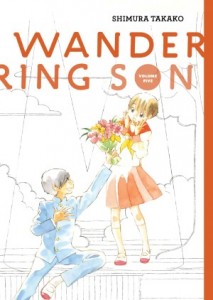
Switching to a new environment can be crippling to a young person, particularly if they’re going through a lot of other things as well. So it is with the cast of Wandering Son and middle school. Nitori tries to continue to define himself while also discovering something he’s genuinely good at, Takatsuki discovers she’s no longer the only one in the room doing what she does, and Chiba finds that even if she’s gone from overly emotional to overly stoic, she still has difficulty dealing with anyone. So, in other words, it’s an excellent depiction of anyone’s life in middle school.

wanderingson5

We also meet some new cast members, who basically fly into Takatsuki’s circle of friends and explode like a bomb. Sarashina also sometimes wears male clothing, but it’s nothing to do with gender identity and more to do with her being an eccentric loudmouth who does whatever the hell she wants. Naturally, Takatsuki is drawn to her, as not caring about what people think is something everyone else in this book has trouble getting past. She also has a best friend, though, Shirai, who clearly is very close to her, and is very unhappy with this new girl making advances on her… um, friend. There are no yuri overtones here, really, but Shirai certainly exhibits all the classic signs of jealousy. She’s written a little flatly, so I hope we find out more about her later.

As for Chiba, you really want to reach out and give her a hug, but there’s no way she’d let you. She can’t get over her own feelings of hatred/jealousy towards Takatsuki, and attempting to suppress all emotion is not working out very well when everyone around you is giving you an excuse to go off like a rocket. So the answer, clearly, is to be antagonistic to *everyone* – even the girls in a higher grade than her, a definite no-no in Japanese society. I really hope Chiba can eventually move on past her repressed and upsetting anger, because right now she’s on a very dark road, and given she’s only 12 or so that’s depressing in itself.

Meanwhile, our hero and heroine are both facing the realities of puberty. Nitori and Ariga record their voices on tape, so they’ll be able to remember what they were like before they change. Nitori is a little upset at the idea that he won’t be able to dress as a girl anymore. Takatsuki is having an even worse time… her sports coach is demanding she wear a bra to practice, another reminder that her gender is trying to impose limits on her. The two of them finally make up, sort of, in a touching yet somewhat sad scene as they both worry about the future. Nitori, however, seems to get an idea for it, and begins to start writing a story based on his own experiences. I like the idea of Nitori’s insecurities and dreams fueling his creativity, and wonder if Takatsuki will be able to help in the process besides just having her life give him ideas.

All in all, this was an excellent transitional book in the series. As we settle into middle school, things are bound to get even more awkward, and I hope our cast finds the strength to make it through.

Filed Under: REVIEWS

Higurashi: When They Cry, Vol. 23

November 3, 2013 by Sean Gaffney

Story by Ryukishi07; Art by Karin Suzuragi. Released in Japan as “Higurashi no Naku Koro ni: Matsuribayashi-hen” by Square Enix, serialized in the magazine Gangan Joker. Released in North America by Yen Press.

As I’ve been following the Higurashi manga, I’ve also been slowly going through the original visual novel, which MangaGamer has released here in North America (don’t look for their site – Higurashi is their token ‘not porn’ title). I just happen to be at the appropriate place in the novel as I am in the manga, so am able to compare them even more. It’s not clear how closely Ryukishi07 checked the content of the manga with the Higurashi artists – I know he’s very involved with the Umineko manga, particularly the final volumes, to correct certain issues with the novels – but certainly the manga glosses over a lot, being a sort of “greatest hits” compared to the deep immersion of the original. That said, where the manga does succeed is in the emotion. Be it heartwarming, sad tears, or dull horror, the manga delivers the goods here.

Ryukishi07_Higurashi_FestivalArc_V2_TP

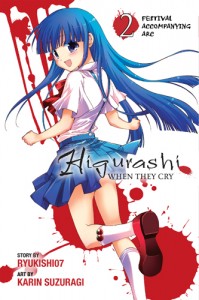
Nothing better demonstrates the difference between the two than the fate of Rika’s mother. The visual novel has this scene from the perspective of Ooishi, who is at the Festival waiting to see if anyone is killed. He’s on hand for the death of Rika’s father, made to look like a heart attack, and tries to follow the group back to the Irie Clinic but is hamstrung by traffic. Thus, we only hear that the wife is later found missing, supposedly having drowned herself in the swamp with a suspicious letter left behind. The manga, on the other hand, follows Rika’s mother. Rika’s mom has always been fairly high-strung from what little we’ve seen of her. It’s not hard to figure out why… Rika must be an amazingly difficult child to bring up. And what with the clinic using her as a guinea pig, and her father basically going along with it, her nerves just stretch to the breaking point. As such, she is ill-equipped to deal with Takano.

Takano remains fascinating, and though I think the visual novel does a better job of showing that a lot of this is Hinamizawa Syndrome rather than “lulz, I’m evil like that”, there’s enough here to keep everyone happy. Notably, for the sake of her research, she grovels at the feet of Rika’s parents, and when that fails, seems genuinely at a loss until Okonogi suggests “taking care of” Rika’s parents. Murder comes as a surprise to her… but once it’s in her head, she doesn’t hold back, as Rika’s parents instantly make the transition from “people” to “research subjects”. As such, she can easily justify using Rika’s mother as a live test subject. The murder is terrifying, and does not remotely hold back, with blood flying everywhere and Takano’s insane rictus grin it’s straight out of an Italian horror film.

Later on, Takano faces an even bigger setback when her mentor dies, and it’s shown that he was basically the only thing keeping her project going. Higurashi has a very realistic and cynical take on the Japanese political system and how power-grabbing it can be, particularly in the early 80s when this takes place. Takano once again has everything almost crumble around her, and it becomes apparently that even though she’s the source of all of Rika’s misery, she herself is being manipulated throughout this story, not just by Okonogi, but also a new faction who wants to use her in order to facilitate their own rise to power. If it works, great. If she dies, meh. And it’s clear the Mountain Hounds work for them, not Rika *or* Takano. Honestly, those two really have so much in common. They should talk over a nice cup of tea when this is over.

The visual novel goes into great detail on the pasts of most of the characters, and the manga manages to include some of it – Okonogi’s mourning for his father, and meeting his mentor after WWII shows why things starting with that guy’s death have led to his own obsession, even if it’s misdirected at the Sonozakis. Speaking of the Sonozakis, we see Mion’s grief and anger over Satoshi’s disappearance (Shion is carefully absent here), and her grandmother doing her best to bring “new blood” into the town while still trying to look old and crotchety. That new blood is the Maebara family, with Keiichi trying to start over after the BB gun incident. Rika and Hanyuu are at their most blatant here, with Rika actively showing she knows who they are and relying on people not realizing she’s living the same life over and over again so they laugh it off.

We also see Hanyu’s past, several hundred years ago. She really is a supernatural being, and her earnest attempts to stop the violence between the two tribes occupying Onigafuchi is heartwarming. I do think the drama needed more time to develop – as it is, it’s not as effecting simply as it goes by so fast – Hanyu gets her own daughter to kill her with a giant sword, which should have been given more weight. But then, Hanyu in general is the most problematic character of Higurashi’s so this is likely appropriate.

There are a few other things I felt didn’t work. Given how much Rika is using her past knowledge to make events work for her, her memories “catching up” with her at the end isn’t explained well enough, and seems to be awkwardly shoehorned in so there can be a cliffhanger. Also, four years pass between the start and end of this volume, yet the kids – all growing like weeds, one would think – look exactly the same in 1980 as they do in 1983. (The visual novel has a similar issue – the sprites never change.) More realism, please.

So now, all the pieces are in place – even Akasaka is having memories of a past life where his wife died and Rika was slaughtered, and is prepared to make his way to Hinamizawa immediately. Will all this be enough to defeat Takano and the forces that are manipulating her? And will Shion ever show up in this again? We’ll find out in January. In the meantime, this is still a very good adaptation with a lot of tragic and emotional scenes.

Filed Under: REVIEWS

Voice Over! Seiyu Academy, Vol. 1

November 2, 2013 by Sean Gaffney

By Maki Minami. Released in Japan as “Seiyu Ka!” by Hakusensha, serialized in the magazine Hana to Yume. Released in North America by Viz.

Long-time readers of this blog will know that I am a huge fan of the Japanese shoujo magazine Hana to Yume. Sadly, I have been increasingly unable to rave about its style of shoujo recently, as CMX and Tokyopop went under, and Viz has licensed less and less from the title, preferring to concentrate on their own owners’ magazines. This makes me very happy when I see a new series starting up, specially one from an artist I’ve liked before, Maki Minami. Her prior series here was Special A, a romantic comedy with an emphasis on the comedy, which had all of Hakusensha’s usual strong point, as well as all its weak points. The text and art tends to clutter the page (Hakusensha shoujo packs the page, Shueisha shoujo opens it up), the plotting could be insanely frustrating, particularly in terms of how drawn out the romance was, and character’s growth ended as soon as their function in the story was complete. Now we have her new series, which has many of the same types of people we’ve seen before. Can it fix its predecessor’s issues?

voiceover1

Our heroine has the name Hime Kino, which already sounds like a pseudonym. She wants to follow in the footsteps of her inspiration and become a voice actress. There’s just one problem – she has a deep, husky voice, and she wants to sound like a cute girl. Nevertheless, the academy lets her in anyway, and it’s hinted there’s some deeper, behind the scenes reason. The solution, of course, is obvious – she should play sexy pretty bishonen, which female voice artists do in Japan ALL THE TIME. It’s such an obvious solution that we see it happening at the end of the first chapter, where she has to fill in as the prince in a Snow White dramatization. But Hime clearly wants to be cute, and girly, ad adorable. I imagine a large part of this plotline will be showing her how she should really succeed at what she’s best at.

Cute vs. cool is a classic modern shoujo trope. Usually, heroines want to be the former but end up being the latter, and Hime easily fits into that pattern. And naturally, she’s never more attractive than when she’s acting strong and powerful and masculine. This is a reverse harem manga, so we already have the obvious winner (a sullen brunet – sigh – named Senri Kuno), as well as a few obvious runner-ups. We have the traditional one female friend. I’m hoping for a second as time goes on. And, this being Maki Minami, we have a lot of incredibly goofy guys doing dumb things – there is some fun humor here.

There are some issues, of course. I am rather weary of bullying by teachers in Japan being a) accepted by the institution as good for students in the long run, and b) not called out because the student has to get stronger on her own. It *sounds* admirable, but I think teaches an incomplete lesson. Hime is also a bit aggressively clueless, though so far she’s not quite as bad as Hikari from Special A, who set new records for denseness. Lastly, as with a lot of mainstream shoujo, there’s nothing really original here – just a few old cliches given a new paint job. But I’m perfectly happy with that as long as it’s fun. And for the most part, Voice Over! is fun. I’ll be looking forward to Vol. 2.

Filed Under: REVIEWS

  • « Go to Previous Page
  • Page 1
  • Interim pages omitted …
  • Page 329
  • Page 330
  • Page 331
  • Page 332
  • Page 333
  • Interim pages omitted …
  • Page 382
  • Go to Next Page »
 | Log in
Copyright © 2010 Manga Bookshelf | Powered by WordPress & the Genesis Framework