• Skip to primary navigation
  • Skip to main content
  • Skip to primary sidebar
  • Home
  • About Us
    • Privacy Policy
    • Comment Policy
    • Disclosures & Disclaimers
  • Resources
    • Links, Essays & Articles
    • Fandomology!
    • CLAMP Directory
    • BlogRoll
  • Features & Columns
    • 3 Things Thursday
    • Adventures in the Key of Shoujo
    • Bit & Blips (game reviews)
    • BL BOOKRACK
    • Bookshelf Briefs
    • Bringing the Drama
    • Comic Conversion
    • Fanservice Friday
    • Going Digital
    • It Came From the Sinosphere
    • License This!
    • Magazine no Mori
    • My Week in Manga
    • OFF THE SHELF
    • Not By Manga Alone
    • PICK OF THE WEEK
    • Subtitles & Sensibility
    • Weekly Shonen Jump Recaps
  • Manga Moveable Feast
    • MMF Full Archive
    • Yun Kouga
    • CLAMP
    • Shojo Beat
    • Osamu Tezuka
    • Sailor Moon
    • Fruits Basket
    • Takehiko Inoue
    • Wild Adapter
    • One Piece
    • After School Nightmare
    • Karakuri Odette
    • Paradise Kiss
    • The Color Trilogy
    • To Terra…
    • Sexy Voice & Robo
  • Browse by Author
    • Sean Gaffney
    • Anna Neatrour
    • Michelle Smith
    • Katherine Dacey
    • MJ
    • Brigid Alverson
    • Travis Anderson
    • Phillip Anthony
    • Derek Bown
    • Jaci Dahlvang
    • Angela Eastman
    • Erica Friedman
    • Sara K.
    • Megan Purdy
    • Emily Snodgrass
    • Nancy Thistlethwaite
    • Eva Volin
    • David Welsh
  • MB Blogs
    • A Case Suitable For Treatment
    • Experiments in Manga
    • MangaBlog
    • The Manga Critic
    • Manga Report
    • Soliloquy in Blue
    • Manga Curmudgeon (archive)

Manga Bookshelf

Discussion, Resources, Roundtables, & Reviews

rascal does not dream

Rascal Does Not Dream of a Dear Friend

January 29, 2026 by Sean Gaffney

By Hajime Kamoshida and Keji Mizoguchi. Released in Japan as “Seishun Buta Yarou wa Dear Friend no Yume wo Minai” by Dengeki Bunko. Released in North America by Yen On. Translated by Andrew Cunningham.

And so the Rascal books come to an end (leaving aside any short story or side story collections) with a volume just as short as the previous one. The main conflict from the last few books gets solved fairly quickly and easily, so much so that we realize that it was a fakeout, and we’re right, as the real conflict is with Sakuta himself. Well, that and maybe the publishers. I’ve talked before about how the series has always felt a little artificially extended after the 9th book, and that Sakuta in college but still dealing with all the Adolescent Syndrome stuff felt tacked on. Turns out Sakuta agrees with me – no, not the Sakuta we’re familiar with, but his alternate-world “perfect” Sakuta, who has come by to let him know that there are many and infinite alternate realities around them, and they all think Sakuta sucks, because he’s managing to break all of them.

When we last saw Sakuta, everything was terrible as Mai announced to the world that she was Touko. Now he has to make things right, which involves getting deep into the heart of Miori’s relationship with Touko and why her repressed feelings are actually making things worse. This is resolved, and thanks to Mai doing a quick “this was all an April Fool” bit, no one believes that she’s Touko anymore (including Mai herself). Unfortunately for Sakuta, all the OTHER reality-altered dreams are still present and correct – there are two Kaedes, Yuuma is dating Rio, etc. As it turns out, Miori is more than just the last in a string of women Sakuta has to help, she’s a dimensional nexus point of sorts. While everyone else has alternate versions of themselves (which we’ve seen with the alt-Sakuta), there is only one Miori. That said, most of this has little to do with Sakuta’s actual problem – how does he fix everything?

Despite the fact that this seems like the 15th book in a row where Sakuta takes a lot of public transportation lovingly described until a solution occurs,. there are things I really enjoyed here. Touko’s final song being a palindrome made it very life affirming, and I wish Miori luck in finding a Touko who isn’t dead. I also liked Sakuta’s discussion with the alt-Kaede, and her own simple solution to his “problem”. His problem is phrased as “grow up”, and the solution is pretty neat, and ties into something we’ve known about Sakuta from the very start – I appreciate how this fixes everything. The biggest issue with the book, and possibly why the last two were so short (well, that and artist illness) is that it’s padded out. Sakuta goes round in circles a lot here, and at one point takes us on a tour of iconic Rascal Does Not Dream locations. Like his alternate self, I wanted Sakuta to get with it and solve everything, not mope around.

The book ends with an epilogue set two years later, with stuff I really liked as well as a few things I’m eeeeh on (why do people love student/teacher relationships? Who are not students?). Sakuta and Mai are still exactly the same as before only with all their issues resolved – sorry, no engagement, marriage, or honeymoon scenes. Basically, everyone has grown up. Rascal went on too long, just like its hero, but I liked it a lot.

Filed Under: rascal does not dream, REVIEWS

Rascal Does Not Dream of His Girlfriend

June 15, 2025 by Sean Gaffney

By Hajime Kamoshida and Keji Mizoguchi. Released in Japan as “Seishun Buta Yarou wa Girlfriend no Yume wo Minai” by Dengeki Bunko. Released in North America by Yen On. Translated by Andrew Cunningham.

If you remember my reviews of titles like Babel and Unnamed Memory, you may recall that I yelled at the author and the publisher (Dengeki Bunko) for taking what could easily be two books, divided in half neatly, and making them one huge 400-page monster. This book has the exact opposite problem. The digital version is a mere 139 pages long, and that’s counting the table of contents and the (one) color illustration. I wondered if it was a case where the final volume was too long to combine them, but no, the final volume seems to be the same size as this one. This should have been one book, but it is two, with this the first half. I get the sense, judging by the very minimal illustrations, that there were production issues, but it’s still a mostly frustrating volume where Sakuta has his latest crisis happen, wanders around talking for a while, and then has the series’ Deus Ex Machina help him figure out the issue… but not solve it. Yet.

We start this book with Sakuta having done everything possible to ensure that the dream everyone had of Mai announcing that she’s Touko will not come true. Guess what happens. What’s worse, this new reality sees EVERYONE’S dreams come true. Rio is dating Yuuma, Kaede is somehow now two people, both of whom are living a happy fulfilled life, Tomoe is now going to his college next term, etc. And none of them know reality is different, and none of them want to help him fix it. Fortunately, there is one other person who is unaffected by the Touko dream virus, and it’s very thematically appropriate. They manage to take a Sakuta who is at the end of his rope (in a mild-mannered way) and lead him to the main issue, as well as help him see who’s really behind everything we’ve seen in the last five books.

Despite my carping above, this is not a bad volume, just a mostly frustrating one. The revelations, as well as the one who is giving them, are thematically appropriate, and it’s nice to see Sakuta try his usual “walk around and mope at people until he figures things out” and have it not work at all. Turns out when people have their dream come true, they actually are happy and satisfied with it. Hell, some of the dreams might be the readers’ as well. I cannot think that Saki has any fans who are desperately unhappy that she’s broken up with Yuuma, and even Sakuta admits he’s happier with that outcome as well. (We do briefly see Saki, who is NOT happy with that outcome.) Even Kaede, who would be the one most torn by her incompatible dreams, literally becomes two people to fix everything. Mai is still in love with Sakuta and his girlfriend, she’s just also Touko. Everyone is happy and content. Except Sakuta. And the other two people I deliberately waffled around in the second paragraph.

So the next volume is the last, though there’s already an After Story volume out as well, apparently. I assume, this having mostly been all setup, it will be all payoff. This was good. Should have been combined with the next book.

Filed Under: rascal does not dream, REVIEWS

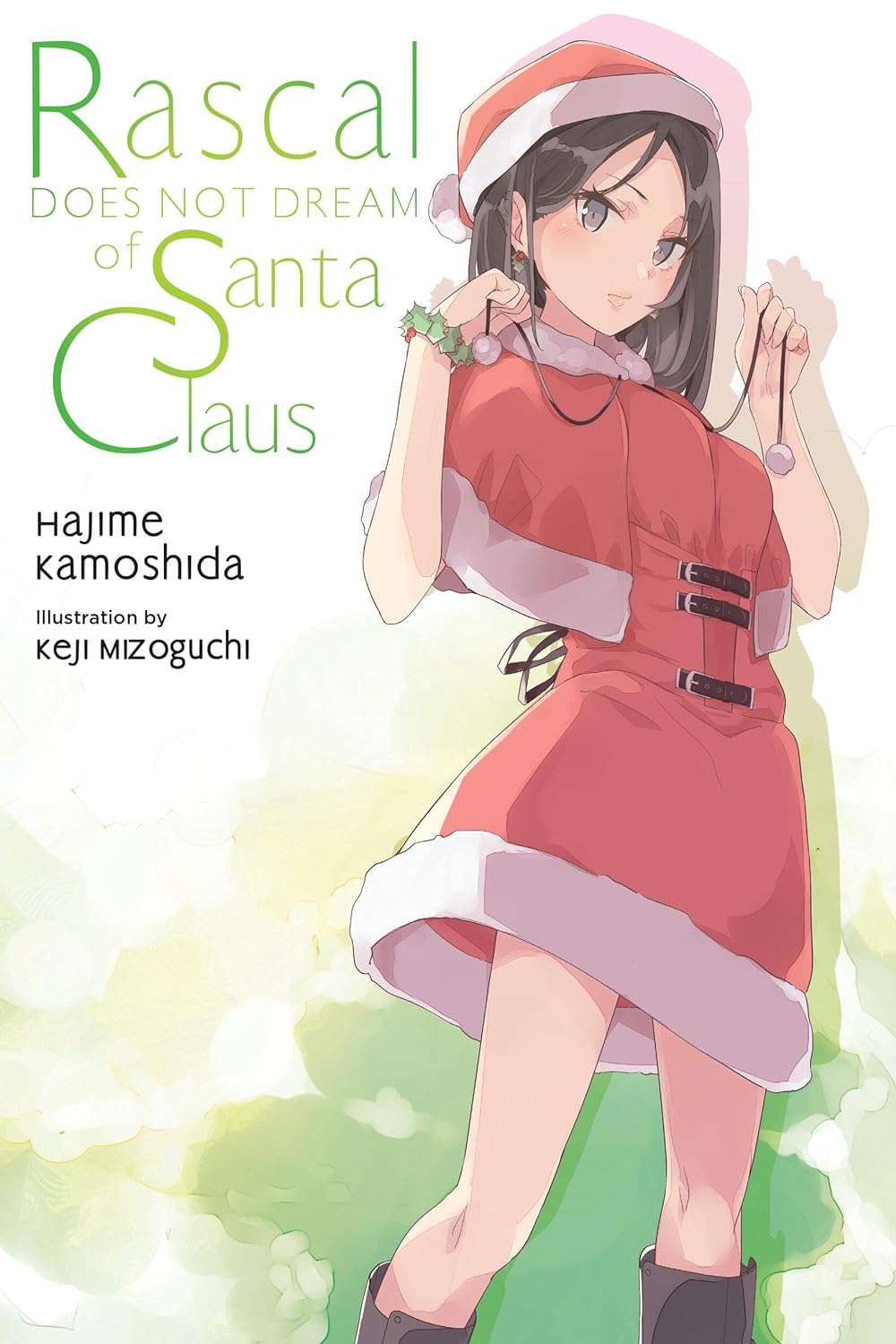
Rascal Does Not Dream of Santa Claus

September 1, 2024 by Sean Gaffney

By Hajime Kamoshida and Keji Mizoguchi. Released in Japan as “Seishun Buta Yarou wa Santa Claus no Yume wo Minai” by Dengeki Bunko. Released in North America by Yen On. Translated by Andrew Cunningham.

You know, Rascal Does Not Dream turned into a horror series so gradually, I didn’t even notice. Oh sure, each volume has had its share of horror and suspense – far more than you’d normally expect from a high school romcom. Starting with Mai potentially disappearing and Sakuta’s horrible scars, each volume has sometimes looked deep into the abyss. But I don’t think we’ve had a volume lean quite so hard into actual horror than this one. Even Vol. 6 and 7 was meant to be a tragedy, not horror. Here we get the ongoing Touko plot blending into loss of identity, and over the course of the book we realize that it’s not just Nene who’s dealing with the loss of identity, but A LOT of other people. And now they’re all invisible Santas. And they’re trying to kill Mai. As I said. Creepy as hell. Sakuta manages to resolve the immediate issue this time around, but only by getting physically injured to protect his love. Also, the ending is not reassuring.

Sakuta has a Christmas dream that Mai is singing at a concert, then announced publicly that she is Touko Kirishima. What’s worse, a whole lot of other people had similar dreams. Other, more disturbing dreams are also happening. Kaede dreamed she had reverted to her alternate self again. Futaba dreamed that she and Kunumi were on a happy date together, which is ominous given that he’s still together with Kamisato. And Mai… didn’t have a dream at all. It all has to relate to the Santa-wearing Touko, and Sakuta spends most of the book looking into Touko, as well as the girl he thinks she is, Nene. The answer to how to solve her problem is a lot closer to Sakuta than he thinks, but… is that really the actual problem? Is he just treating a symptom? And what’s with the dream of Mai getting injured and falling into a coma?

As I said, there’s a lot of scary stuff here. Particularly the ending, showing Mai surrounded by about 100 Santa-clad Toukos that no one else seems to be able to see. I did enjoy the wrapup on Nene’s plot specifically, but it also made me wonder how she and all the other Toukos are meant to reintegrate into society after having “vanished” for about 10 months. The book, unsurprisingly, decides to elide over that. I also enjoyed seeing the friendship/codependent helper relationship that he and Ikumi have, is only because it’s just nice to see him have someone reliable to talk to who can help deal with everything even when no one else can. And, honestly, that may end up tying into the next book. Because anyone who thinks the next book is not going to start with Mai saying that she’s Touko is fooling themselves. The whole volume is a setup for that.

There are two books to go, and they come out only two months apart (the final one is in October in Japan), so Yen may wait and try to release them the same way here. The identity of the antagonist is not hard to guess (hint: what major girl hasn’t got a cover yet?) but I have no idea how it’s going to resolve. In the meantime, there is fun banter here, I promise, but it’s getting thin on the ground.

Filed Under: rascal does not dream, REVIEWS

Rascal Does Not Dream of His Student

November 24, 2023 by Sean Gaffney

By Hajime Kamoshida and Keji Mizoguchi. Released in Japan as “Seishun Buta Yarou wa My Student no Yume wo Minai” by Dengeki Bunko. Released in North America by Yen On. Translated by Andrew Cunningham.

With the first two books in the “college” part of this series, I have struggled to see why it’s been ongoing at all beyond “this is now a franchise with ongoing multimedia, you will write more until we tell you to stop” coming from Dengeki Bunko. With this book, I think I’ve gotten a handle on where this is going, helped out by a much stronger “cover character” than the others, even if she’s far less likeable. The original Rascal books were, for the most part, “a traumatic event in someone’s past displays itself as external symptoms that are horrible”, with Sakuta attempting to fix things in the same way that Koyomi Araragi or Hachiman Hikigaya try to fix things, i.e. throw themselves at it with little regard to danger. But Sakuta has learned better by now, helped by Mai literally dying for him, and so self-sacrifice isn’t on the menu. More importantly, the external symptoms are now wonderful.

Sakuta is still doing his cram-school job while also attending college, working his part-time job, trying to figure out what’s up with the Santa girl only he can see, and also spending time with his girlfriend. This is a lot. The prophetic dream thing is still ongoing, and Sakuta has a dream that on Christmas Eve he’s on a train … not with his girlfriend, but with Sara Himeji, a new student in his cram school class who has had two cram school teachers apparently try to make a move on her and be fired. Sakuta is #3, and is determined to avoid that possibility, despite events conspiring against him at every turn. And there’s also the fact that Sakuta from the other world where he’s more competent has told our Sakuta that Mai is in danger because of Touko.

Sara may not be 100% likeable, but she’s one of the best characters we’ve seen in this series for a while. She’s basically not had to struggle her entire life, and people are naturally drawn to her. As a result, when something does not go the way she wants, it ends up devastating her in a way that’s pretty easy for Touko to exploit. The best part of the book is the solution to the problem, as Sakuta spends most of it doing detective work to try to find a way out of this dream future, and ends up going with “do what the dream says and see what happens. But then Mai invites herself along. Mai being part of the solution is something that works very specifically for Sara, who is poleaxed at seeing what a real couple really in love is like, and when Mai starts reeling off things she loves about Sakuta and informs her she can do this all day, it cracks the Adolescence Syndrome like an egg. You can see and hear Sara grow up.

There is an ominous cliffhanger to this book, which implies that once again the universe is out to kill Mai. That said, the title of the next book is Rascal Does Not Believe in Santa Claus, so presumably we’ll confront Touko at last.

Filed Under: rascal does not dream, REVIEWS

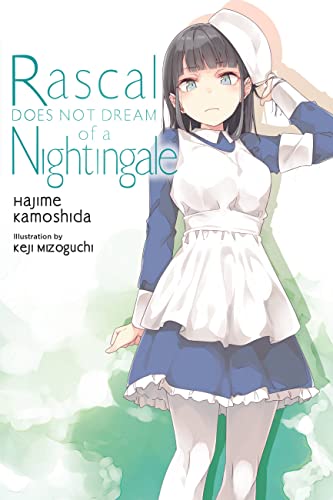
Rascal Does Not Dream of a Nightingale

June 27, 2023 by Sean Gaffney

By Hajime Kamoshida and Keji Mizoguchi. Released in Japan as “Seishun Buta Yarou wa Nightingale no Yume wo Minai” by Dengeki Bunko. Released in North America by Yen On. Translated by Andrew Cunningham.

When I first saw the title, I wondered why we were getting two “singer” books in a row, and wondered if we’d be hitting all of Sweet Bullet. But no, this is not “Nightingale” as in “sang in Berkeley Square”, it’s “Nightingale” as in “Florence Nightingale”. I’m not sure if the author is TRYING to hit every single fetish, but it’s certainly true that, after commenting on the miniskirt Santa he met last time, he has to deal with several nursing school students this time around. Including, unfortunately, his old nemesis Saki. Fortunately, both of them have grown up to the point where they can actually tolerate each other in short bursts. As for the actual person who stars in this volume, we’ve seen her before as well. She was briefly in Sakuta’s high school in the “other universe” in Book 9, and he briefly saw her at college last book. And, as it turns out, she’s heavily connected to his past.

After briefly meeting up with Yuuma and Rio for a day outing, and confirming that Yuuma is quite happy being written out of the series, Sakuta goes back to trying to solve the problem of Touko Kirishima and the resurgence of Adolescence Syndrome. Of course, this being Sakuta, “trying” is perhaps too strong a word. What he ends up finding is that Ikumi Akagi, his old classmate from junior high, has been going around doing good deeds. Horrifying, right? It turns out that these good deeds are connected to a social media tag where people confess prophetic dreams, and Ikumi has been using that to try to stop the bad prochecies from coming true. This bothers Sakuta, who has first hand experience about why doing that can be a terrible idea. That said, what’s more bothersome is the fact that she’s making him remember what happened back in junior high, i.e. the events that led to the main plotline of this series.

This isn’t a harem series. Really. Sakuta has remained faithful to Mai the entire time, and the two have several lovey-dovey scenes together. It’s just that Sakuta has that combination of a bad-boy personality combined with good-boy actions that leads everyone to be drawn to him. Ikumi is no exception, and I actually want to be circumspect here, because I thought a lot of the aspects of her syndrome, as well as the cause and resolution, were very clever in a series that’s already pretty clever, so I don’t want to give it away. At heart, this is about how hard to can be to live up to your own expectations. Ikumi feels she failed Sakuta in junior high, and has never been able to get over it. Sakuta always feels like he’s doing the wrong thing, especially after going to the other world and finding a Sakuta who seemingly did everything right. We are our own worst critics.

Good stuff, even if it still feels like a series that ended at Book 9 and the publisher is locking the author in a room until they write more because it’s got movies coming out.

Filed Under: rascal does not dream, REVIEWS

Rascal Does Not Dream of a Lost Singer

March 23, 2023 by Sean Gaffney

By Hajime Kamoshida and Keji Mizoguchi. Released in Japan as “Seishun Buta Yarou wa Mayoeru Singer no Yume wo Minai” by Dengeki Bunko. Released in North America by Yen On. Translated by Andrew Cunningham.

As we hit double digit volumes for this series, and we start what is basically “Rascal: The College Years”, it’s probably a good time to ask ourselves what we really want out of the series. Let’s face it, I’d be perfectly happy just watching Sakuta interact with the rest of the cast, no plot or dangerous supernatural phenomenon needed. Add in 40-50 pages of descriptions of subway stations, which is about the average with this series, and you could say that we don’t NEED the main premise of the series anymore. The main cast, for the most part, has accepted their past and trauma, and made a good effort at moving on. Sakuta and Mai are adults in college, and even Kaede will probably be graduating soon. There’s no NEED for what has been termed “Adolescence Syndrome”. And so, until the last page of the book, I assumed that this was the point of this volume. That the problems Uzuki had were totally normal.

You can sum up the plot of this volume as follows: “What measure is a non-airhead?”. Sakuta and Mai are now at college, and living the blissful couple life (well, except they barely see each other due to her job). He’s also tutoring two students from his old high school at a cram school, and hasn’t had to worry about any supernatural phenomenon in a year and a half. Uzuki and Nodoka, from Sweet Bullet, are also there, and Uzuki is in a lot of Sakuta’s classes, as they share a major. Uzuki is, of course, her usual lovable ditz self, and seems to get along with everyone in the class. “Seems” being the operative word. Because one day, Uzuki shows up at class, and something is… off. She’s making efforts to fit in more. She’s picking up social cues. What the hell is going on? This is so unlike her!

There’s actually a whole new mini-cast introduced here, which no doubt will get more of a look-in in future volumes. We meet Miori, who honestly seems to be Rule 63 Sakuta a lot of the time, and her obvious attempts to insert herself into his life. Ikumi, who we briefly saw in the last book, is briefly seen again, and Sakuta is still vaguely uncomfortable around her. There’s the cram school kids. I feel the author is apologizing for a lot of the old cast only making token appearances, but such is life. As for Uzuki and her issues, I thought it was very well handled and sometimes very sad, and the climax of the book was excellent. The actual resolution, though, feels not QUITE as happy as I’d have liked… especially given the OTHER new character we see at the end, who implies that this really WAS supernatural, not just Uzuki suddenly maturing. Enter Touko Kirishima.

No, it’s Touko, not Touka, this is not becoming a Tokyo Ghoul crossover. Exactly what it’s becoming is still undecided. But I will admit feeling unsatisfied that the catalyst for Uzuki’s issues was actually a third party. I will have to content myself with the fact that the conflict and resolution of it was all Uzuki, and she did very well.

Filed Under: rascal does not dream, REVIEWS

Rascal Does Not Dream of a Knapsack Kid

December 29, 2022 by Sean Gaffney

By Hajime Kamoshida and Keji Mizoguchi. Released in Japan as “Seishun Buta Yarou wa Randoseru Girl no Yume wo Minai” by Dengeki Bunko. Released in North America by Yen On. Translated by Andrew Cunningham.

My favorite episode of Urusei Yatsura (the original, not the 2022 reboot) has Lum end up in various alternate universes and unable to get back to the correct one. We see one where everyone is the opposite gender, one where her father actually invaded and everyone hates her, etc. Towards the end, she finds a world where everything seems to be absolutely perfect… including an Ataru who actually looks to be as handsome as she sees him, saying that he loves her. The look on her face when she hears “I love you” and knows that it’s the wrong world again may be the most heartbreaking moment in the series, topped only by her little “bye bye” as she flees, trying again to get back to HER Ataru. If you’re wondering what all this has to do with Rascal Does Not Dream, then I urge you to read this volume, which may be Sakuta’s best to date.

Things are going reasonably well for Sakuta. He’s still studying hard so he can go to college with Mai, Kaede has decided to start high school at the remote learning place, and he and Mai remain lovey-dovey (or at least as lovey-dovey as Mai ever gets). There’s even more good news coming – Sakuta and Kaede’s mother is getting released from the hospital and being allowed to go home, and she wants to see Kaede. Sakuta is naturally worried about how things will go, and does his best to be a good big brother and strong grownup for his sister. And indeed, things go very well. The reunion is a big success! The only trouble is that Sakuta is still running into the little girl version of Mai. Oh, yes, and one other problem – no one can see him anymore.

The callback to the very first book (though Sakuta does not wear a bunny girl outfit, or even consider it, which makes me sad) is appropriate given that this book pretty much resolves all the major plot points that were outstanding in the series to date. Sakuta’s parents were a constant invisible pressure on the series, but we only saw his father rarely, and we never saw his mother till this book. The middle part of this book is hideously depressing, especially when (helped by the child Mai) he does get back to a world where people can see him… but it’s the wrong one, and just makes him feel inadequate. Fortunately, Rio and Mai are the same no matter what universe, and give him some support… but unfortunately, the solution is something Sakuta will have to work out on his own.

This is not the final book in the series, but it feels like it is, with Sakuta’s entire third year being skipped as we jump to his graduation. There is more to come, and indeed there are teases for future books in this one, including a new character from Sakuta’s past. For this book, though, it’s all Sakuta. He ma never get a cover picture because of the genre he’s in, but if he did, this would be the book. Also: “Other Sakuta: fix your shit” is hilarious.

Filed Under: rascal does not dream, REVIEWS

Rascal Does Not Dream of a Sister Venturing Out

September 3, 2022 by Sean Gaffney

By Hajime Kamoshida and Keji Mizoguchi. Released in Japan as “Seishun Buta Yarou wa Odekake Sister no Yume wo Minai” by Dengeki Bunko. Released in North America by Yen On. Translated by Andrew Cunningham.

The last two books in the series were pretty much crushingly emotional, with some genuine grief and horror in them, and I imagine that readers are hoping for a slightly more light-hearted volume at this point. Unfortunately, thay may have to wait a bit longer. The eighth Rascal book is not a tragic heartbreaker like the last arc. It’s merely a quiet, unflinching study of how Kaede is trying to get better and move on with her life, and how she’s being hindered not only by her own trauma over what happened in the past, but also the way that the Japanese school system works. And, of course, there’s “the other” Kaede, who hovers over this volume like a ghost, present and influential despite already being gone. Last time Sakuta was able to go back and save Mai from being killed, but there’s no way to really save “both” Kaedes, at least not at this point in the series. He just has to support her as best he can.

Sakuta is getting ready for Mai’s graduation, and being forced to think hard about his own future. Mai wants them to go to college together, so much so that she’s taking a year break to wait for him. This means that he needs to buckle down and actually study rather than being a lazy SOB, his natural state. Things are not helped by the fact that he’s having a dream of her as a small elementary school girl. That said, studying is going to have to take second place to Kaede, whose future is far more fragile. She’s now going to school again… but can’t actually leave the nurse’s office. There are a wide variety of high schools she could attend… but with a complete lack of grades for the last two years, it’s a high bar to clear. And to make matters worse, she’s determined to go to the same school Sakuta and Mai attend. Is that really something she can achieve?

I had forgotten that Japanese education is only compulsory through junior high, so high school is optional. This makes things very difficult for Kaede, though, as with a complete lack of junior high grades, it’s hard to get into a good high school, and that makes it hard to get a good job, etc. She’s made great strides, especially now that she has recovered her old memories, but there are still certain obstacles that still traumatize her, especially relating to her old school. And there’s an even bigger obstacle beyond that, one that has her feeling guilty and unloved. Despite that, Sakuta is an awesome older brother here. He’s trying to support what she says she wants to do, coming up with contingency plans on what to do if that fails, and not pressuring her. There’s also an extended section on remote learning schools that is very good at showing how they can be a help if you find the right one, while also showing that everyone automatically thinks they’re sketchy.

Aside from a plot twist near the end, which I found a bit unbelievable, this was an excellent volume in the series. I do wonder how it would be animated, though… perhaps that’s why there hasn’t been any ore of the anime since the movie. In any case, next time we resolve Sakuta’s new dream. Till then, fight on, Kaede!

Filed Under: rascal does not dream, REVIEWS

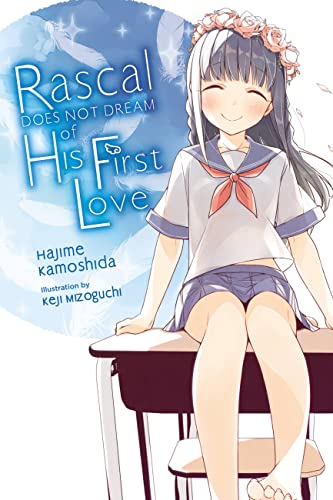
Rascal Does Not Dream of His First Love

May 10, 2022 by Sean Gaffney

By Hajime Kamoshida and Keji Mizoguchi. Released in Japan as “Seishun Buta Yarou wa Hatsukoi Shoujo no Yume wo Minai” by Dengeki Bunko. Released in North America by Yen On. Translated by Andrew Cunningham.

One of the things I like best about this series, which sets it apart from many of its contemporaries, is its use of short, quick sentences. The book reads fast, with dense paragraphs kept to a bare minimum and most of its page count being dialogue or inner monologue of some sort. However, this does not mean that it sacrifices any emotional impact – in fact, in many ways it’s heightened. The start of this book was always going to be a killer, and the prose makes it even more so. The sheer despair that Sakuta is feeling, the grief and rage that Mai’s mother and Nodoka have as they blame him for her death and cry out as to why it happened, it’s absolutely visceral and raw. Even knowing that this is not going to be permanent, that Mai will not remain dead (a series does not kill off its main draw), this is still a painful read. It gets better. But at some cost.

When we last left our heroes, Mai had just been hit by a truck. Sadly, she is not reincarnated in a fantasy world, but is simply dead. This shatters Sakuta, and things are not helped by the fact that a superstar actress died in order to save the life of her ordinary boyfriend – most of Japanese media is out to get him. refusing to accept Mai’s death, he returns once more to the beachfront we’ve seen in most other books in this series, and finds the older Shouko there once more. She reminds him of what almost everyone has experienced so far – Adolescence Syndrome – and that this might actually be a future we don’t want to see, rather than the present. But can Sakuta return to his “present” even though he’s already there? Will anyone notice him? And even if he can stop Mai from getting killed, who’s to stop HIM from dying?

I do wonder if there’s a fanfic out there showing what happened in that bad future if Sakuta couldn’t fix it, because the implication is there is no way the media would allow him to survive. Sakuta’s grief infuses over half of this volume, making it by far the least funny of the books to date, but that’s fine, you don’t want laughs here. When they come later, they’re as much a relief for Sakuta as they are for the reader. It’s also nice to see Mai reminding us that she is quite a sweet and loving partner, to the point where Sakuta has to actually find ways to upset her in order to have her be cool and menacing towards him (his professed fetish). And then there’s Shouko, whose life and death also rides on this book. The ending may be a bit sappy and unrealistic, but given the nature of the series, realism is not what I want. That said, it’s VERY abrupt – you’re waiting for another epilogue.

It’ll be interesting to see where we go from here, with the main backstory plotlines pretty much resolved. The next volume promises a return to Kaede’s attempts to go to school. Till then, please enjoy this cry of grief from the heart, and be thankful it all ended well.

Filed Under: rascal does not dream, REVIEWS

Rascal Does Not Dream of a Dreaming Girl

December 6, 2021 by Sean Gaffney

By Hajime Kamoshida and Keji Mizoguchi. Released in Japan as “Seishun Buta Yarou wa Yumemiru Shoujo no Yume wo Minai” by Dengeki Bunko. Released in North America by Yen On. Translated by Andrew Cunningham.

In my review of the last volume in this series, I mentioned I wasn’t aware of what happened in the next two books beyond it being sad. I’ll admit: I was lying. Generally these days, if you are following a series in any capacity on the internet, and the anime has already come out, there is no real way to avoid being spoiled. I didn’t have the main story beats of this book spoiled to me, but I knew what the last five pages would be, and so they are. That said, let’s not talk about those, let’s instead discuss the previous 250 or so pages, in which we find that Sakuta’s own adolescence syndrome has a very different cause from what he (and the reader) thought, learn exactly what’s going on with Shouko, and discover that it’s still hard to say you’re different from Bakemonogatari or Oregairu when you decide the best way for the hero to fix things is to sacrifice himself to save the girl.

Sakuta’s apartment is getting a bit crowded. Kaede is back, though with her “original” personality, and is struggling to catch up with the two years she’s lost. College-age Shouko is there, being very mysterious and Kasumi Tendo-ish. And Mai stays over once as well, because frankly the situation screams “my boyfriend is cheating on me with an older woman who’s also a middle-school student”, and who among us hasn’t felt agitated when that happened to them? The drama starts then Sakuta discovers that Shouko is back in the hospital – and getting worse. She has an old elementary school assignment about dreams for the future she never completed, as “die” would upset the teachers. Now it’s mysteriously being filled out… and the details seem to match up with college-age Shouko very well. Sakuta is concerned about the “get married’ part, though…

One of the more interesting things about this series is that it has all the wacky misunderstandings that harem anime usually has, but without any of the actual misunderstandings themselves. Mai and Sakuta are simply too sympatico with each other to really believe that there’s cheating or lying going on. Indeed, the fact that they’re so in tune with each other is what leads up to the tragedy in the final pages. Other than that, the most affecting part of the book for me may not have been the ending but everything leading up to it, as Sakuta drifts through school looking like a man who’s about to die. When even Kamisato is deeply concerned with him, in her own “drop dead” way, you know things are bad. And Rio and Mai’s scenes are even worse. Everyone seems to know what’s going to happen, but they also know that talking Sakuta out of this is next to impossible. As indeed it proves to be.

So what’s next? Well, if this were the movie, we’d only be halfway done. But it’s a book, so we’ve got to wait a few months. Rest assured I doubt it will kill off a main character, but I’m not as optimistic about its dreaming girl. Till then, enjoy an emotional gut-wrencher.

Filed Under: rascal does not dream, REVIEWS

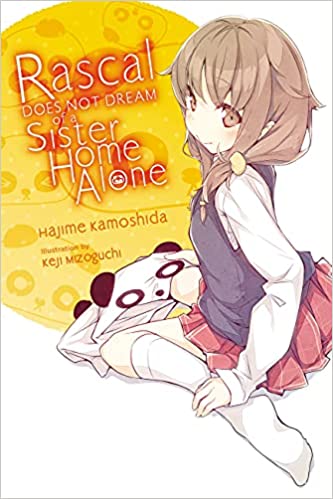
Rascal Does Not Dream of a Sister Home Alone

August 8, 2021 by Sean Gaffney

By Hajime Kamoshida and Keji Mizoguchi. Released in Japan as “Seishun Buta Yarou wa Orusuban Imouto no Yume wo Minai” by Dengeki Bunko. Released in North America by Yen On. Translated by Andrew Cunningham.

The first four books of the series had its main character, Sakuta, helping out a different girl each time who had what he termed “Adolescence Syndrome”, where an inner issue they were suffering from showed itself in an exterior way. Mai was turning invisible, Tomoe was time looping, Rio twinned herself, and Nodoka bodyswapped herself with her sister. Through all this, though, we were also learning of Sakuta’s own past – both his encounter with a high school girl named Shouko (who he rediscovers but not in high school) and his sister, whose reaction to bullying, and his frustration and reaction to her own pain, is what jumpstarted all of this. Now, at last, in this 5th book, we finally get to focus on Kaede. She’s more determined than ever to leave the apartment and go to school, to the point where she has a list of tasks in her diary. Together with Sakuta, can she succeed? Well, yes, but that’s not necessarily a wonderful thing for all involved.

Much of this book is about moving forward and trying to take a next step. For Sakuta that means actually applying himself. Mai, despite her celebrity, is going to college, and Sakuta wants to follow her there a year later. For Kaede, this means a whole lot of things. Just going to school is fraught with tensions, given that whenever she sees someone she doesn’t know, especially someone wearing her school uniform, she has a panic attack. She’s also re-exhibiting signs of her adolescence syndrome, which is definitely not a good thing. (Given that when this happened before, the authorities thought her mother abused her, I worried they might zero in on Sakuta, but thankfully this does not go there.) And there’s another, even larger issue: Kaede, as we discover here, has no memories from before two years ago. Given the way amnesia works, there’s a danger that she might lose herself no matter what the outcome.

There is a large chunk of this book that is very heartwarming. Seeing Kaede’s determination is great, trying to take small steps despite her terror. Sakuta strikes exactly the right notes, knowing when to push and when to retreat. The scenes at the zoo were magical, and brought a smile to your face… which of course makes the last fifth of the book all the more tear-jerking. It’s startling to see not just Kaede but also Sakuta re-develop symptoms from adolescence syndrome, and of course it happens when Mai is out of the city and can’t help him. Fortunately, he has Shouko – the older version – to help him once again. That said, she’s not Mai, and I wish that Mai had been there to talk him out of it. Mai remains the best part of this series. In any case, I’m not sure where Sakuta’s family relationship will go from here, but hopefully his romantic relationships will survive the cliffhanger. They probably will, she’s eminently sensible.

I joked on Twitter that the next two books would be light and fluffy – trust me, I saw the movie reviews, and while I don’t know what’s going to happen I know it’s a tear jerker. But so is this, in its own way, as we take a look at what makes up a person’s identity, and how fragile that can really be.

Filed Under: rascal does not dream, REVIEWS

Rascal Does Not Dream of Siscon Idol

April 6, 2021 by Sean Gaffney

By Hajime Kamoshida and Keji Mizoguchi. Released in Japan as “Seishun Buta Yarou wa Siscon Idol no Yume wo Minai” by Dengeki Bunko. Released in North America by Yen On. Translated by Andrew Cunningham.

Last time I said that the book felt a bit quieter than the first two, and that goes double for this one, which I definitely enjoyed but which feels a little bit insubstantial compared to the previous books. Part of this could be that there does not seem to be any sort of danger of things being catastrophic if things don’t work out as with previous books. Nodoka’s issues do matter, don’t get me wrong, and I feel for her, but you are 100% not surprised at the solution to this particular adolescence syndrome, and honestly I feel it might have been able to be solved even earlier. That said, having it drag on does help to really hammer home the crux of those issues, and the fact that if there’s going to be any changing and growing being done, it’s going to have to be on Nodoka’s side – Mai, despite being as blunt as her boyfriend at times, is doing just fine.

As with most of this series, the book picks up where the previous one left off, with Sakuta confronted with a Mai who isn’t. When “Nodoka” also shows up, clearly with Mai’s personality, it rapidly becomes clear what’s happened. The issues involved are fairly straightforward – Nodoka and Mai have different mothers, and Nodoka’s mother wants her to be a top idol just as Mai is a top actress, which has led to stress. So Nodoka has run away and swapped bodies. Turning to Mai for comfort is not really working out for her, as Mai is not a comfort sort of girl. Plus this means she has to hang around with Sakuta all the time, who is… well, see the previous three books. She’s astonished Mai is going out with him. Unfortunately, as with prior “syndromes”, knowing the issues doesn’t solve the problem. What’s worse, they each have to take on each other’s career, and, well, one of them is much better at it than the other.

This book emphasizes that family is not something you can narrow down to “I love them” or “I hate them” in absolute terms, and that’s the book’s highlight, as I think it does a good job showing that. Midway through, Sakuta has a very awkward dinner with his father, and we get to see exactly why he feels rather ambiguous about him. At the same time, he’s also searching for thoughts on what being a parent is like to help Nodoka, and gets good, if oblique, advice. Nodoka, fitting with the “annoying little sister” box she sort of falls into, can be sympathetic, especially watching Mai in Nodoka’s body being an even better idol than she normally is, but I 100% agree with Sakuta that her over the top reaction of walking into the ocean to “drown” herself, knowing he’ll stop her, is really irritating. Fortunately, the resolution is cute. That said, one thing this book does do that won’t snap back is Mai and Sakuta’s relationship, which is now public. Fortunately, Mai is very good at damage control.

The next book’s title implies we’re going to focus on Sakuta’s own little sister next time, as she seems to be wanting to return to school… maybe. I get the feeling it will be a bit less relaxed than this book. Still, this is a decent enough volume, especially if you love Sakuta simply saying whatever he’s thinking at the time, no matter how bad it will be for him.

Filed Under: rascal does not dream, REVIEWS

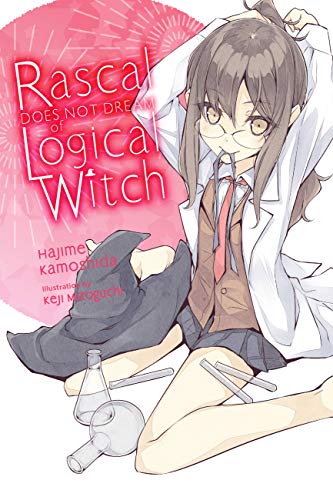
Rascal Does Not Dream of Logical Witch

December 27, 2020 by Sean Gaffney

By Hajime Kamoshida and Keji Mizoguchi. Released in Japan as “Seishun Buta Yarou wa Logical Witch no Yume wo Minai” by Dengeki Bunko. Released in North America by Yen On. Translated by Andrew Cunningham.

The first two books in this series were not exactly loud and obnoxious, but they were fairly action-packed and things happened in them. By contrast, the third book, focusing on Sakuta’s friend Rio, is a quiet, muted affair, which fits well with the nature of her Adolescence Syndrome. Indeed, hers is the most relatable one that we’ve seen to date, dealing with issues that would affect a number of other girls her age. It also makes a lot of sense that, despite literally being split into two, both Rios are not all that far apart – this is not an example of an evil twin here, and even the things that the non-glasses wearing Rio do are something Rio started before the split. As such, Sakuta’s role here is mostly to listen, and occasionally yell, because Rio has possibly read too much science fiction and thinks the only way that this can end is if one of her two selves dies.

There are, of course, other things going on in Sakuta’s life besides Rio’s cloning blues. Mai is back to work with a vengeance, meaning that she is not really available to date him all that much – and when the two of them are spotted, she’s reminded by her agency that the fans would go ballistic if they heard she was dating a guy, which… well, yes, is true. What’s more, the girl he fell in love with from the past is still in the present, only she’s 12, and we’re STILL not sure what’s going on there. We do find out that she has a heart condition, which I expect will be fairly important and/or tragic later on. His sister is still a shut-in and acting much younger than her age. His best friend’s girlfriend still despises him, though she also proves to be a major help here as well. And what’s this idol group that we hear about?

But yes, for the most part curing Rio merely involves being there for Rio, learning about her past as an early bloomer, and her somewhat alarming present posting salacious selfies to an Instagram-ish site. There’s a somewhat awkward explanation for this from Sakuta’s annoying reporter friend, but the cycle of elation and loathing is one that feels a bit TOO real for a series that tends to rely on supernatural phenomenon that are secretly psychological damage. And of course there’s also her crush on Yuuma, which is awkward, as I suspect nearly everyone reading this or watching the anime would rather that Yuuma be dating Rio. But… Yuuma is not in love with Rio, even though they’re best friends. We don’t hear it (i.e. Sakuta doesn’t), but it’s implied she confessed to him at the end and was rejected. And, fortunately, no Rios were killed in the making of this book. It is a nice, bittersweet and calm ending.

Well, aside from the cliffhanger, which seems to imply that a bodyswap is the next crisis we’ll face. Till then, this is one of the better written light novels I’ve seen for some time, assuming you can put up with Sakuta’s personality. Well, he is a rascal, after all.

Filed Under: rascal does not dream, REVIEWS

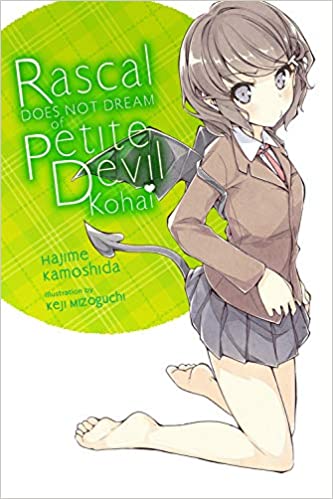
Rascal Does Not Dream of Petite Devil Kohai

September 14, 2020 by Sean Gaffney

By Hajime Kamoshida and Keji Mizoguchi. Released in Japan as “Seishun Buta Yarou wa Chibi Devil Kohai no Yume wo Minai” by Dengeki Bunko. Released in North America by Yen On. Translated by Andrew Cunningham.

This book had several hills to climb in order to win me over, to be honest. I enjoyed the romance in the first volume, and was not fond of it being torpedoed right off the bat in the cliffhanger. The heroine of this book, Tomoe, did not make all that good an impression on me in the first one. Time loop stories make me vaguely uncomfortable, hitting a certain level of “I get embarrassed reading this” in me. And fake dating stories also rub me the wrong way in actual books, though oddly I’m fine with it in fanfiction, mostly as it almost always leads to real dating. That said, it’s a testament to the writing skill of the author that I was able to enjoy the book regardless, and most of my objections stated above were put to rest fairly easily. (The one heroine per book thing is something I fear I will have to get used to.)

The time loop is helped by it only being relevant at the start and end of the book. Sakuta is caught in a loop of the same day… for three days, and then, when it breaks, he’s basically in the worst possible situation. This is due to the heroine of this book, Tomoe, who is not a literal devil but is a stand in for “Laplace’s Demon”. We saw her in book one kicking Sakuta’s butt (and getting kicked in the butt in return, something that Sakuta, being who he is, brings up over and over again in this book), and now she has a problem, one that she tried to get Sakuta to help with once the time loop breaks. In order to fend off the attention of another guy, they have to pretend to date for the rest of the semester. Of course, Sakuta is in love with Mai, which makes things just a bit difficult. And that’s not even getting into Tomoe hitting the “fanfiction” part of the trope and wanting to turn her fake dating real.

As with the first book, the main reason to read the series is Sakuta, who is both a very nice , upstanding guy and a completely terrible lech who just has no filter at all. This book provides a different heroine to react to this, and while Mai was basically doing her best Senjogahara impersonation, Tomoe is the sort of blush, stomp her feet and say “Geez!” at his antics. Tomoe is far more likeable in this book when she gets the entire novel to sell herself, and I really enjoyed her backstory, which also tied into the reason why Sakuta, who is still trying to tell Mai he loves her, agrees to do this at all. There are hints of future plot developments – the third book seems to feature Rio, and there’s some setup for that here, namely her not-so-hidden crush on her friend Yuuma, and there’s another shocking cliffhanger ending that will no doubt play out in future books somehow. And there’s a lot of fun humor, mostly because Sakuta exists.

To sum up, I was wary of this book, but it ended up being a lot of fun. I am definitely getting the next in the series.

Filed Under: rascal does not dream, REVIEWS

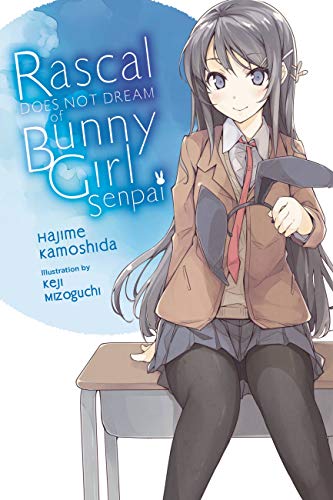
Rascal Does Not Dream of Bunny Girl Senpai

May 1, 2020 by Sean Gaffney

By Hajime Kamoshida and Keji Mizoguchi. Released in Japan as “Seishun Buta Yarou wa Bunny Girl Senpai no Yume wo Minai” by Dengeki Bunko. Released in North America by Yen On. Translated by Andrew Cunningham.

(This review is based on a review copy provided by the publisher.)

A lot of times these days, licensed light novels tend to fall into two different categories: “we’re licensing this because the Japanese publisher knows there’s an anime in the works”, and “the anime has come and gone but this did not immediately vanish into obscurity the moment the anime ended so let’s take a flyer on it”. Rascal Does Not Dream of Bunny Girl Senpai seems to be the latter – it started Japanese publication in 2014, which makes it quite old by licensing standards. I haven’t seen the anime (yes, try to contain your surprise) but I’d certainly heard of it, with it seeming to occupy that odd position of both “high school romcom” and “vaguely supernatural things happen” that we see in Haruhi Suzumiya and others. That said, I did notice (and tweeted about) a major different I spotted: unlike all those novels with snarky first-person narrators whose inner thoughts we are buried in, Aobuta (its Japanese nickname) is third person. It makes a difference, believe it or not.

Our hero apparently already had a boatload’s worth of light novel events happen to him before the series began: Sakuta has a past, which has left him with huge gashes across his chest, a little sister who’s a shut-in, and a reputation at school that means he has precisely two friends. One day at the library he is startled to find Mai, an upperclassman of his and a famous actress… well, actress on hiatus… dressed as a bunny girl and walking around. No one pays any notice to her – but Sakuta can see her, much to her shock and dismay. As they gradually get closer he discovers that more and more people simply don’t notice that Mai exists, and it’s becoming something of a problem. Since he has experience of this thanks to his sister’s history of being bullied (which also involved mysterious supernatural consequences), he chooses to help her out. It helps that she’s really hot. It doesn’t help that he will say absolutely anything that comes out of his brain with no filter.

As I said, this is in third person, so while we can hear about Sakuta’s thoughts and decisions, we don’t get his specific thought process. This means that things that others, such as Kyon or Hachiman, might think to themselves for the benefit of the reader but not bother to say aloud he says aloud. This might actually make him more attractive to Mai, who is used to people not knowing how to talk to her and thus not talking to her at all. The relationship between the two is the best part of the book. I also like how he expects her, when they first meet, to behave like Senjogahara – the book is aware of its influences. Mai is a bit less sharp than that, but still falls into that basic type. In the second half of the book, as things turn more serious and Mai’s “no one can see me” condition turns potentially fatal, the two have a warmly growing bond that I want to see more of.

The book is part of a series, which not only makes for an annoying cliffhanger (expect a Groundhog Day loop next time) but also sometimes means things clearly meant for future novels are introduced here, no matter how awkwardly they may fit in. If Tomoe is the subject of the next book (as the title suggests), she’s going to have to be more interesting than she was here to win me over. (That said, she clearly wins out over the girlfriend of our hero’s best friend, who seems to be designed to be a Hate Sink so that the fandom can go after her and leave the rest of the cast alone.) In the end, I found Rascal Does Not Dream 1 (the titles will be changing with each book) to be an excellent stand-alone romance that seems to be a harem-ey ongoing series. As such, we’ll see what happens in the second book.

Filed Under: rascal does not dream, REVIEWS

 | Log in
Copyright © 2010 Manga Bookshelf | Powered by WordPress & the Genesis Framework