• Skip to primary navigation
  • Skip to main content
  • Skip to primary sidebar
  • Home
  • About Us
    • Privacy Policy
    • Comment Policy
    • Disclosures & Disclaimers
  • Resources
    • Links, Essays & Articles
    • Fandomology!
    • CLAMP Directory
    • BlogRoll
  • Features & Columns
    • 3 Things Thursday
    • Adventures in the Key of Shoujo
    • Bit & Blips (game reviews)
    • BL BOOKRACK
    • Bookshelf Briefs
    • Bringing the Drama
    • Comic Conversion
    • Fanservice Friday
    • Going Digital
    • It Came From the Sinosphere
    • License This!
    • Magazine no Mori
    • My Week in Manga
    • OFF THE SHELF
    • Not By Manga Alone
    • PICK OF THE WEEK
    • Subtitles & Sensibility
    • Weekly Shonen Jump Recaps
  • Manga Moveable Feast
    • MMF Full Archive
    • Yun Kouga
    • CLAMP
    • Shojo Beat
    • Osamu Tezuka
    • Sailor Moon
    • Fruits Basket
    • Takehiko Inoue
    • Wild Adapter
    • One Piece
    • After School Nightmare
    • Karakuri Odette
    • Paradise Kiss
    • The Color Trilogy
    • To Terra…
    • Sexy Voice & Robo
  • Browse by Author
    • Sean Gaffney
    • Anna Neatrour
    • Michelle Smith
    • Katherine Dacey
    • MJ
    • Brigid Alverson
    • Travis Anderson
    • Phillip Anthony
    • Derek Bown
    • Jaci Dahlvang
    • Angela Eastman
    • Erica Friedman
    • Sara K.
    • Megan Purdy
    • Emily Snodgrass
    • Nancy Thistlethwaite
    • Eva Volin
    • David Welsh
  • MB Blogs
    • A Case Suitable For Treatment
    • Experiments in Manga
    • MangaBlog
    • The Manga Critic
    • Manga Report
    • Soliloquy in Blue
    • Manga Curmudgeon (archive)

Manga Bookshelf

Discussion, Resources, Roundtables, & Reviews

Books

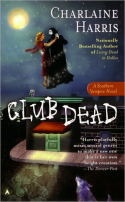
Club Dead by Charlaine Harris

October 8, 2011 by Michelle Smith

From the back cover:
There’s only one vampire Sookie Stackhouse is involved with (at least voluntarily) and that’s Bill. But recently he’s been a little distant—in another state, distant. His sinister and sexy boss Eric has an idea where to find him. Next thing Sookie knows, she is off to Jackson, Mississippi to mingle with the under-underworld at Club Dead. It’s a dangerous little haunt where the elitist vampire society can go to chill out and suck down some type O. But when Sookie finally finds Bill—caught in an act of serious betrayal—she’s not sure whether to save him… or sharpen some stakes.

Review:
It’s been more than a year since I promised “Club Dead, coming soon!” at the end of my review of Living Dead in Dallas. I didn’t forget the pledge; it just took me that long to be in the mood for another round of salacious vampire shenanigans. But what better time to revisit the series than Halloween Week? This one was such an improvement over the last, however, that I’m going to make a sincere effort to get caught up on the series.

Part of what makes Club Dead interesting is that there is so little Bill and when there is Bill, he’s wronging Sookie in ways that culminate with her disinviting him from her home. As the book begins, he is working on a top-secret assignment for “the queen of Louisiana” (there’s a lot of detail about the vampire hierarchy in this book) and tells Sookie he’s heading to Seattle to work on it. This turns out to be a lie, as she learns later that Bill is being held captive in Jackson and that he was preparing to pension her off and return to his vampire love, Lorena.

Despite the betrayal, Sookie agrees to help Eric (Bill’s superior, in a manner of speaking) find Bill and is matched up with a brawny werewolf named Alcide Herveaux, who can introduce her to the supernatural element in Jackson. Alcide’s got baggage of his own, so in addition to treading lightly around “the king of Mississippi” and the werewolves the king has hired to search for Bill’s girlfriend (thankfully, he never got her name), they’ve also got to avoid Alcide’s crazy ex, Debbie Pelt.

All of this is fairly entertaining—even if a large amount of the plot is contingent upon guys finding Sookie extremely hawt and wanting to boff her—but it did seem randomly strung-together at times. For example, after Bill is rescued the gang must next prevent the crucifixion of “Bubba” (Elvis in vamp form) and foil a convenience store robbery. I really liked the ending, though, and once again find myself hoping that Sookie will not forgive Bill’s transgressions, now weightier than ever before. Sure, it’s a little ridiculous how many guys are hot for her, but her steamy encounters with both Alcide and Eric are more fun to read than detailed sex scenes starring Bill. (The fact that Eric gets fleshed out a great deal is one of the best aspects of the book, actually.) Plus, Sookie’s reaction to these tempting guys is pretty amusing. “I was not pleased with my moral fiber!”

I find that I haven’t much to say about the book beyond this. It’s diverting and amusing and has even rekindled my curiosity about True Blood. It’s not fair to compare something like this against oh, say, Price and Prejudice, but for this particular genre, it exceeds expectations.

Filed Under: Books, Supernatural Tagged With: Charlaine Harris

2011 Summer Manga Bestsellers

September 29, 2011 by Matt Blind 4 Comments

Comparative Rankings Based on Consolidated Online Sales

last quarter’s charts
about the charts

The Quarterly chart is a bit different from the usual weekly post: There are five times as many volumes in the Manga Bestsellers (a full 2,500 volumes listed & ranked) and the Series/Property list is twice as long, with a top 100 listed & ranked. Secondary charts – New Releases, Preorders, Manhwa, and BL/Yaoi – are each a Top 50.

##

Manga Bestsellers

1. ↑1 (2) : Maximum Ride 4 – Yen Press, Apr 2011 [5,560.3] ::
2. ↑4 (6) : Black Butler 1 – Yen Press, Jan 2010 [5,142.8] ::
3. ↑75 (78) : Vampire Knight 12 – Viz Shojo Beat, Jun 2011 [5,089.7] ::
4. ↔0 (4) : Black Butler 5 – Yen Press, Apr 2011 [4,885.4] ::
5. ↓-4 (1) : Black Butler 4 – Yen Press, Jan 2011 [4,755.1] ::
6. ↑31 (37) : Naruto 51 – Viz Shonen Jump, Jun 2011 [4,748.4] ::
7. ↑113 (120) : Black Butler 6 – Yen Press, Jul 2011 [4,738.2] ::
8. ↑63 (71) : Sailor Moon 1 – Kodansha Comics, Sep 2011 [4,504.1] ::
9. ↓-1 (8) : Maximum Ride 1 – Yen Press, Jan 2009 [4,416.0] ::
10. ↓-3 (7) : Black Butler 3 – Yen Press, Oct 2010 [4,312.2] ::

[more]

Top Imprints
Number of volumes ranking in the Top 2500:

Viz Shonen Jump 360
Viz Shojo Beat 325
Yen Press 254
Tokyopop 197
Del Rey 195
Dark Horse 142
Viz Shonen Jump Advanced 127
Viz 110
DMP Juné 95
Viz Shonen Sunday 89

[more]

Series/Property

1. ↔0 (1) : Black Butler – Yen Press [11,875.2] ::
2. ↑1 (3) : Naruto – Viz Shonen Jump [11,744.2] ::
3. ↓-1 (2) : Maximum Ride – Yen Press [10,793.2] ::
4. ↑2 (6) : Vampire Knight – Viz Shojo Beat [9,405.1] ::
5. ↑27 (32) : Sailor Moon – Kodansha Comics [9,305.1] ::
6. ↑3 (9) : Ouran High School Host Club – Viz Shojo Beat [8,768.3] ::
7. ↑13 (20) : Negima! – Del Rey [8,263.6] ::
8. ↓-1 (7) : Black Bird – Viz Shojo Beat [8,102.7] ::
9. ↓-1 (8) : Bleach – Viz Shonen Jump [7,379.3] ::
10. ↑4 (14) : Pokemon – Vizkids [7,237.7] ::

[more]

New Releases
(Titles releasing/released This Month & Last)

7. ↑113 (120) : Black Butler 6 – Yen Press, Jul 2011 [4,738.2] ::
8. ↑63 (71) : Sailor Moon 1 – Kodansha Comics, Sep 2011 [4,504.1] ::
12. ↑201 (213) : Black Bird 9 – Viz Shojo Beat, Jul 2011 [3,957.7] ::
13. ↑288 (301) : Negima! 30 – Kodansha Comics, Jul 2011 [3,917.0] ::
14. ↑97 (111) : Sailor Moon Codename: Sailor V 1 – Kodansha Comics, Sep 2011 [3,916.5] ::
22. ↑108 (130) : Warriors SkyClan & The Stranger 1 – HC/Tokyopop, Jul 2011 [3,586.3] ::
23. ↑151 (174) : Highschool of the Dead 3 – Yen Press, Jul 2011 [3,245.9] ::
30. ↑182 (212) : Dance in the Vampire Bund 10 – Seven Seas, Jul 2011 [2,986.2] ::
32. ↑338 (370) : Pandora Hearts 6 – Yen Press, Jul 2011 [2,935.7] ::
33. ↑216 (249) : Pokemon Black & White 2 – Vizkids, Jul 2011 [2,931.3] ::

[more]

Preorders

29. ↑129 (158) : Sailor Moon 2 – Kodansha Comics, Nov 2011 [3,095.6] ::
71. ↑new (0) : Sailor Moon 4 – Kodansha Comics, Mar 2012 [1,905.1] ::
81. ↑495 (576) : Sailor Moon 3 – Kodansha Comics, Jan 2012 [1,818.3] ::
86. ↑151 (237) : Sailor Moon Codename: Sailor V 2 – Kodansha Comics, Nov 2011 [1,798.2] ::
138. ↑new (0) : Finder Series 5 Truth in the View Finder – DMP Juné, Dec 2011 [1,321.0] ::
245. ↑676 (921) : Negima! 32 – Kodansha Comics, Nov 2011 [798.7] ::
268. ↑634 (902) : Vampire Knight 13 – Viz Shojo Beat, Oct 2011 [729.9] ::
297. ↑955 (1252) : Berserk 35 – Dark Horse, Oct 2011 [672.5] ::
355. ↑676 (1031) : Black Butler 7 – Yen Press, Oct 2011 [555.1] ::
365. ↑1517 (1882) : xxxHolic 18 – Kodansha Comics, Dec 2011 [542.2] ::

[more]

Manhwa

150. ↑43 (193) : Bride of the Water God 8 – Dark Horse, May 2011 [1,183.2] ::
339. ↓-249 (90) : Priest vols 1-3 collection – Tokyopop, Jun 2011 [598.7] ::
386. ↓-151 (235) : March Story 1 – Viz Signature, Oct 2010 [513.5] ::
479. ↑52 (531) : Jack Frost 4 – Yen Press, Dec 2010 [393.6] ::
498. ↓-187 (311) : Bride of the Water God 7 – Dark Horse, Feb 2011 [378.7] ::
658. ↓-343 (315) : March Story 2 – Viz Signature, Apr 2011 [259.2] ::
770. ↓-89 (681) : Jack Frost 3 – Yen Press, Jul 2010 [200.7] ::
788. ↑122 (910) : Bride of the Water God 6 – Dark Horse, Aug 2010 [191.9] ::
797. ↑162 (959) : Laon 3 – Yen Press, Sep 2010 [187.9] ::
804. ↑new (0) : Black God 13 – Yen Press, Jul 2011 [184.6] ::

[more]

BL/Yaoi

85. ↑748 (833) : Maelstrom (Kindle ebook) 1 – Yaoi Press, Jun 2011 [1,806.4] ::
90. ↑26 (116) : Finder Series 4 Prisoner in the View Finder – DMP Juné, Aug 2011 [1,732.2] ::
105. ↓-62 (43) : Finder Series 3 One Wing in the View Finder – DMP Juné, Mar 2011 [1,598.5] ::
138. ↑new (0) : Finder Series 5 Truth in the View Finder – DMP Juné, Dec 2011 [1,321.0] ::
185. ↑new (0) : Maelstrom (Kindle ebook) 3 – Yaoi Press, Jul 2011 [984.3] ::
216. ↓-93 (123) : Caged Slave (novel) – DMP Juné, May 2008 [881.8] ::
226. ↑new (0) : Maelstrom (Kindle ebook) 4 – Yaoi Press, Jul 2011 [852.3] ::
242. ↑53 (295) : The Tyrant Falls in Love 3 – DMP Juné, May 2011 [814.3] ::
376. ↑189 (565) : First Stage of Love – DMP Juné, Apr 2008 [531.8] ::
418. ↑new (0) : About Love – DMP Juné, Nov 2011 [470.9] ::

[more]

Filed Under: Books Tagged With: Manga Bestsellers

Bookshelf Briefs pointer

September 22, 2011 by Sean Gaffney

I knew I forgot something this week. For those who read my reviews by category (like me), I have reviews of Kimi ni Todoke 10 and Velveteen & Mandala in this week’s Bookshelf Briefs.

Filed Under: Books

I Am Not a Serial Killer by Dan Wells

September 21, 2011 by Michelle Smith

From the back cover:
John Wayne Cleaver is dangerous, and he knows it. He’s spent his life doing his best not to live up to his potential.

He’s obsessed with serial killers but really doesn’t want to become one. So for his own sake, and the safety of those around him, he lives by rigid rules he’s written for himself, practicing normal life as if it were a private religion that could save him from damnation.

Dead bodies are normal to John. He likes them, actually. They don’t demand or expect the empathy he’s unable to offer. Perhaps that’s what gives him the objectivity to recognize that there’s something different about the body the police have just found behind the Wash-n-Dry Laundromat—and to appreciate what that difference means.

Now, for the first time, John has to confront a danger outside himself, a threat he can’t control, a menace to everything and everyone he would love, if only he could.

Review:
It’s hard to resist a book with a title like I Am Not a Serial Killer, at least for me, and when I picked this up I figured I was in for something akin to “Dexter: The Early Years.” But that was before Wells pulled a genre switcheroo.

Fifteen-year-old John Wayne Cleaver is a markedly self-aware sociopath, in that he is fully cognizant of his lack of empathy and bizzare compulsions and narrates about them in an articulate manner that I wouldn’t be surprised to learn is uncommon in others of his kind. He’s seeing a therapist and trying to keep “the monster” at bay by following a series of strict, self-imposed rules (a what-to-avoid list gleaned from intensive serial killer research) designed to keep him from going down a dangerous path. When mutilated bodies start showing up in his small town, John is excited and fascinated, but the more he learns about the crimes and the fact that the killer never intends to stop, the more he comes to realize that he may be the only person who can prevent the deaths of more innocents by letting “the monster” out to kill the perpetrator.

Soon it becomes clear that John is dealing with something supernatural. Ordinarily, it would bug me when a “real world” mystery suddenly veers into the supernatural for its resolution, but it actually kind of works for me here. John is such a broken person that he can’t understand why the culprit is doing certain things, and eventually realizes that even a demon is more capable of genuine human emotion than he is. This ties in some with the depiction of John’s family life—an absentee father who never follows through with promises and a mother who loves with desperate urgency to try to make up for her ex-husband’s shortcomings—since one of the most important moments of the book occurs when John is finally able to achieve a bit of real understanding with his mom instead of just faking it.

I guess the book is somewhat gross. None of the descriptions of the crimes bothered me, but the mortuary scenes—John’s mom and aunt run a funeral home and allow him to assist sometimes—are clinical and grim. They made me think of my late grandmother and made me want to call my parents. That said, I appreciate how familiarity with the mortuary layout and equipment pays off later in the story.

Ultimately, I Am Not a Serial Killer is pretty interesting. Though I’m not sure I buy the extent of John’s self-knowledge, he’s still an intriguing protagonist, and I thought Wells did a decent job of making him simultaneously sympathetic and abnormal. When I picked up the book I didn’t realize it was the first of a trilogy, but it was a pleasant surprise. Look for a review of book two, Mr. Monster, in the near future.

Filed Under: Books, Supernatural, Suspense, YA Tagged With: Dan Wells

Winter by John Marsden

September 19, 2011 by Michelle Smith

From the back cover:
For twelve years, Winter has been haunted. Her memories will not leave her alone. There are secrets she does not remember—but needs to know.

The time has come for her to go back home.

Every journey starts with a single step. But sometimes if you want to step into the future, you must first step into the past…

Review:
After reading Checkers, So Much to Tell You, and Take My Word for It, I realized that John Marsden has a certain… preferred pattern. In each case, something profoundly traumatic has happened to the (Australian) teenaged heroine and the slim book consists of her first-person narrative as she attempts to work past whatever it was, while gradually divulging enough tidbits to enable readers to figure out what happened. In many ways, Winter is very similar, though in this case, the titular heroine begins the book as in the dark as anyone else.

It’s been twelve years since sixteen-year-old Winter De Salis has set foot on the family estate of Warriewood. Both of her parents died when she was four, but she wasn’t told much about them by the relatives with whom she spent the intervening years. Now old enough to leave school and return home, that’s exactly what determined Winter does, and makes short work of dispatching the dishonest caretakers of her property while questioning anyone who might provide some useful information concerning her parents’ deaths. After making friends with a girl around her age, enjoying a bit of romance, and uncovering the family secret, she is eventually able to face her future without obsessing over the past.

Despite the structural similarities to other Marsden books, Winter doesn’t much feel like them. Its setting is more rural, for one thing, so there are sections like the one describing the cathartic process (for Winter) of removing unwanted blackberries from the property, or the depiction of her first attempt to take care of the cattle by herself. Winter is a unique protagonist, and I love how Marsden shows her capacity for being difficult—when you’re underage and you want something strongly, sometimes the only weapon in your arsenal is being stubborn—while simultaneously showing that she really is a good kid. She’s grateful for kindness and not so wounded that she can’t make new friends, and posits at one point that perhaps the early death of her famously strong mother is what has enabled her to become so strong herself. It’s a pretty devastating truth that she learns, but it’s believable that she is able to move on from it and not dwell too long on questions that will never have answers.

My only minor quibble is that the romance feels somewhat superfluous; granted, it plays an important role in demonstrating Winter’s progression from someone fixated on the past to someone anticipating the future, but I would’ve liked the boy (Matt Kennedy) to be a more well-rounded character. I’d almost wish for a sequel—perhaps a story set twenty years later with Winter and Matt as parents to a new protagonist—but I suppose that would require something traumatic to happen to their offspring, and we wouldn’t want that!

Filed Under: Books Tagged With: John Marsden

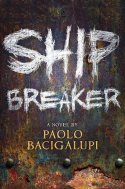
Ship Breaker by Paolo Bacigalupi

September 9, 2011 by Michelle Smith

From the back cover:
In America’s Gulf Coast region, where grounded oil tankers are being broken down for parts, Nailer, a teenage boy, works the light crew, scavenging for copper wiring just to make quota—and hopefully live to see another day. But when, by luck or by chance, he discovers an exquisite ship beached during a recent hurricane, Nailer faces the most important decision of his life: strip the ship for all it’s worth or rescue its lone survivor, a beautiful and wealthy girl who could lead him to a better life…

In this powerful novel, award-winning author Paolo Bacigalupi delivers a thrilling, fast-paced adventure set in a vivid and raw, uncertain future.

Review:
Ship Breaker won the Printz Award this year, and I must say I think it deserved it! It took a little while to grow on me, but I liked it a lot by the end.

At some unspecified point in the future, a community of people has sprung up on Bright Sands Beach (on the Gulf Coast) where the best work to be found is on crews breaking down giant, rusting wrecks of oil tankers. Everyone toils away to meet their quota, all the while dreaming of the lucky strike—oil or other scarce commodities—that could make them rich. Nailer Lopez is fifteen years old and works on the light crew, where his job is scuttling through pipes to scavenge copper, aluminum, and nickel.

After a near-death experience during which his wits and luck save him from drowning in a pocket of oil, Nailer is christened Lucky Boy by his friends. This moniker seems apt when he and his friend Pima discover a valuable wreck left behind in the wake of a hurricane. They set to work stripping it but are stunned to discover a survivor—a very wealthy girl named Nita Chaudhury, who promises her father will reward them for saving her life. When Nailer’s drunken and dangerous father Richard discovers the wreck, however, he opts to trade Nita to her father’s enemies, which forces Nailer to make a whole bunch of difficult decisions.

When he and Pima find the wreck, she urges Nailer to be smart about it. In her eyes, “smart” seems to involve profiting enough to obtain a position of power on Bright Sands Beach. Nailer is aiming higher, however, and makes Nita promise to take him and Pima away and into a better life. The choices he makes from that point on are partly in pursuit of this goal, but also out of a growing sense of loyalty towards Nita, who proves herself capable and quickly loses her prejudices towards those less cultured than she. There are many times where he could have walked away and abandoned Nita to her fate but doesn’t, and ultimately, his concern for her works out in his own favor.

The story ranges over a few different settings, from the beach to the drowned docks of “Orleans” to a clipper ship crewed by people loyal to Nita’s father. As a big fan of the Hornblower series, I liked the ship the best. I hadn’t realized how much I missed depictions of naval battles until the awesome sequence wherein Nailer’s familiarity with the coastline results in a surprise advantage over a superior foe. In fact, the whole final sequence of the book was quite exciting, and makes me think this would make a good movie.

I also found it interesting that the main villain of the work is Nailer’s father, Richard, because Nailer harbors such conflicted feelings about him. He remembers the man his father used to be before his mother died, and though Richard’s now more likely to be high and abusive than relaxed and kind, Nailer feels obliged to care about him and give him chances to be a better person. After many disappointments, he finally realizes that Pima and her nurturing mother, Sadna, are his true family and is able to muster the strength to stop believing that his father is capable of turning over a new leaf at this point. Essentially, he’s a victim of domestic abuse who finally achieves the strength to say, “I’m not going to let you hurt me anymore.”

Lastly, Ship Breaker is commendable for its effortless portrayal of characters of many ethnicities. None of the lead characters is Caucasian. Their skin color is mentioned as part of their physical description, but doesn’t factor in to their relationships at all. Characters are judged purely based on their individual actions. If anything, the only real prejudice left in the world seems to be between the rich (or “swanks”) and the poor, but Nailer’s actions convince Nita, at least, of the errors of her ways, especially since he proves fully capable of functioning in her world if given half a chance.

Although initially a little frustrating—despite my love for dystopic YA, I still get a little frustrated with crappy situations that just seem to be getting crappier—Ship Breaker turns out to be a well-crafted and riveting tale.

Filed Under: Books, Sci-Fi, YA Tagged With: Paolo Bacigalupi, Printz Award

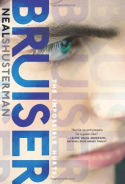
Bruiser by Neal Shusterman

August 30, 2011 by Michelle Smith

From the back cover:
Tennyson:
Don’t get me started on the Bruiser. He was voted “Most Likely to Get the Death Penalty” by the entire school. He’s the kid no one knows, no one talks to, and everyone hears disturbing rumors about. So why is my sister, Brontë, dating him? One of these days she’s going to take in the wrong stray dog, and it’s not going to end well.

Brontë:
My brother has no right to talk about Brewster that way—no right to threaten him. There’s a reason why Brewster can’t have friends—why he can’t care about too many people. Because when he cares about you, things start to happen. Impossible things that can’t be explained. I know, because they’re happening to me.

Review:
Let me just state upfront that any parents pretentious enough to name their children Tennyson and Brontë need a damn good whacking.

Moving on, Bruiser (from the author of Unwind) is the story of a social outcast named Brewster Rawlins who is perceived as a creepy delinquent by his classmates but is actually harboring a secret that compels him to keep his distance: if he cares about someone, he will absorb their pain, both mental and physical. Alternating between the perspectives of four characters (broody poetry fan Brewster, twins Tennyson and Brontë Sternberger, and Brewster’s daredevil little brother), the novel depicts how Brewster’s gift/curse affects his relationships with others and how, ultimately, being healed of all one’s ills is not necessarily a good thing.

Initially, Tennyson is opposed to his sister dating Brewster and sets out to warn the guy off, but once he catches a glimpse of Brewster’s terribly scarred back, he begins to suspect something awful is going on at the boy’s home. Concern and conscience win out, and he and Brewster begin to become friends, which is when Tennyson first notices that the scabs on his knuckles (a lacrosse injury) have miraculously disappeared in Brew’s presence. It takes a while for the specifics of his ability to come to light, and an interminable time for Tennyson and Brontë to realize that Brew’s ability to take away pain also extends to their feelings.

At first, I thought they did realize that Brew could quell mental anguish, and that that was part of the reason they convinced/manipulated their on-the-verge-of-divorce parents into taking temporary custody of Brew and his brother, Cody, after their guardian, Uncle Hoyt, passes away. Selfish to use Brew in this way, yes, but believably so for desperate teens. Eventually, though, it seems they really did not know, which is why Brontë kept pushing and pushing for Brew to make new friends, never considering that, for him, more people to care about means more potential injury. Uncle Hoyt was an abusive drunken bastard, true, but his ability to hang on to his own anger (instead of passing it off to Brew) and his insistence that Brew keep his distance from the world are seen in a new light by the novel’s end. (And speaking of the end, reports of its cheesiness are not exaggerated. The last few lines made me go “Pfft.”)

Even with the mystery of Brewster’s powers, Bruiser lacks the high-impact concept of Unwind. Instead of an epic dystopia where the whole country is going in a bizarre direction, Tennyson and Brontë’s world is defined by their home life, where they can tell that something very wrong is happening between their parents. Brew’s presence in their home acts as a balm for a while, but eventually they want to own their own pain because it seems so wrong to feel content while their family crumbles. The novel may not be as dramatic as Unwind, but is possessed of its own subtle themes and messages. I’ll definitely be reading more Shusterman in the future.

Filed Under: Books, YA Tagged With: Neal Shusterman

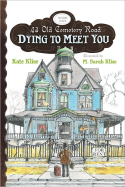
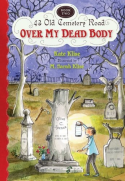
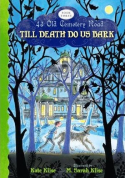
43 Old Cemetery Road, Books 1-3 by Karen and M. Sarah Klise

August 28, 2011 by Michelle Smith

43 Old Cemetery Road is a quirky illustrated series for children that tells its ghostly story using letters, newspaper clippings, drawings, et cetera. There are three books in the series so far—Dying to Meet You (2009), Over My Dead Body (2009), and Till Death Do Us Bark (2011)—with a fourth (The Phantom of the Post Office) due in May 2012.

Dying to Meet You
What with the illustrations and the fact that the story is told through correspondence rendered in a large font, Dying to Meet You is a very quick read. And yet, for all that, it’s got some nuance!

Ignatius B. Grumply is a famous children’s author who hasn’t written anything for twenty years. Seeking to overcome his writer’s block, he rents a Victorian house in Ghastly, Illinois and is decidedly miffed to discover a boy and his cat living there. The boy, Seymour Hope, has been left behind by his parents, the owners of the home, who are on a lecture tour of Europe. They’re paranormal experts, and had moved into Spence Mansion hoping to confirm the existence of its rumored spectral resident. When Seymour could see her, but they couldn’t, they became convinced that a) ghosts don’t exist and b) their son is delusional.

But Olive C. Spence, the ghost of the woman who originally built the house, is indeed real! She sets out to drive Ignatius away at first, but after an incident with a chandelier causes more injury than she had intended, she begins to feel sorry for him and decides to help him with his book. It turns out that all of them have been rejected in one form or another: Seymour by his parents, Olive by the publishers who would never give her graphic epistolary mysteries a chance, and Ignatius by the woman he loved and upon whom he squandered his fortune.

Olive encourages “selfish and crabby” Ignatius to feel and care about others again, and thus achieves a warm and fuzzy ending where each of them gets something they want while drawing together into their own little family. It’s quite sweet, really. About the only complaint I could make is that some of the punny names are not funny—Paige Turner, Frank N. Beans, Shirley U. Jest—but I did have to snicker at Fay Tality and her dog, Mort, so they’re not all clunkers.

Over My Dead Body
Life at 43 Old Cemetery Road has been great since Ignatius, Olive, and Seymour began collaborating on a series of ghost stories. When a letter from Dick Tater, head of the International Movement for the Safety & Protection of Our Kids & Youth, arrives, however, everything is turned upside down. Tater objects to their living arrangements, especially the fact that custody of eleven-year-old Seymour was seemingly transferred via a rental lease, and his investigation results in Ignatius being committed to an asylum and Seymour being sent to an orphanage until his opportunistic parents deign to claim him.

The majority of the book is comprised of letters to and from Olive as everyone ponders how to escape confinement and satisfy the customers who have prepaid for the next three installments of their story. Dick Tater does various nefarious things, like canceling Halloween and instructing libraries to burn books that meet with his disapproval, and the book has a very pro-reading, pro-free thinking vibe as a result.

The book also features the second “just go with it” moment of the series. I assume this is going to be a recurring thing. In the first book, readers had to “just go with” the stipulation that sales of the trio’s stories (at $3 a pop, if I recall rightly) were sufficient to raise the $250,000 Seymour needed to buy Spence Mansion from his parents. Here, Ignatius and Olive (a ghost, mind you) are able to adopt Seymour simply by proving his parents don’t love him.

To this I say, “Whatever.” I am willing to go with it because it results in (nicely illustrated) passages like this, which I confess made me a bit verklempt. (Best attempted after you remind yourself of Seymour’s last name.)

And so, in a sense, we end where we began… in a 32½-room house built by a woman who, in her lifetime, never married or had children… and rented by a man who never married and always thought he disliked children… and purchased by a boy whose parents abandoned him. And so, even though one member of the family might still get grumpy now and then… and another might become cranky when she misplaces her glasses… neither would ever, could ever, abandon Hope.

Sniff.

Till Death Do Us Bark
One day, a shaggy dog follows Seymour home from the library. He has always wanted a dog, and so he asks his new parents, Ignatius and Olive, if he can keep him. They have reservations, and insist that he first attempt to find the dog’s owner, since he has a collar and everything. Seymour soon learns that the dog formerly belonged to Noah Breth, a wealthy man who recently died and whose children (Kitty and Kanine) are bickering over their presumed inheritance. But he doesn’t tell his parents this.

I must say that I did not like this book as well as the others. I like that Seymour admits that his goal was to be a perfect son, but that very quickly he was keeping secrets and running away. What I don’t like was how he was so passionately dog crazy when his best friend up ’til now has been his cat, Shadow. He didn’t show much concern that Shadow had seemingly run away after the dog showed up. And Ignatius, who is allergic to cats, suddenly had a flare-up and pledged to “get rid” of the cat once it was found. This is not the way to endear me to your characters, Klise sisters.

Of course, everything works out fine in the end and Shadow is nearby and well. The Breth siblings, who have been following a series of limericks devised by their late father on the hunt for his fortune, are shamed into suddenly becoming nicer people. A rare coin that everyone’s been looking for turns out to be exactly where it was telegraphed to be at the beginning of the story.

As a result, more than the other books, this one feels like something only children would enjoy. I hope the upcoming fourth book represents a return to form.

Filed Under: Books, Children's Fiction, Supernatural Tagged With: Karen and M. Sarah Klise

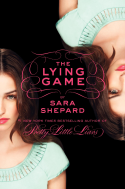
The Lying Game by Sara Shepard

August 25, 2011 by Michelle Smith

From the front flap:
The worst part of being dead is that there’s nothing left to live for. No more kisses. No more secrets. No more gossip. It’s enough to kill a girl all over again. But I’m about to get something no one else does—an encore performance, thanks to Emma, the long-lost twin sister I never even got to meet.

Now Emma’s desperate to know what happened to me. And the only way to figure it out is to be—to slip into my old life and piece it all together. But can she laugh at inside jokes with my best friends? Convince my boyfriend she’s the girl he fell in love with? Pretend to be a happy, carefree daughter when she hugs my parents good night? And can she keep up the charade, even after she realizes my murderer is watching her every move?

Review:
The Lying Game is the second collaborative effort between Sara Shepard and Alloy Entertainment (the team that brought you Pretty Little Liars) to be made into a TV series for ABC Family. I thought that this time I’d try reading the book before starting the show, so here we are.

Emma Paxton was raised by her unstable mother Becky until the age of five, when Becky skipped town while Emma was at a friend’s house. After Becky could not be located, Emma entered the foster care system, where she developed the ability to hold her tongue and become “whatever type of girl the situation needed [her] to be.” Now two weeks shy of her eighteenth birthday, Emma is hoping to make it through her senior year of high school and even dreams of attending USC and becoming an investigative journalist. Her skeevy foster brother has other plans, however, and Emma is soon accused of theft and told she must go when she turns eighteen.

Skeevy also shows Emma a video of a girl who looks just like her engaging in what looks like asphyxiation-for-kicks. From the video, Emma gleans that the girl is called Sutton and lives in Arizona. Googling leads to a Facebook page, and Emma’s message yields an invite from Sutton, who confirms that she was adopted. Without hesitation, Emma packs her bags and heads to Tucson.

Sutton fails to show for their appointed rendezvous, however, and when Sutton’s friends show up to whisk her off to a party, Emma finds herself using her adaptability skills to assume her sister’s role. Conveniently, Emma’s bag containing her cash and ID are stolen at this point. The next morning, she gets a note informing her that Sutton’s dead and that she’d better play along or she’ll be next. Emma tries various times to tell people what’s going on—Sutton’s parents, the police—but because Sutton was such a notorious prankster (more in a malicious way than a fun way) nobody believes her. Soon, Emma grows to suspect Sutton’s circle of friends may have offed their leader, and by the end of the book she’s learned the truth about the video but isn’t any farther along in discovering who killed her sister.

The Lying Game is definitely a guilty pleasure, and I already have the second volume in the series (Never Have I Ever) checked out from the library. Still, there are a couple of things about it that bugged me. The major issue for me is the choice to have Sutton stick around as an unseen-by-Emma ghostly presence. Conveniently, she has access to Emma’s thoughts, and so takes narrative duties, but in a really strange way. She’ll be narrating along omnisciently, referring to herself as “Sutton” or to things that belonged to her as “Sutton’s,” just like Emma might, and then all of a sudden she’ll switch into first person narration, using “me” and “mine.” It’s pretty distracting.

It’s also highly convenient that Sutton can’t remember many details of her past or see anything if Emma can’t see anything. She is, therefore, little use if Emma is in peril, though her timely recollections of snatches of memory do serve to heighten the dramatic tension when readers know something that Emma doesn’t. Mostly, however, I have the inkling that Sutton is there to react remorsefully when Emma discovers some of the horrible things she has done. Is Ghost!Sutton just a ploy to try to get us to care about her? In life, Sutton was a thoroughly nasty and entitled person, which makes this the second Shepard/Alloy series that focuses on the death of a girl so odious one wonders why she had any friends at all.

And that’s the second problem I had with The Lying Game: it’s too much like Pretty Little Liars. Granted, maybe that’s what fans of PLL want, but as I watched the action build towards a social event (a party, naturally) and watched Emma jump to conclusions I had the distinct feeling that I had been through all this before. There’s somewhat less focus on brand name fashions, at least.

Still, as mentioned, I will keep reading. And I’ll check out the show, too. Shepard is good at injecting twists into the story to hook a reader, and I like that Emma is beginning to have feelings for Ethan (a broody, poetry-reading boy) and seems poised to have an ally in her efforts going forward. Then they can jump to conclusions together, just like the girls in PLL!

Filed Under: Books, Supernatural, Suspense, YA Tagged With: Sara Shepard

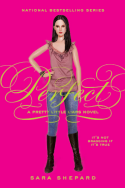
Perfect by Sara Shepard

August 20, 2011 by Michelle Smith

From the front flap:
In a town where gossip thrives like the ivy that clings to its mansions, where mysteries lie behind manicured hedges and skeletons hide in every walk-in closet, four perfect-looking girls aren’t nearly as perfect as they seem.

Spencer, Aria, Emily, Hanna, and the best friend Alison were once the girls at Rosewood Day School. They were the girls everyone loved but secretly hated—especially Alison. So when Alison mysteriously vanished, the girls’ grief was tinged with… relief. And when Alison’s body was later discovered in her own backyard, the girls were forced to unearth some ugly memories of their old friend, too. Could there have been more to Alison’s death than anyone realizes?

Now someone named A, someone who seems to know everything, is pointing the finger at one of them for Alison’s murder. As their secrets get darker and their scandals turn deadly, A is poised to ruin their perfect little lives forever.

Review:
Shit just gets so much worse in this installment of the Pretty Little Liars series that all I can do is shake my head. And still, I continue to read and eagerly await the answers promised in the fourth volume (originally intended to be the end of the series), so make of that what you will.

Anyway, some fairly awful things happen to the titular liars in this book, set three weeks after Flawless, the majority of them courtesy of A. Aria is ousted from her home because her mom can’t stand to look at her since Aria has known about her father’s infidelity for three years without ever mentioning it. Emily is outed at a school swim meet, and her parents threaten to send her to live with puritanical relations in Iowa unless she attends de-gaying therapy. Hanna still hasn’t heard from her father and now her best friend Mona is pissed at her too, culminating in a cringeworthy moment at Mona’s big birthday party followed by Hanna getting hit by a car.

You might think this couldn’t be topped for dramatic potential, but Spencer (who spends most of the book angsting about an essay contest) discovers a personal history of blackouts and gradually begins to recall what happened the night Ali disappeared. Meanwhile, A gives out lots of clues and hints about the murder, though their veracity is suspect.

I think I may be running out of things to say about this series, so perhaps it will suffice to say “the whirlwind of cray-cray continues.” It’s hard to feel much sympathy for Aria’s plight—not so much the getting kicked out of her house thing, but what follows—or Spencer’s, because both are very much “you’ve made your bed, now you’ve got to lie in it” types of situations. Emily seems to have fewer chapters devoted to her this time, which makes me wonder whether Shepard realized the endless on-again, off-again relationship with Maya was getting boring.

As in the TV show, Hanna continues to be my favorite. While it’s absolutely awful reading about her utter humiliation at Mona’s party, it does seem to cause her to question what her quest for perfection has really been about. Maybe she’ll learn to embrace her dorky side and will stick with Lucas, the sweet-but-uncool boy who thinks she’s wonderful just the way she is. But then again, with this series, hoping for a happy ending for anyone is probably futile.

Filed Under: Books, Suspense, YA Tagged With: Sara Shepard

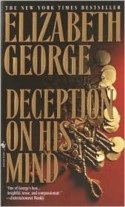
Deception on His Mind by Elizabeth George

August 18, 2011 by Michelle Smith

From the front flap:
Balford-le-Nez is a dying seatown on the coast of Essex. But when a member of the town’s small but growing Asian* community is found dead on its beach, his neck broken, sleepy Balford-le-Nez ignites. Working solo, without her long-time partner Detective Inspector Thomas Lynley, Sergeant Barbara Havers must probe not only the mind of a murderer and a case very close to her own heart, but the terrible price people pay for deceiving others… and themselves.

* Evidently, Brits use the term “Asian” to apply to people whom Americans would call “Middle Eastern.”

Review:
As a fan of Detective Sergeant Barbara Havers, I was chuffed to discover that Deception on His Mind features Barbara in the role of main protagonist, as her superior officer, Detective Inspector Thomas Lynley, is away on his honeymoon. While I like Barbara even more after this outing, especially after she gives voice to one long-overdue “sod you” in the book’s final pages, I unexpectedly found myself missing Lynley.

This isn’t Barbara’s fault at all, however. Instead, I lay the blame at Detective Inspector Emily Barlow, an acquaintance of Barbara’s who is the lead investigator of the murder of Haytham Querashi, a Pakistani immigrant who has come to England to marry Sahlah Malik, daughter of a local businessman, and work in her father’s factory. Barbara gets involved in the case when her neighbor, Taymullah Azhar, is summoned by his cousin (Sahlah’s brother Mohannad) to help advise the family. She wants to help him out and when she discovers that Barlow is heading up the case, she offers to assist. It soon becomes apparent that Barlow harbors racist attitudes, as she spends the entire book focused on pinning the crime on Mohannad and balking any time Barbara finds evidence that suggests a white person might have been involved.

This, as you might imagine, gets incredibly frustrating. In fact, I think the whole theme of the book must be “people seeing only what they want to see,” because there are several characters who exhibit this quality. Sahlah’s friend, Rachel, is deluded that pregnant Sahlah will be able to have a happy-ever-after romance with rich and white Theo Shaw. And, failing that, that Sahlah would be content to spend her days living with her in a cozy flat by the sea. She and Sahlah have several tedious conversations about the unlikelihood of these events occurring, but Rachel never seems to get it. Meanwhile, Rachel’s mum, fit and attractive Connie, refuses to see facially deformed Rachel as anything but lovely and Yumn, Mohannad’s odious wife, sees herself as Allah’s gift to humanity for her ability to bear sons for her husband and abuses her position to order Sahlah about imperiously. (She also seems to have an unhealthy fixation with her children’s nether regions.)

Icky and irritating characters aside, the investigation into Querashi’s death is fairly interesting. I learned a new bit of British slang—cottaging—and really enjoyed the trust that develops between Barbara and Azhar. They’re an unlikely match, but now I totally want them to get together, especially since Azhar’s ray-of-sunshine daughter, Hadiyyah, loves Barbara so much and is loved in return. Events culminate in a rather exciting boat chase, and I liked that Barlow’s instinctive suspicions aren’t entirely wrong, after all. I was confused by a couple of things, however, and especially disappointed when Barbara failed to mention a bit of evidence that would prove Querashi’s good intentions when Barlow got it into her head that he’d been blackmailing Mohannad. I think George dropped the ball there.

Overall, this is not my favorite Lynley mystery, but it shows Barbara in a good light and offers interesting ramifications for her in the future. I’ve just discovered there’s a new Lynley mystery due in January, and my goal is to get caught up by then, so expect more reviews of this series in the months to come.

Filed Under: Books Tagged With: Elizabeth George

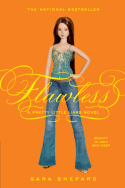
Flawless by Sara Shepard

August 13, 2011 by Michelle Smith

From the front flap:
In the exclusive town of Rosewood, Pennsylvania, where the sweetest smiles hide the darkest secrets, four pretty little liars—Spencer, Aria, Emily, and Hanna—have been very bad girls…

Spencer stole her sister’s boyfriend, Aria is brokenhearted over her English teacher, Emily likes her new friend Maya… as much more than a friend. And Hanna’s obsession with looking flawless is literally making her sick. But the most horrible secret of all is something so scandalous it could destroy their perfect little lives.

And someone named “A” is threatening to do just that. At first they thought A was Alison, their friend who vanished three years ago… but then Alison turned up dead. One thing’s for certain: A’s got the dirt to bury them all alive, and with every crumpled note, wicked IM, and vindictive text message A sends, the girls get a little closer to losing it all.

Review:
In this, the second book of the Pretty Little Liars series, bad things continue to happen to the pulchritudinous prevaricators, often of their own making but sometimes not. Spencer risks her family’s wrath (and her academic standing) by sneaking off to see Wren, her sister’s ex-boyfriend. Emily tries very hard to not be gay, and ends up taking as a date to the big charity dance a boy who may have killed Alison. Hanna is desperate to earn her father’s love, but A (and a bitchy soon-to-be step-sister) sees to it that he finds out about her various transgressions. And Aria tries to derail her father’s extramarital affair while growing closer to the guy who dumped Hanna, like, eight days ago.

While I could never claim that this series is a shining achievement in literature, it certainly is entertaining (in the most crackalicious way possible). Each book seems to cover about a week in the lives of these four girls and, seriously, if I had this much crazy crap going on in my life, I think I would end up catatonic. As before, chapters alternate between the four girls as they each deal with their own secrets and various threats from A. This time, they’ve decided that A must be Toby, a neighbor who took the blame when one of Alison’s pranks resulted in dire injury to his sister. By the end of the novel, they’ve convinced themselves that Toby also killed Alison for revenge, though the revelation of the existence of an airtight alibi throws that into question.

I can’t help but come at this series from the perspective of someone who’s been watching the TV show. The differences between the two versions of the story are widening, and it’s interesting to me to see how the producers of the show decided to take the story in new directions. On the show, for example, Aria is still (as of the last episode I saw, anyway) hooking up with her English teacher. Here, she seems to have moved on, and with Hanna’s ex, to boot. Spencer never had sex with Wren on the show, nor was it ever mentioned that she used to be a chronic sleepwalker. In the books, the girls have not resumed their friendship as enthusiastically. Most importantly, though, someone dies in this book who is still very much alive on the show!

This makes me happy, because I accidentally spoiled myself on the identity of A in the books. This robs me of some suspense while reading, unfortunately, but at the same time all these changes suggest that A could very well be someone completely different in the TV version, and that I can’t necessarily expect people who are benevolent in one format to be the same in another. That’s pretty neat.

For me, Pretty Little Liars is the epitome of a guilty pleasure.

Filed Under: Books, Suspense, YA Tagged With: Sara Shepard

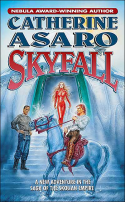
Skyfall by Catherine Asaro

August 2, 2011 by Michelle Smith

From the back cover:
Skyfall goes back to the beginning, to the rebirth of Skolia, showing how a chance meeting on a backwater planet forges a vast interstellar empire. Eldrinson, a provincial ruler on a primitive planet, is plagued by inner demons. But when he meets Roca, a beautiful and mysterious woman from the stars, he whisks her away to his mountain retreat, inadvertently starting a great interstellar war, and birthing the next generation of rulers for the Skolian Empire.

Review:
Skyfall is technically the ninth book in Catherine Asaro’s Saga of the Skolian Empire series, but is first if one is reading in internal chronological order. It works well as an entry point, though there were a few things that could’ve used a bit more explanation—presumably this happens in the books that were actually published before this one.

Beautiful and golden (like, literally) Roca Skolia is a “Ruby Psion,” an extremely rare and valued psion descended from similarly rare parents who currently rule the Skolian Imperialate. Because of her pedigree, she is expected to marry someone of the ruling assembly’s choosing and produce more Ruby Psions, the only people capable of controlling “the Kyle web,” an instantaneous interstellar network that somehow protects Skolia. Roca’s been married twice before and her grown son, Kurj, has a lot of mental anguish about the death of his father, the abuse perpetrated by his stepfather, and the atrocities committed by another group of psions who relish the pain of others.

When Roca’s away on government business (she’s the foreign affairs councillor), Kurj calls an assembly vote to discuss going to war with the sadistic psions. She knows he’ll try to stop her from casting her dissenting vote, so goes underground to try to make it back home in time without attracting his notice. Her route takes her to a remote, unspoiled world called Skyfall by “the Allieds” (descendents of Earth) and Lyshriol by its natives. There, her plans are foiled by a treacherous snow storm, and while she waits for it to pass, she falls in love with Eldri, a passionate and epileptic bard with significant psionic gifts, and ends up pregnant just in time for Eldri’s rival to lay siege to his castle.

It wouldn’t be incorrect to label Skyfall as “a romance novel in space.” Certainly Roca’s relationship with Eldri, who believes she’s a gift from the sun gods and is otherwise baffled by the technology she sees as commonplace, is quite romantic, with the two of them drawn together pretty much instantly and conceiving easily when other Ruby Psion births have required much medical intervention to achieve. Roca’s position brings political factors into their relationship, however. It turns out that Lyshriol was once a Skolian colony, so when Kurj eventually comes looking for her and Roca’s family finds out she has actually married this “barbarian,” it is ultimately Eldri’s genes that convince them to accept him (after a barrage of tests during which Eldri’s mental abilities and illness are evaluated).

There aren’t a whole lot of sci-fi elements to the novel, though there are enough to give one a picture of how things work in the Skolian Empire and its relationships with other spacefaring people. Genetic manipulation seems quite normal, as are cybernetic implants, and I am totally envious of the language node Roca has, which enables her to process and gradually learn new languages. Kurj has turned himself into an intimidating metallic giant, but it’s still not enough to shield him from his self-conflicting inner demons. In his case, Asaro effectively uses technology to show just how damaged he is, with some pretty fascinating results.

Suffice it to say, I’m looking forward to reading more in this series!

Additional reviews of Skyfall can be found at Triple Take.

Filed Under: Books, Sci-Fi, Triple Take Tagged With: Catherine Asaro

The Strange Case of Origami Yoda by Tom Angleberger

July 17, 2011 by Michelle Smith

From the back cover:
Meet Dwight, a sixth-grade oddball. Dwight does a lot of weird things, like wearing the same t-shirt for a month or telling people to call him “Captain Dwight.” This is embarrassing, particularly for Tommy, who sits with him at lunch every day.

But Dwight does one cool thing. He makes origami. One day he makes an origami finger puppet of Yoda. And that’s when things get mysterious. Origami Yoda can predict the future and suggest the best way to deal with a tricky situation. His advice actually works, and soon most of the sixth grade is lining up with questions.

Tommy wants to know how Origami Yoda can be so smart when Dwight himself is so clueless. Is Yoda tapping into the Force? It’s crucial that Tommy figure out the mystery before he takes Yoda’s advice about something VERY IMPORTANT that has to do with a girl.

This is Tommy’s case file of his investigation into “The Strange Case of Origami Yoda.”

Review:
If you had asked me to sum up The Strange Case of Origami Yoda in one word, my initial answer would have simply been “cute.” When I first finished it, I was left with a pleasant impression but wasn’t sure I had too much to say about it. After a period of mulling, however, I realized that, even if the story itself is fairly straightforward, Angleberger does some interesting things with the way he tells it.

“The big question,” protagonist Tommy begins, “is Origami Yoda real?” The weirdest kid in sixth grade, Dwight, has made an origami Yoda finger puppet, which seems to dispense good advice even though Dwight himself is a big spaz. Tommy compiles a case file of students’ interactions with Yoda in an effort to determine if he’s for real and, therefore, if his advice concerning the girl that Tommy likes should be followed or if it will lead to total humiliation. He allows his friends to add comments and doodles, giving the book a bit of flair.

Origami Yoda offers advice on various topics, like helping a boy not burst into angry tears whenever he strikes out in softball, or helping another kid live down an unwelcome nickname (“Cheeto Hog”). Each chapter recounts a different incident, and though they are nominally written by different students, there is no discernible difference in narrative voice, except in the case of Harvey, Tommy’s obnoxious friend.

Angleberger doesn’t spell out the answer concerning Yoda’s authenticity in detail, but he does show that Tommy gradually gets fed up of Harvey “criticizing everything and everybody all the time” and realizes that he would rather be friends with Dwight, even if he is an oddball. Everyone probably has a toxic friend like Harvey at some point and must make the difficult decision to stop associating with them, and I thought Angleberger handled Tommy’s revelation in this regard rather well.

He also incorporates themes of inclusion and tolerance with subtlety. At no point, for example, is a racial characteristic ever assigned for any of these characters. We know that Tommy is short with unruly hair, Harvey is perpetually smirking, and Kellen is thin, but that’s it. Too, one of the female characters is described as “cute and cool” before it’s revealed a few paragraphs later that she also happens to be deaf. True, characterization doesn’t go much deeper than this for anyone, but I still appreciated the lack of preachiness.

Again, I come back to the idea that The Strange Case of Origami Yoda is a cute read, but I reckon late elementary Star Wars fans would have fun with it. A sequel, Darth Paper Strikes Back (in which Harvey is out for revenge), is due out next month.

Additional reviews of The Strange Case of Origami Yoda can be found at Triple Take.

Filed Under: Books, Children's Fiction, Triple Take Tagged With: Tom Angleberger

The Phoenix and the Carpet by E. Nesbit

July 7, 2011 by Michelle Smith

From the back cover:
It’s startling enough to have a Phoenix hatch in your house, but even more startling when it reveals you have a magic carpet on the floor. Conceited it may be, but the Phoenix is also good-hearted, and obligingly accompanies the children on their adventures through time and space—which, magic being what it is, rarely turn out as they were meant…

Review:
The Phoenix and the Carpet (1904) is the second book in the trilogy that begins with Five Children and It. It’s November now and the children—Cyril, Anthea, Robert, Jane, and baby brother “the Lamb”—are back at home in Camden Town. One day, after a small fire ruins their nursery carpet, their mother buys a new one from which emerges a shiny yellow egg. And when that egg falls into the fire, a talking Phoenix is hatched who informs them that the new carpet is actually magic and can take them wherever they’d like to go.

As with the first book in the trilogy, most of the story is comprised of the wishes the children make and their often unexpected outcomes. They wish to go abroad, for example, so the carpet takes them to visit a topless tower in France, where Robert promptly gets stuck on a window ledge. On another occasion, the cook accidentally accompanies them on a trip to a sunny shore and ends up being worshipped by the natives. Other wishes involve visits to India and a plethora of Persian cats.

What’s different this time is that more of the wishes are linked. When the children wish to do a bit of good, they find themselves back in France, where they find the rightful owners of the treasure hidden in the tower. And when a would-be burglar is arrested on suspicion of having stolen said Persian cats, the children rescue him from jail and convey him to the sunny shore, whereupon he promptly falls in love with the cook and they get married on the spot. The emphasis on helping people makes this installment of the series a little more like The Railway Children, which still remains my favorite Nesbit book.

While the adventures are fun—my very favorite is not a wish at all, but a visit the children make with the Phoenix to a fire insurance company who uses his likeness for their logo—Nesbit’s writing is really the main draw here. It’s warm, observant, and clever simultaneously, eliciting many a giggle. I love this evocative line about a cast-aside bit of correspondence:

”The letter… lay on the table, drinking hot bacon fat with one corner and eating marmalade with the other.”

That line not only conjures a vivid mental picture, but tells you something about the letter’s recipients, as well. And, indeed, the characterization of the children is more defined in this second outing, with the two eldest (Cyril and Anthea) showing signs of increased maturity. Nesbit never idealizes the children—“The children were not particularly handsome, nor were they extra clever, nor extraordinarily good. But they were not bad sorts on the whole.”—and their imperfections are what make them likeable. When they discover that sometimes things can get worn out through striving to please, one gets the sense that they’ve learned an Important Lesson about consideration without it coming across as some sort of moral.

Though less famous, The Phoenix and the Carpet is actually better than the first book in the trilogy, and I am definitely looking forward to the third and final installment.

Filed Under: Books Tagged With: E. Nesbit

  • « Go to Previous Page
  • Page 1
  • Page 2
  • Page 3
  • Page 4
  • Page 5
  • Page 6
  • Interim pages omitted …
  • Page 20
  • Go to Next Page »
 | Log in
Copyright © 2010 Manga Bookshelf | Powered by WordPress & the Genesis Framework