• Skip to primary navigation
  • Skip to main content
  • Skip to primary sidebar
  • Home
  • About Us
    • Privacy Policy
    • Comment Policy
    • Disclosures & Disclaimers
  • Resources
    • Links, Essays & Articles
    • Fandomology!
    • CLAMP Directory
    • BlogRoll
  • Features & Columns
    • 3 Things Thursday
    • Adventures in the Key of Shoujo
    • Bit & Blips (game reviews)
    • BL BOOKRACK
    • Bookshelf Briefs
    • Bringing the Drama
    • Comic Conversion
    • Fanservice Friday
    • Going Digital
    • It Came From the Sinosphere
    • License This!
    • Magazine no Mori
    • My Week in Manga
    • OFF THE SHELF
    • Not By Manga Alone
    • PICK OF THE WEEK
    • Subtitles & Sensibility
    • Weekly Shonen Jump Recaps
  • Manga Moveable Feast
    • MMF Full Archive
    • Yun Kouga
    • CLAMP
    • Shojo Beat
    • Osamu Tezuka
    • Sailor Moon
    • Fruits Basket
    • Takehiko Inoue
    • Wild Adapter
    • One Piece
    • After School Nightmare
    • Karakuri Odette
    • Paradise Kiss
    • The Color Trilogy
    • To Terra…
    • Sexy Voice & Robo
  • Browse by Author
    • Sean Gaffney
    • Anna Neatrour
    • Michelle Smith
    • Katherine Dacey
    • MJ
    • Brigid Alverson
    • Travis Anderson
    • Phillip Anthony
    • Derek Bown
    • Jaci Dahlvang
    • Angela Eastman
    • Erica Friedman
    • Sara K.
    • Megan Purdy
    • Emily Snodgrass
    • Nancy Thistlethwaite
    • Eva Volin
    • David Welsh
  • MB Blogs
    • A Case Suitable For Treatment
    • Experiments in Manga
    • MangaBlog
    • The Manga Critic
    • Manga Report
    • Soliloquy in Blue
    • Manga Curmudgeon (archive)

Manga Bookshelf

Discussion, Resources, Roundtables, & Reviews

David Welsh

Flying the Heavenly Skies

January 8, 2011 by David Welsh

Thanks so much for your input on my Previews order! Many people provided thoughtful feedback on how I might best squander around $10 of my monthly comic budget, and the winner was…

The Beautiful Skies of Hou Ou High, written and illustrated by Arata Aki, published by Digital Manga! Here’s how the publisher describes it:

Houou High is a famous and incredibly prestigious all-boys school. It’s also the stomping grounds for the sons of the most well-renowned families from all walks of life, which gives rise to rumors that it holds a monopoly on money and power. Our protagonist, Kei Saeba, ends up enrolling in this veritable garden of blooming amateurs due to her mother’s guile. Now she must pretend she’s a boy for three years or she “will be erased”!

Another source told me that Kei is sent to this school because she likes girls and her mother wants to fix that via deep boy immersion, because that always works. I don’t have a particular aversion to reverse-harem stories and have enjoyed some of them very much, but blithe conversion comedy sets my phasers on kill.

It originally ran in Mag Garden’s Comic Avarus, home to notable titles like Alice in the Country of Hearts, Monochrome Factor, Tactics, Vassalord, and Your and My Secret, all from Tokyopop. That’s not a terrible track record, to be honest, but it’s still on the mixed side. We’ll see. Three months from now, I may come back to bitterly denounce you all. Won’t that be fun?!

Filed Under: REVIEWS

License Request Day: Kiko-Chan’s Smile

January 7, 2011 by David Welsh

As I wrap up The Seinen Alphabet (three more letters!), I find myself thinking of the upcoming Josei Alphabet. Since there isn’t a tremendous amount available in English, I’m guessing they’ll consist largely of unlicensed works. It seemed like a good time to do a little investigating and see what’s lurking out there. Imagine my delight when I found something that looks both funny and weird.

It’s called Kiko-Chan’s Smile, five volumes written and illustrated by Tsubasa Nunoura and originally serialized in Kodansha’s Be Love. And it’s about a weird little girl. Isn’t she lovely?

Kiko is an independent, taciturn and, from what I can surmise, kind of forbidding child. Her parents don’t know what to make of her, but her classmates are delighted by the unusual events that seem to swirl around her. She meddles with her teacher’s love life, and she enjoys the companionship of her cat, who also happens to be an angel and the father of five half-angel, half-cat kittens. (Kittels? Angens?) Kittens with supernatural powers, people… tell me that doesn’t light a fire.

I have a documented fondness for manga about weird girls and an unexpected weakness for manga about precocious, disruptive children, so this seems like a fine opportunity to cross the streams, as they say. It doesn’t seem like what one would traditionally think of as josei; I get more of a Morning vibe off of it. But it was adapted into an anime, so that’s always a good sign. And it’s nice to be reminded that the subject matter of josei can be as rangy and odd as the other demographics.

I’m thinking this would be a nice one for Vertical. We can always hope that Kodansha’s own initial offerings do well enough that they’ll publish some less commercial titles, but I definitely get a feeling that this would fit in nicely with the good folks at Vertical. They support kittens in manga.

Filed Under: LICENSE REQUESTS

From the stack: The Kurosagi Corpse Delivery Service vol. 11

January 6, 2011 by David Welsh

I always feel a little badly about my follow-up with reviews, as I tend to focus on early volumes of manga series with mostly cursory remarks on later installments unless my opinion changes materially or I feel the book is underappreciated. While my opinion of The Kurosagi Corpse Delivery Service (Dark Horse) hasn’t changed, I did want to highlight the fact that the eleventh volume, written by Eiji Otsuka and illustrated by Housui Yamazaki, is pretty extraordinary, even by the standards of this uniformly excellent series.

For those of you who aren’t familiar with the series, first of all, you really should be. The premise is simple at its core and extremely portable in terms of the kinds of stories Otsuka and Yamazaki tell. It’s about a group of unemployable students at a Buddhist university who combine their unique talents to form a side business dedicated to helping misplaced corpses with their unfinished business. Their various skills include hacking (with computers as opposed to cleavers), embalming and autopsy, channeling a foulmouthed alien entity, detecting dead bodies, and actually speaking to the deceased to find out how they ended up where they ended up.

It’s witty and gruesome, and Otsuka uses the episodic nature of the series to explore not only the ways humans respond to death, but contemporary culture as a whole. The satire is generally just the right kind of sly, which I think results in part from Yamazaki’s open, friendly cartooning. Yamazaki can certainly pull off grisly visuals, but he seems fond of the ways people look different from one another in age, size and shape. Even the terrible people who wander in and out of the narrative have that certain vulnerability you get from the fact that they look distinct, that you could imagine seeing them in your world.

The stories tend to run a few chapters each, but my favorite arcs tend to be longer. The second volume tells a single story, and it’s a glorious mystery with supernatural elements. The eleventh volume includes what I think is the second-longest story arc in the series, and it never flags. Otsuka packs it with both solid plot and smart embellishments.

It’s about mysterious happenings at an elite private school that center around a spooky little girl with an unsavory past named Chihaya. She has a connection to Sasayama, the retired detective/civil servant who often drags our heroes into worthwhile (but unprofitable) scenarios. Chihaya is an amazing character – steely, secretive, and purposeful, but entirely credible as a kid. I would love it if she got a spin-off or at least returned for another big, meaty arc.

Otsuka and Yamazaki have a great time with the social discord of the school setting and the ways little girls can be awful to each other, particularly at the elite levels. They also poke smart fun at the state of journalism and public perceptions of crime and youth. And they give their core cast some great moments. Corpse-finding Numata gets some surprising time in the spotlight, with his slacker-dope persona revealing some unexpected but totally logical nuances. Hacker Sasaki doesn’t get as much panel time, but she has a few terrific bits that remind readers of why she’s the brains of the operation.

The second arc in the book isn’t as good, but that’s mostly a matter of comparison. In an average volume, its look at the seedy underbelly of a beloved institution would be entirely welcome, and it’s not unwelcome here. It just can’t compete with Chihaya’s tightly written, sharply observed plight. If you want to give it a more charitable reading, start at page 171, then pick up at the beginning.

I mentioned this series as a worthy contender for an Eisner nomination, and I’ll happily restate that, particularly based on the strength of this volume. It’s a great comic, and I’d love it if more people gave it a chance.

Filed Under: REVIEWS

The Seinen Alphabet: W

January 5, 2011 by David Welsh

“W” is for…

Wandering Son, written and illustrated by Takako Shimura, originally serialized in Enterbrain’s Comic Beam and due for English-language release from Fantagraphics. This tale of gender identity is easily one of the most anticipated books of 2011.

What a Wonderful World!, written and illustrated by Inio Asano, originally serialized in Shogakukan’s Sunday GX and published in English in two volumes by Viz. Interconnected short stories that are sometimes very lovely and sometimes kind of predictably mope-y, but Asano is undeniably talented, and I’ll certainly read any of his work that’s published in English.

What’s Michael?, written and illustrated by Makoto Kobayashi, originally serialized in Kodansha’s Weekly Morning, then partially serialized in English in Dark Horse’s Super Manga Blast. It’s about cats. That’s all I really need to say.

Wolf’s Rain, written by Keiko Nobumoto and illustrated by Toshitsugu Iida, originally serialized in Kodansha’s Magazine Z and published in English by Viz. It’s a two-volume adaptation of a popular fantasy anime.

Wounded Man, written by Kazuo Koike and illustrated by Ryoichi Ikegami, originally serialized in Shogakukan’s Big Comic Spirits and published in English by Comics One. I think this might be the most violent Koike manga to be licensed. I certainly remember people cringing at the thought of it.

Working!!, written and illustrated by Karino Takatsu, serialized in Square Enix’s Young Gangan. It’s a comedy about quirky people working in a family restaurant. I have a weakness for manga of that type, so I suspect I would be pleased if someone published it in English.

What Did You Eat Yesterday?, written and illustrated by Fumi Yoshinaga, serialized in Kodansha’s Weekly Morning. I mentioned this previously, but I’ll mention it again, because I’m desperate for someone to publish it in English. It’s about a food-loving gay couple.

What’s the Answer?, written and illustrated by Tondabayashi, originally serialized in Shogakukan’s IKKI, appears very intermittently on Viz’s SigIKKI site.

“W” is also for “Weekly,” a modifier that often appears before the title of various Japanese manga magazines to indicate the frequency with which they are published. Please peruse this list at your leisure for examples.

What starts with “W” in your seinen alphabet?

Update:

And the glaring omission klaxon sounds! I inexcusably forgot Daisuke (Children of the Sea) Igarashi’s Witches, originally serialized in Shogakukan’s IKKI, which means it seems like fair game for the SigIKKI site. I’ve already given this one the License Request treatment, which I’ll take this opportunity to reaffirm.

Update 2:

This omission is even more inexcusable, as Jiro Taniguchi’s The Walking Man (Fanfare/Ponent Mon) is one of my favorite comics of all time, and I read it over and over again. It’s title is entirely accurate; it’s about a middle-class guy who goes for walks in his suburban neighborhood, enjoying everyday wonders, and it’s quite unlike almost anything else you’re likely to find in a comic shop. It originally ran in Kodansha’s Weekly Morning and was later reprinted by Shogakukan.

On the creator front, there’s the hilarious Kiminori Wakasugi, whose Detroit Metal City (Viz) continues to delight and offend.

Filed Under: FEATURES

Upcoming 1/5/2011

January 4, 2011 by David Welsh

I’ve already pointed out my Pick of the Week, but I would feel incomplete if I didn’t look through the rest of this week’s ComicList.

I think this shipped through other venues, but Diamond is finally delivering the first volume of Nicolas De Crecy’s Salvatore: Transports of Love. This has the dual attractions of being by De Crecy, whose Glacial Period remains one of my favorite graphic novels of all time, and of being a fulfilled license request. Salvatore is about a gifted auto mechanic who also happens to be an antisocial dog (an oxymoron, but I’ll suspend disbelief) who goes off in search of true love while dealing with a variety of odd customers. I’m stupidly excited to have this in my hands.

The rest of the week is devoted to new volumes of lovely manga titles.

There’s the fifth volume of Kou Yaginuma’s Twin Spica (Vertical), which has rightly been showing up on Best of 2010 lists all over the place.

From Viz, there’s the tenth (and final) volume of Hinako Ashihara’s Sand Chronicles, which explores the stories of supporting characters and fills in back story. Continuing the glorious shôjo trend is the fifth volume of Yuki Midorikawa’s Natsume’s Book of Friends, which focuses on cram sessions and mermaid blood, which is exactly what one should expect from this supernatural series.

What sounds good to you?

Filed Under: Link Blogging

Natsume, Kurozakuro, Panda, Prince

January 3, 2011 by Katherine Dacey, Michelle Smith, MJ and David Welsh Leave a Comment

With the addition of new authors to the Manga Bookshelf family of blogs, it seemed like the right time to refresh this weekly feature with more diversity of opinion. To that end, both Kate and David will now be joining in offer up their weekly Picks. And as a bonus, we have a Pick from Soliloquy in Blue‘s Michelle Smith. So take your pick of the Picks below or stretch your pocketbook and pick up all four!


From MJ: There isn’t a lot of excitement to be found for me in this week’s batch of incoming manga, though there are a couple of bright spots. A new volume of Sand Chronicles is always welcome, of course, but my eye is especially drawn to volume five of Natsume’s Book of Friends, one of my favorite new shoujo series last year. I got a bit bogged down with it during volume three, but here’s a snippet from my thoughts on volume four: “The volume begins on a strong note, by introducing a troubled yokai who ends up inhabiting the body of a snow bunny (not the kind found on ski slopes, but in children’s back yards) in order to try to reunite with his one-time companion who had been driven to the dark side by the cruelty of humanity. While that concept sounds at once unbearably cutesy and melodramatic, its execution is anything but. It’s subtle and moving, and in that moment, the series won me back completely.”

The emotional content of this series has really refined itself beautifully over the course of its run so far, and I’m really looking forward to picking up the this week’s volume.

From David: I missed the first volume of this series, and I have no idea if it’s particularly good or not, but I was very struck by the style of the covers of Kurozakuro (Viz), written and illustrated by Yoshinori Natsume. I tend not to be a big shounen fan, but I’ve done pretty well with the titles in Viz’s Shonen Sunday imprint. This one is about a boy who finds that he’s turning into an ogre and wants to eat people, which isn’t your standard young-man-with-a-dream problem. The preview on the Shonen Sunday site looks kind of promising, particularly in terms of the style of the illustrations.

From Kate: I’m going to put on my Good Comics for Kids hat and champion Panda Man and the Treasure Hunt, the second installment of a new graphic novel/activity book/chapter book series from VIZ Kids. The first volume of Panda Man was perfect for seven- or eight-year-olds: it had stylish artwork, plenty of slapstick, and enough bathroom humor to satisfy the most discerning fart joke connoisseur. Oh, and mazes, connect-the-dot exercises, and drawing tips, making it a great choice for keeping kids busy on a car ride or a plane trip. The second volume finds Panda Man going mano-a-mano with pirates in search of treasure. I’m guessing the plot may be a little disjointed — the first volume was more a collection of gags than a story — but I can’t imagine it will be anything less than entertaining. Even an adult can appreciate a hero whose primary weapons are smelly feet and an overactive GI tract; as someone who rode the NYC subway for years, I can attest to the awesome, crippling power of stinky toes!

From Michelle: For me, the automatic purchase this week is volume 40 of Takeshi Konomi’s The Prince of Tennis. I recently completed a marathon read to get current on the series, and though many ridiculous elements offer themselves up as reasons for mockery—chief among them Konomi’s decision to depict the pinnacle of tennis achievement with glowing auras and sparkles (both visible to spectators)—I would never for a moment dream of giving up on it before its completion, even though the product description warns me to expect “a wicked case of amnesia” in this latest volume. That’s my Prince of Tennis: incredibly silly and yet so irresistible.


So, readers, what’s your Pick this week?

Filed Under: PICK OF THE WEEK

Previews review January 2011

January 3, 2011 by David Welsh

There isn’t a wealth of exciting new product in the current edition of the Previews catalog from Diamond Comics Distributors, so I thought I would try a little experiment. I’ll put forward three (uninspiring sounding) debuting titles and let you vote on which one I should try.

First up, from Digital Manga, we have the potentially odious The Beautiful Skies of Hou Ou High, written and illustrated by Arata Aki. When Kei’s mom finds out her daughter likes girls, she sends Kei to an all-boys’ high school to presumably de-gay her or something. Will it be charmingly subversive, or just gross? It originally ran in Mag Garden’s Comic Avarus, which doesn’t mean a whole lot to me. (Page 281.)

Are you perverse enough to subject me to the sparkly incoherence of Arina Tanemura? Is that even a question? Anyway, her new title from Viz is Sakura Hime: The Legend of Princess Sakura, and it’s about “the granddaughter of a mysterious moon princess who slew demons with her Blood Cherry Blossom sword.” Please don’t do this to me. It originally ran in Shueisha’s Ribon. (Page 321.)

There’s something about Kazue Kato’s Blue Exorcist (also Viz) that looks like trouble, and not the fun kind of trouble. It’s about an orphaned boy raised by a priest who learns that he’s one of Satan’s bastard children. (The orphan, not the priest, at least as far as I know.) So the orphan decides to become an exorcist so he can fight his dad. Manga plus Catholicism is always… awkward. It originally ran in Shueisha’s Jump Square. (Page 322.)

Please vote for one of the above in the comments before January 15, 2011, and I will dutifully order the title that garners the highest number of votes through my local comic shop.

Mercifully, there are tons of new volumes of great ongoing series, which I will now dutifully list:

  • Itazura na Kiss vol. 5, written and illustrated by Kaoru Tada, Digital Manga, page 280
  • Salt Water Taffy vol. 4: Caldera’s Revenge, written and illustrated by Matthew Loux, Oni Press, page 302
  • V.B. Rose vol. 12, written and illustrated by Banri Hiaka, Tokyopop, page 313
  • Cross Game vol. 3, written and illustrated by Mitsuru Adachi, Viz, page 324
  • House of Five Leaves vol. 3, written and illustrated by Natsume Ono, Viz, page 325
  • Twin Spica vol. 6, written and illustrated by Kou Yaginuma, Vertical, page 327
  • Bunny Drop vol. 3, written and illustrated by Yumi Unita, Yen Press, page 329

By the way, Viz’s new web site is terrible. Terrible, terrible, terrible.

Update: Lissa (Kuriousity) Pattillo has some thoughts on Viz’s terrible new web site.

Filed Under: Link Blogging, NEWS

Random Sunday question: Which Who?

January 2, 2011 by David Welsh

As one must on a long weekend, I’ve been watching marathon television, particularly the most recent season of Doctor Who on BBC America. In spite of our extended time together, I’m just not warming up to the Eleventh Doctor. To be honest, I’m shocked that I miss the Tenth Doctor, as I always found him to be a bit much (his five minutes in Harry Potter and the Goblet of Fire felt like 40), but there you go. So, if you’re up to the point that you can have an opinion of the Eleventh Doctor, what might that opinion be? In favor? Opposed? Abstaining?

Filed Under: REVIEWS

This year, next year

December 30, 2010 by David Welsh

The indefatigable Deb (About.Com) Aoki has rounded up and ranked critics’ choices for the Best Manga of 2010, and it’s a fine and varied list. I’d also like to point you to Deb’s picks for Best Continuing Manga of 2010, since there’s a lot of overlap between her favorites and mine. I’m particularly pleased by her inclusion of Kaoru Tada’s Itazura na Kiss (Digital Manga); I did some catch-up reading on that one over the weekend, and it just gets better as it goes along.

Looking at Deb’s previews of promising manga due in 2011, I can’t help but pick the five that sound best to me, even if some of them counted as my most anticipated in 2010:

and one that wasn’t on Deb’s list, but I’m very eager to read:

Did some of your favorites from this year not make the critics’ round-up or Deb’s list of ongoing series? What about exciting books due in 2011?

Filed Under: Link Blogging, NEWS

The Seinen Alphabet: V

December 29, 2010 by David Welsh

“V” is for… well, not very much, when you make a conscious choice to ignore “Vampire” and “Virgin,” but that’s just how I roll.

Vagabond (Viz), written and illustrated by Takehiko Inoue. This is one of those Japanese comics that’s highly regarded both by manga devotees and by comics omnivores, though I think that’s generally true of all of Inoue’s work. Vagabond, which is still running in Kodansha’s Morning, though I believe it’s on hiautus, tells the tale of the “quintessential warrior-philosopher.”

Mizu Sahara adapted a one-volume manga of Makoto Shinkai’s animated film, The Voices of a Distant Star. The manga was originally published in Kodansha’s Afternoon, and it was later published in English by Tokyopop.

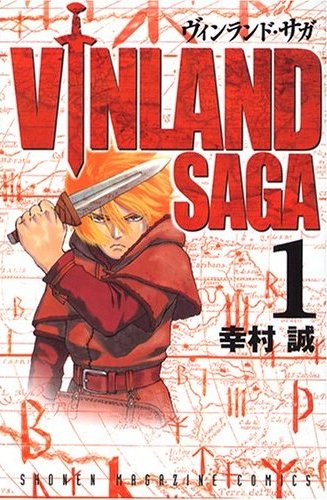
Lots of people would love for someone to publish Makoto (Planetes) Yukimura’s Vinland Saga, myself included. This sprawling tale of Vikings is still running in Kodansha’s Afternoon.

“V” is also for Viz, obviously, still barreling along as North America’s major manga publisher. It’s jointly owned by Shogakukan and Shueisha, and Viz makes a great deal of seinen manga available for free online in the form of its SigIKKI initiative.

And nobody should ever overlook Vertical, which initially made its manga name by focusing on classic works by Osamu Tezuka and Keiko Takemiya, but has recently begun publishing more contemporary (but still excellent) works, in addition to its prose fiction and non-fiction catalog.

Update:

On Twitter, Scott Green reminded me of Voyeurs, Inc. (Viz), written and illustrated by Hideo Yamamoto. It follows the misadventures of a group of surveillance experts. It originally ran in Shogakukan’s Young Sunday.

Filed Under: FEATURES

Upcoming 12/29/2010

December 28, 2010 by David Welsh

I’m still decompressing upon reentry to normal world as opposed to holiday sparkle world, and, to be honest, looking at this week’s ComicList is roughly akin to trying to read something written in ancient possum. My brain just isn’t there yet. I’ll rely instead on two trustworthy souls, and take their recommendation to seek out a copy of The Secret Notes of Lady Kanako (Tokyopop), written and illustrated by Ririko Tsujita. I’ve been excited about this since MJ(Manga Bookshelf) discussed it with Michelle Smith in a recent Off the Shelf column. And Sean (A Case Suitable for Treatment) Gaffney points out that it’s from Hakusensha’s LaLa DX, which is a fine font of manga even by Hakusensha’s generally excellent standards.

I’m coherent enough to enjoy the writing of other bloggers, even if I can’t yet conjure the mental acuity to formulate a shopping list. First up are the new inductees to Kate (The Manga Critic) Dacey’s Manga Hall of Shame. And, as usual, there’s a lot of overlap between my favorites and the Best Manga of 2010 list at Manga Worth Reading.

Filed Under: Link Blogging

License Request Day: Cooking Papa

December 24, 2010 by David Welsh

One of the many important things I’ve learned from the entertainment industry is that Christmas is the time of year to make unreasonable demands of higher powers that they are obligated to fulfill if they want people to keep believing in them. We’ve basically got them in a corner, so why not go for the big ask? Why not say, “Hey, someone should throw caution and logic to the wind and publish a 100-plus-volume cooking manga”?

While working on this week’s letter of the Seinen Alphabet, I ran across a mangaka named Tochi Ueyama, who basically only has one title to his credit. This isn’t due to laziness, as he’s been working on it since 1984. 112 volumes have been published to date. It’s called Cooking Papa, and it runs in Kodansha’s Morning.

As near as I can tell, it’s about an average family where the father, a white-collar worker, does the cooking. (The mother, a journalist, isn’t very good at it.) Papa helps their son learn his way around the kitchen. Every chapter includes recipes.

Now, I can hear all the “buts” to the point that they sound like an outboard motor. But it’s way too long! But cooking manga doesn’t have a great commercial track record! But we should pester Viz to publish more Oishinbo instead! But Kodansha isn’t taking that many risks yet!

All of those things are true. But if we all adopt our best Cindy Lou Who miens, perhaps manga’s heart will grow several sizes. It’s Christmas. We’re entitled to expect miracles. TV said so.

What are some of your Christmas Miracle license requests?

Filed Under: LICENSE REQUESTS

Pretty maids all in a row

December 23, 2010 by David Welsh

I saw a story on the BBC about these all-girl pop groups that are cropping up in Japan under the sponsorship of just about everyone, from corporations to vegetable growers associations to urban redevelopment committees. And it reminded me of the truth that, when you put four or more attractive people in a row and give them some common purpose, your chances of achieving your aims improve at least slightly, depending on how appealing those four or more young people are.

They can come together by inspiration or design, it really doesn’t matter all that much. Origins in inspiration are obviously more highly regarded than manufacture, but, one or the other, people can still develop attachments to even the most cynically constructed assemblages. If they look good standing in a row, if their types connect in comforting ways, you’re in good shape.

The tale of local-produce promotional singing sensations mentioned above also reminded me of the truth that success replicates, even if you’ll never quite capture the lightning in a bottle that inspired the original. Entire comics companies have been born out of a desire to replicate the grim and gritty success of Wolverine. Intriguing notions become franchises, for better or worse.

In the case of the cast of Kiyohiko Azuma’s Azumanga Daioh (Yen Press), they are the best they are at what they do, and what they do is be funny and cute, particularly funny. Azuma’s ensemble seems to have inspired a host of imitators, temperamentally balanced groups of girls with their weapons set on “charm.” That they will almost certainly never rank any higher than second place, given that it’s unlikely that Azumanga Daioh will ever drop from first, isn’t reason for them not to exist. People didn’t stop writing plays about crazy, southern drunks after Tennessee Williams or musicals about neurotic people after Stephen Sondheim.

Of course, not all of these imitations fully justify their existence. I thought the four cute girl students of Ume Aoki’s Sunshine Sketch (Yen) were totally forgettable, like adorable collectibles rather than proper characters, in spite of their promising art-school setting. The music-club girls of Kakifly’s K-On (Yen) are just better enough that I can see myself spending a few volumes with them.

Yes, there’s the serious one, the loud one, the dingbat, and the rich girl. Yes, there’s the obnoxious teacher who should probably find another career. Yes, they go to the beach and wear kimonos and maid costumes. They basically go through all of the Stations of the Cross. But I enjoyed their company, and I got a reasonable number of chuckles out of their delivery of admittedly familiar situations. I can even abstractly appreciate the thoroughness with which Kakifly has abetted the audience’s wish fulfillment – there isn’t even the silhouette of a male character to present competition.

But, at the same time, I’m not the author’s ideal reader, either. I didn’t read the magazine, then collect the paperbacks, then watch the anime, then download the soundtrack of the anime, then buy the DVDs, then collect the figurines, play the video game, and track down the sexy fan comics, all while discussing with my friends which character I’d ideally like to marry, judging them for their choices. If that sounds like I’m judging the franchise for being cynically commercial, I’m not. Kakifly and company took a successful formula, turned it into something likable, and built a mini empire out of that. It’s better than building an empire based on something awful, right?

Filed Under: REVIEWS

From the stack: Ayako

December 19, 2010 by David Welsh

I’m not going to claim that I’ve loved everything of Osamu Tezuka’s that I’ve read. Pinocchio remodels are right after Peter Pan tales in the list of things that make me lose patience, so I’ve only sampled Astro Boy (Dark Horse). Swallowing the Earth (DMP) had a crazy verve that couldn’t quite compensate for its ultimate clumsiness.

Ayako (Vertical) adds another to the roster of Tezuka works that I just can’t fully endorse, and I’m still figuring out why that is. It’s a sprawling, serious-minded saga of familial disintegration, which can promise all kinds of good times, but those fail to materialize in this case. Tezuka is on his almost-best behavior here, and while it makes me feel rather shallow for saying so, I wish he’d worn the lampshade a bit more often.

The weird and marvelous thing about Tezuka is that the puckish quality of his storytelling – the human tempura, the pansexual masters of disguise, the just-a-trunk warriors – doesn’t diminish its force. He can still make moving and persuasive arguments about morality, family and leadership without resorting to austerity. It seems that, without those flights of fancy, his gruesome assessment of selfishness and cruelty becomes almost exhausting, even rote.

The title character is the illegitimate daughter of the patriarch of a family of landed gentry trying to hold onto their property after the end of World War II. Ayako is the fulcrum of all of the family’s greedy, sexy secrets, and she suffers accordingly as her extended clan vent their frustrations, ambitions and shame on her. Given the structure of her life, it’s hard to imagine how she could emerge as a proper character, and she really doesn’t. She’s an acre of family land where the bodies are buried.

With her rendered somewhat useless in terms of specific reader empathy, who’s left? Ayako’s half-siblings seem united only in their willingness to abdicate anything like responsibility or conscience. Her prisoner-of-war older brother is spying for the occupying forces. Her sister is dabbling with the socialists, politically and emotionally. Even her amateur sleuth youngest brother is unwilling to translate his curiosity and surprisingly developed sense of justice into sustained action.

But that’s the point, I think – that moral compromise is kind of an incurable cancer, and that people, no matter what they were like at the beginning, are doomed once they take that wrong step. A tale like that can have compelling moments, but I think that progressive decay as a narrative structure becomes exhausting after a while. It certainly does here. It’s a harangue at the characters and the culture they inhabit, not an argument in which the audience can engage, which is usually the nature of Tezuka’s morality plays.

Since I’m (obviously) still working out my thoughts on this piece, I’ll point you to a couple of better-argued pieces on Ayako (which I didn’t let myself read until after writing the above). First up is Kate (The Manga Critic) Dacey, whose evaluation tracks with my own. Then, there’s Alexander (Manga Widget) Hoffman, who finds a lot to admire in the work.

(This review is based on a complimentary copy provided by the publisher.)

Filed Under: REVIEWS

From the stack: Genkaku Picasso vol. 1

December 14, 2010 by David Welsh

Between my fondness for Usumaru Furuya’s “Palepoli” strips in Viz’s Secret Comics Japan and my abiding love of episodic “psychic helper” manga, Genkaku Picasso (also from Viz) seemed likely to be a slam dunk. It’s not.

It’s about a high-school student who suffers a near-death experience and resumes life with the ability to see traumatic auras around his classmates, then capture their distress on his sketch pad. If he wants to continue to fend off premature death, he has to help these shrouded people with their issues. He’s the self-isolating type, so this isn’t a natural set of responsibilities for him, but at least he’s got the nagging, tiny ghost of a dead friend to prod him into doing the right thing.

There aren’t many surprises in the various adolescent traumas that our hero must confront, so the book’s interest is reliant on Furuya’s ability to layer compelling weirdness onto things like eating disorders, over-identification with pop idols, and daddy issues. There are some intermittent flourishes, some dollops of lurking nastiness, but the kids are on the dull side, and their woes need more verve than Furuya seems inclined to provide.

In fact, I sometimes found myself wondering if Furuya hadn’t determined on creating a satire without having any particularly novel observations on his subject other than “these are things that routinely happen in these stores.” The chapters sort of ramble through a set number of pages, not in an idiosyncratic, arrhythmic way, but in a “I have 20 pages of story to fill 50 pages of magazine” manner. I invariably lost interest before each tale’s conclusion, and I ended up concluding that, with Furuya, less may be more. He seems at his strongest when he’s being concise.

Part of the book’s problem might be that the protagonist, Hikari “Picasso” Hamura, isn’t especially pleasant company. He’s crabby when engaged, which can be a fun quality in a fictional character, and I wanted to like the fact that he doesn’t yearn for his classmates’ approval like so many of his shônen peers. But Hamura needs to be dragged into things too much, and he carps too much about how difficult his lot is. Beyond being annoying, it doesn’t read as organic. It feels more like a vamp, and a routine one at that.

The apparent time-killing gives me occasion to actively look for things that annoy me, even though I find Genkaku Picasso to be drawn very well. By volume’s end, I was improbably put out with Hamura’s pouty, blush-bruised lips. I know that the lips should barely have registered, that I had been given time to fixate on something minor and off-putting while so little was actually happening, and that it was less about the lips themselves than the fact that I’d had so little else to fill in the gaps of a rather lazy satire of a familiar formula.

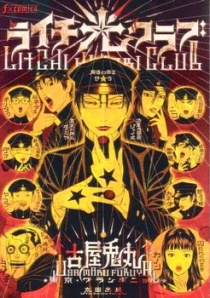
I’m still looking forward to Furuya’s Lychee Light Club, due out from Vertical in April. It promises a much higher degree of adolescent perversion without any filter necessitated by placement in a shônen magazine while still being able to twist shonen conventions into knots. Maybe it was overly optimistic to expect that from Genkaku Picasso?

Filed Under: REVIEWS

  • « Go to Previous Page
  • Page 1
  • Interim pages omitted …
  • Page 23
  • Page 24
  • Page 25
  • Page 26
  • Go to Next Page »
 | Log in
Copyright © 2010 Manga Bookshelf | Powered by WordPress & the Genesis Framework