• Skip to primary navigation
  • Skip to main content
  • Skip to primary sidebar
  • Home
  • About Us
    • Privacy Policy
    • Comment Policy
    • Disclosures & Disclaimers
  • Resources
    • Links, Essays & Articles
    • Fandomology!
    • CLAMP Directory
    • BlogRoll
  • Features & Columns
    • 3 Things Thursday
    • Adventures in the Key of Shoujo
    • Bit & Blips (game reviews)
    • BL BOOKRACK
    • Bookshelf Briefs
    • Bringing the Drama
    • Comic Conversion
    • Fanservice Friday
    • Going Digital
    • It Came From the Sinosphere
    • License This!
    • Magazine no Mori
    • My Week in Manga
    • OFF THE SHELF
    • Not By Manga Alone
    • PICK OF THE WEEK
    • Subtitles & Sensibility
    • Weekly Shonen Jump Recaps
  • Manga Moveable Feast
    • MMF Full Archive
    • Yun Kouga
    • CLAMP
    • Shojo Beat
    • Osamu Tezuka
    • Sailor Moon
    • Fruits Basket
    • Takehiko Inoue
    • Wild Adapter
    • One Piece
    • After School Nightmare
    • Karakuri Odette
    • Paradise Kiss
    • The Color Trilogy
    • To Terra…
    • Sexy Voice & Robo
  • Browse by Author
    • Sean Gaffney
    • Anna Neatrour
    • Michelle Smith
    • Katherine Dacey
    • MJ
    • Brigid Alverson
    • Travis Anderson
    • Phillip Anthony
    • Derek Bown
    • Jaci Dahlvang
    • Angela Eastman
    • Erica Friedman
    • Sara K.
    • Megan Purdy
    • Emily Snodgrass
    • Nancy Thistlethwaite
    • Eva Volin
    • David Welsh
  • MB Blogs
    • A Case Suitable For Treatment
    • Experiments in Manga
    • MangaBlog
    • The Manga Critic
    • Manga Report
    • Soliloquy in Blue
    • Manga Curmudgeon (archive)

Manga Bookshelf

Discussion, Resources, Roundtables, & Reviews

YA

I Am Not a Serial Killer by Dan Wells

September 21, 2011 by Michelle Smith

From the back cover:
John Wayne Cleaver is dangerous, and he knows it. He’s spent his life doing his best not to live up to his potential.

He’s obsessed with serial killers but really doesn’t want to become one. So for his own sake, and the safety of those around him, he lives by rigid rules he’s written for himself, practicing normal life as if it were a private religion that could save him from damnation.

Dead bodies are normal to John. He likes them, actually. They don’t demand or expect the empathy he’s unable to offer. Perhaps that’s what gives him the objectivity to recognize that there’s something different about the body the police have just found behind the Wash-n-Dry Laundromat—and to appreciate what that difference means.

Now, for the first time, John has to confront a danger outside himself, a threat he can’t control, a menace to everything and everyone he would love, if only he could.

Review:
It’s hard to resist a book with a title like I Am Not a Serial Killer, at least for me, and when I picked this up I figured I was in for something akin to “Dexter: The Early Years.” But that was before Wells pulled a genre switcheroo.

Fifteen-year-old John Wayne Cleaver is a markedly self-aware sociopath, in that he is fully cognizant of his lack of empathy and bizzare compulsions and narrates about them in an articulate manner that I wouldn’t be surprised to learn is uncommon in others of his kind. He’s seeing a therapist and trying to keep “the monster” at bay by following a series of strict, self-imposed rules (a what-to-avoid list gleaned from intensive serial killer research) designed to keep him from going down a dangerous path. When mutilated bodies start showing up in his small town, John is excited and fascinated, but the more he learns about the crimes and the fact that the killer never intends to stop, the more he comes to realize that he may be the only person who can prevent the deaths of more innocents by letting “the monster” out to kill the perpetrator.

Soon it becomes clear that John is dealing with something supernatural. Ordinarily, it would bug me when a “real world” mystery suddenly veers into the supernatural for its resolution, but it actually kind of works for me here. John is such a broken person that he can’t understand why the culprit is doing certain things, and eventually realizes that even a demon is more capable of genuine human emotion than he is. This ties in some with the depiction of John’s family life—an absentee father who never follows through with promises and a mother who loves with desperate urgency to try to make up for her ex-husband’s shortcomings—since one of the most important moments of the book occurs when John is finally able to achieve a bit of real understanding with his mom instead of just faking it.

I guess the book is somewhat gross. None of the descriptions of the crimes bothered me, but the mortuary scenes—John’s mom and aunt run a funeral home and allow him to assist sometimes—are clinical and grim. They made me think of my late grandmother and made me want to call my parents. That said, I appreciate how familiarity with the mortuary layout and equipment pays off later in the story.

Ultimately, I Am Not a Serial Killer is pretty interesting. Though I’m not sure I buy the extent of John’s self-knowledge, he’s still an intriguing protagonist, and I thought Wells did a decent job of making him simultaneously sympathetic and abnormal. When I picked up the book I didn’t realize it was the first of a trilogy, but it was a pleasant surprise. Look for a review of book two, Mr. Monster, in the near future.
Filed Under: Books, Supernatural, Suspense, YA Tagged With: Dan Wells

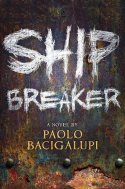
Ship Breaker by Paolo Bacigalupi

September 9, 2011 by Michelle Smith

From the back cover:
In America’s Gulf Coast region, where grounded oil tankers are being broken down for parts, Nailer, a teenage boy, works the light crew, scavenging for copper wiring just to make quota—and hopefully live to see another day. But when, by luck or by chance, he discovers an exquisite ship beached during a recent hurricane, Nailer faces the most important decision of his life: strip the ship for all it’s worth or rescue its lone survivor, a beautiful and wealthy girl who could lead him to a better life…

In this powerful novel, award-winning author Paolo Bacigalupi delivers a thrilling, fast-paced adventure set in a vivid and raw, uncertain future.

Review:
Ship Breaker won the Printz Award this year, and I must say I think it deserved it! It took a little while to grow on me, but I liked it a lot by the end.

At some unspecified point in the future, a community of people has sprung up on Bright Sands Beach (on the Gulf Coast) where the best work to be found is on crews breaking down giant, rusting wrecks of oil tankers. Everyone toils away to meet their quota, all the while dreaming of the lucky strike—oil or other scarce commodities—that could make them rich. Nailer Lopez is fifteen years old and works on the light crew, where his job is scuttling through pipes to scavenge copper, aluminum, and nickel.

After a near-death experience during which his wits and luck save him from drowning in a pocket of oil, Nailer is christened Lucky Boy by his friends. This moniker seems apt when he and his friend Pima discover a valuable wreck left behind in the wake of a hurricane. They set to work stripping it but are stunned to discover a survivor—a very wealthy girl named Nita Chaudhury, who promises her father will reward them for saving her life. When Nailer’s drunken and dangerous father Richard discovers the wreck, however, he opts to trade Nita to her father’s enemies, which forces Nailer to make a whole bunch of difficult decisions.

When he and Pima find the wreck, she urges Nailer to be smart about it. In her eyes, “smart” seems to involve profiting enough to obtain a position of power on Bright Sands Beach. Nailer is aiming higher, however, and makes Nita promise to take him and Pima away and into a better life. The choices he makes from that point on are partly in pursuit of this goal, but also out of a growing sense of loyalty towards Nita, who proves herself capable and quickly loses her prejudices towards those less cultured than she. There are many times where he could have walked away and abandoned Nita to her fate but doesn’t, and ultimately, his concern for her works out in his own favor.

The story ranges over a few different settings, from the beach to the drowned docks of “Orleans” to a clipper ship crewed by people loyal to Nita’s father. As a big fan of the Hornblower series, I liked the ship the best. I hadn’t realized how much I missed depictions of naval battles until the awesome sequence wherein Nailer’s familiarity with the coastline results in a surprise advantage over a superior foe. In fact, the whole final sequence of the book was quite exciting, and makes me think this would make a good movie.

I also found it interesting that the main villain of the work is Nailer’s father, Richard, because Nailer harbors such conflicted feelings about him. He remembers the man his father used to be before his mother died, and though Richard’s now more likely to be high and abusive than relaxed and kind, Nailer feels obliged to care about him and give him chances to be a better person. After many disappointments, he finally realizes that Pima and her nurturing mother, Sadna, are his true family and is able to muster the strength to stop believing that his father is capable of turning over a new leaf at this point. Essentially, he’s a victim of domestic abuse who finally achieves the strength to say, “I’m not going to let you hurt me anymore.”

Lastly, Ship Breaker is commendable for its effortless portrayal of characters of many ethnicities. None of the lead characters is Caucasian. Their skin color is mentioned as part of their physical description, but doesn’t factor in to their relationships at all. Characters are judged purely based on their individual actions. If anything, the only real prejudice left in the world seems to be between the rich (or “swanks”) and the poor, but Nailer’s actions convince Nita, at least, of the errors of her ways, especially since he proves fully capable of functioning in her world if given half a chance.

Although initially a little frustrating—despite my love for dystopic YA, I still get a little frustrated with crappy situations that just seem to be getting crappier—Ship Breaker turns out to be a well-crafted and riveting tale.

Filed Under: Books, Sci-Fi, YA Tagged With: Paolo Bacigalupi, Printz Award

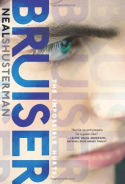
Bruiser by Neal Shusterman

August 30, 2011 by Michelle Smith

From the back cover:
Tennyson:
Don’t get me started on the Bruiser. He was voted “Most Likely to Get the Death Penalty” by the entire school. He’s the kid no one knows, no one talks to, and everyone hears disturbing rumors about. So why is my sister, Brontë, dating him? One of these days she’s going to take in the wrong stray dog, and it’s not going to end well.

Brontë:
My brother has no right to talk about Brewster that way—no right to threaten him. There’s a reason why Brewster can’t have friends—why he can’t care about too many people. Because when he cares about you, things start to happen. Impossible things that can’t be explained. I know, because they’re happening to me.

Review:
Let me just state upfront that any parents pretentious enough to name their children Tennyson and Brontë need a damn good whacking.

Moving on, Bruiser (from the author of Unwind) is the story of a social outcast named Brewster Rawlins who is perceived as a creepy delinquent by his classmates but is actually harboring a secret that compels him to keep his distance: if he cares about someone, he will absorb their pain, both mental and physical. Alternating between the perspectives of four characters (broody poetry fan Brewster, twins Tennyson and Brontë Sternberger, and Brewster’s daredevil little brother), the novel depicts how Brewster’s gift/curse affects his relationships with others and how, ultimately, being healed of all one’s ills is not necessarily a good thing.

Initially, Tennyson is opposed to his sister dating Brewster and sets out to warn the guy off, but once he catches a glimpse of Brewster’s terribly scarred back, he begins to suspect something awful is going on at the boy’s home. Concern and conscience win out, and he and Brewster begin to become friends, which is when Tennyson first notices that the scabs on his knuckles (a lacrosse injury) have miraculously disappeared in Brew’s presence. It takes a while for the specifics of his ability to come to light, and an interminable time for Tennyson and Brontë to realize that Brew’s ability to take away pain also extends to their feelings.

At first, I thought they did realize that Brew could quell mental anguish, and that that was part of the reason they convinced/manipulated their on-the-verge-of-divorce parents into taking temporary custody of Brew and his brother, Cody, after their guardian, Uncle Hoyt, passes away. Selfish to use Brew in this way, yes, but believably so for desperate teens. Eventually, though, it seems they really did not know, which is why Brontë kept pushing and pushing for Brew to make new friends, never considering that, for him, more people to care about means more potential injury. Uncle Hoyt was an abusive drunken bastard, true, but his ability to hang on to his own anger (instead of passing it off to Brew) and his insistence that Brew keep his distance from the world are seen in a new light by the novel’s end. (And speaking of the end, reports of its cheesiness are not exaggerated. The last few lines made me go “Pfft.”)

Even with the mystery of Brewster’s powers, Bruiser lacks the high-impact concept of Unwind. Instead of an epic dystopia where the whole country is going in a bizarre direction, Tennyson and Brontë’s world is defined by their home life, where they can tell that something very wrong is happening between their parents. Brew’s presence in their home acts as a balm for a while, but eventually they want to own their own pain because it seems so wrong to feel content while their family crumbles. The novel may not be as dramatic as Unwind, but is possessed of its own subtle themes and messages. I’ll definitely be reading more Shusterman in the future.

Filed Under: Books, YA Tagged With: Neal Shusterman

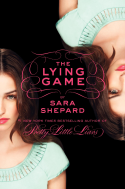
The Lying Game by Sara Shepard

August 25, 2011 by Michelle Smith

From the front flap:
The worst part of being dead is that there’s nothing left to live for. No more kisses. No more secrets. No more gossip. It’s enough to kill a girl all over again. But I’m about to get something no one else does—an encore performance, thanks to Emma, the long-lost twin sister I never even got to meet.

Now Emma’s desperate to know what happened to me. And the only way to figure it out is to be—to slip into my old life and piece it all together. But can she laugh at inside jokes with my best friends? Convince my boyfriend she’s the girl he fell in love with? Pretend to be a happy, carefree daughter when she hugs my parents good night? And can she keep up the charade, even after she realizes my murderer is watching her every move?

Review:
The Lying Game is the second collaborative effort between Sara Shepard and Alloy Entertainment (the team that brought you Pretty Little Liars) to be made into a TV series for ABC Family. I thought that this time I’d try reading the book before starting the show, so here we are.

Emma Paxton was raised by her unstable mother Becky until the age of five, when Becky skipped town while Emma was at a friend’s house. After Becky could not be located, Emma entered the foster care system, where she developed the ability to hold her tongue and become “whatever type of girl the situation needed [her] to be.” Now two weeks shy of her eighteenth birthday, Emma is hoping to make it through her senior year of high school and even dreams of attending USC and becoming an investigative journalist. Her skeevy foster brother has other plans, however, and Emma is soon accused of theft and told she must go when she turns eighteen.

Skeevy also shows Emma a video of a girl who looks just like her engaging in what looks like asphyxiation-for-kicks. From the video, Emma gleans that the girl is called Sutton and lives in Arizona. Googling leads to a Facebook page, and Emma’s message yields an invite from Sutton, who confirms that she was adopted. Without hesitation, Emma packs her bags and heads to Tucson.

Sutton fails to show for their appointed rendezvous, however, and when Sutton’s friends show up to whisk her off to a party, Emma finds herself using her adaptability skills to assume her sister’s role. Conveniently, Emma’s bag containing her cash and ID are stolen at this point. The next morning, she gets a note informing her that Sutton’s dead and that she’d better play along or she’ll be next. Emma tries various times to tell people what’s going on—Sutton’s parents, the police—but because Sutton was such a notorious prankster (more in a malicious way than a fun way) nobody believes her. Soon, Emma grows to suspect Sutton’s circle of friends may have offed their leader, and by the end of the book she’s learned the truth about the video but isn’t any farther along in discovering who killed her sister.

The Lying Game is definitely a guilty pleasure, and I already have the second volume in the series (Never Have I Ever) checked out from the library. Still, there are a couple of things about it that bugged me. The major issue for me is the choice to have Sutton stick around as an unseen-by-Emma ghostly presence. Conveniently, she has access to Emma’s thoughts, and so takes narrative duties, but in a really strange way. She’ll be narrating along omnisciently, referring to herself as “Sutton” or to things that belonged to her as “Sutton’s,” just like Emma might, and then all of a sudden she’ll switch into first person narration, using “me” and “mine.” It’s pretty distracting.

It’s also highly convenient that Sutton can’t remember many details of her past or see anything if Emma can’t see anything. She is, therefore, little use if Emma is in peril, though her timely recollections of snatches of memory do serve to heighten the dramatic tension when readers know something that Emma doesn’t. Mostly, however, I have the inkling that Sutton is there to react remorsefully when Emma discovers some of the horrible things she has done. Is Ghost!Sutton just a ploy to try to get us to care about her? In life, Sutton was a thoroughly nasty and entitled person, which makes this the second Shepard/Alloy series that focuses on the death of a girl so odious one wonders why she had any friends at all.

And that’s the second problem I had with The Lying Game: it’s too much like Pretty Little Liars. Granted, maybe that’s what fans of PLL want, but as I watched the action build towards a social event (a party, naturally) and watched Emma jump to conclusions I had the distinct feeling that I had been through all this before. There’s somewhat less focus on brand name fashions, at least.

Still, as mentioned, I will keep reading. And I’ll check out the show, too. Shepard is good at injecting twists into the story to hook a reader, and I like that Emma is beginning to have feelings for Ethan (a broody, poetry-reading boy) and seems poised to have an ally in her efforts going forward. Then they can jump to conclusions together, just like the girls in PLL!

Filed Under: Books, Supernatural, Suspense, YA Tagged With: Sara Shepard

Perfect by Sara Shepard

August 20, 2011 by Michelle Smith

From the front flap:
In a town where gossip thrives like the ivy that clings to its mansions, where mysteries lie behind manicured hedges and skeletons hide in every walk-in closet, four perfect-looking girls aren’t nearly as perfect as they seem.

Spencer, Aria, Emily, Hanna, and the best friend Alison were once the girls at Rosewood Day School. They were the girls everyone loved but secretly hated—especially Alison. So when Alison mysteriously vanished, the girls’ grief was tinged with… relief. And when Alison’s body was later discovered in her own backyard, the girls were forced to unearth some ugly memories of their old friend, too. Could there have been more to Alison’s death than anyone realizes?

Now someone named A, someone who seems to know everything, is pointing the finger at one of them for Alison’s murder. As their secrets get darker and their scandals turn deadly, A is poised to ruin their perfect little lives forever.

Review:
Shit just gets so much worse in this installment of the Pretty Little Liars series that all I can do is shake my head. And still, I continue to read and eagerly await the answers promised in the fourth volume (originally intended to be the end of the series), so make of that what you will.

Anyway, some fairly awful things happen to the titular liars in this book, set three weeks after Flawless, the majority of them courtesy of A. Aria is ousted from her home because her mom can’t stand to look at her since Aria has known about her father’s infidelity for three years without ever mentioning it. Emily is outed at a school swim meet, and her parents threaten to send her to live with puritanical relations in Iowa unless she attends de-gaying therapy. Hanna still hasn’t heard from her father and now her best friend Mona is pissed at her too, culminating in a cringeworthy moment at Mona’s big birthday party followed by Hanna getting hit by a car.

You might think this couldn’t be topped for dramatic potential, but Spencer (who spends most of the book angsting about an essay contest) discovers a personal history of blackouts and gradually begins to recall what happened the night Ali disappeared. Meanwhile, A gives out lots of clues and hints about the murder, though their veracity is suspect.

I think I may be running out of things to say about this series, so perhaps it will suffice to say “the whirlwind of cray-cray continues.” It’s hard to feel much sympathy for Aria’s plight—not so much the getting kicked out of her house thing, but what follows—or Spencer’s, because both are very much “you’ve made your bed, now you’ve got to lie in it” types of situations. Emily seems to have fewer chapters devoted to her this time, which makes me wonder whether Shepard realized the endless on-again, off-again relationship with Maya was getting boring.

As in the TV show, Hanna continues to be my favorite. While it’s absolutely awful reading about her utter humiliation at Mona’s party, it does seem to cause her to question what her quest for perfection has really been about. Maybe she’ll learn to embrace her dorky side and will stick with Lucas, the sweet-but-uncool boy who thinks she’s wonderful just the way she is. But then again, with this series, hoping for a happy ending for anyone is probably futile.

Filed Under: Books, Suspense, YA Tagged With: Sara Shepard

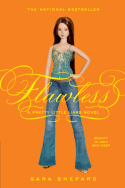
Flawless by Sara Shepard

August 13, 2011 by Michelle Smith

From the front flap:
In the exclusive town of Rosewood, Pennsylvania, where the sweetest smiles hide the darkest secrets, four pretty little liars—Spencer, Aria, Emily, and Hanna—have been very bad girls…

Spencer stole her sister’s boyfriend, Aria is brokenhearted over her English teacher, Emily likes her new friend Maya… as much more than a friend. And Hanna’s obsession with looking flawless is literally making her sick. But the most horrible secret of all is something so scandalous it could destroy their perfect little lives.

And someone named “A” is threatening to do just that. At first they thought A was Alison, their friend who vanished three years ago… but then Alison turned up dead. One thing’s for certain: A’s got the dirt to bury them all alive, and with every crumpled note, wicked IM, and vindictive text message A sends, the girls get a little closer to losing it all.

Review:
In this, the second book of the Pretty Little Liars series, bad things continue to happen to the pulchritudinous prevaricators, often of their own making but sometimes not. Spencer risks her family’s wrath (and her academic standing) by sneaking off to see Wren, her sister’s ex-boyfriend. Emily tries very hard to not be gay, and ends up taking as a date to the big charity dance a boy who may have killed Alison. Hanna is desperate to earn her father’s love, but A (and a bitchy soon-to-be step-sister) sees to it that he finds out about her various transgressions. And Aria tries to derail her father’s extramarital affair while growing closer to the guy who dumped Hanna, like, eight days ago.

While I could never claim that this series is a shining achievement in literature, it certainly is entertaining (in the most crackalicious way possible). Each book seems to cover about a week in the lives of these four girls and, seriously, if I had this much crazy crap going on in my life, I think I would end up catatonic. As before, chapters alternate between the four girls as they each deal with their own secrets and various threats from A. This time, they’ve decided that A must be Toby, a neighbor who took the blame when one of Alison’s pranks resulted in dire injury to his sister. By the end of the novel, they’ve convinced themselves that Toby also killed Alison for revenge, though the revelation of the existence of an airtight alibi throws that into question.

I can’t help but come at this series from the perspective of someone who’s been watching the TV show. The differences between the two versions of the story are widening, and it’s interesting to me to see how the producers of the show decided to take the story in new directions. On the show, for example, Aria is still (as of the last episode I saw, anyway) hooking up with her English teacher. Here, she seems to have moved on, and with Hanna’s ex, to boot. Spencer never had sex with Wren on the show, nor was it ever mentioned that she used to be a chronic sleepwalker. In the books, the girls have not resumed their friendship as enthusiastically. Most importantly, though, someone dies in this book who is still very much alive on the show!

This makes me happy, because I accidentally spoiled myself on the identity of A in the books. This robs me of some suspense while reading, unfortunately, but at the same time all these changes suggest that A could very well be someone completely different in the TV version, and that I can’t necessarily expect people who are benevolent in one format to be the same in another. That’s pretty neat.

For me, Pretty Little Liars is the epitome of a guilty pleasure.

Filed Under: Books, Suspense, YA Tagged With: Sara Shepard

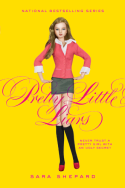
Pretty Little Liars by Sara Shepard

July 1, 2011 by Michelle Smith

From the front flap:
Gossip thrives amid the Mercedes-Benzes, mega mansions, and perfectly manicured hedges in the exclusive town of Rosewood, Pennsylvania. Behind their big Gucci sunglasses, beneath their perfectly pressed Polos, everyone has something to hide, especially high school juniors Spencer, Aria, Emily, and Hanna. Spencer covets her sister’s gorgeous new boyfriend. Aria is having an affair with her English teacher. Emily is infatuated with the new girl at school. And Hanna is using some ugly tricks to stay beautiful. Deeper and darker still is a horrible secret the girls have shared since sixth grade—a secret they thought was safe forever.

Review:
Confession: I have become addicted to the ABC Family adaptation of Pretty Little Liars. Now that it has started its second season, I figured it was safe to read the first book in the series. As it turns out, said book only covers the first few episodes of the show, so I needn’t have delayed.

The series was originally developed by Alloy Entertainment—who is behind most of the YA novel series that have recently become TV shows—to be a kind of teen version of Desperate Housewives. (I’d say that description is pretty apt, except that I think Pretty Little Liars is the better show, largely because when your protagonists do really stupid things it’s more forgivable when they’re sixteen than when they’re thirty-something.) Even though Sara Shepard receives sole authorship credits, interviews suggest that it’s really a team effort.

The first novel sets up the series and the secrets that each of its four protagonists carries. Back in sixth and seventh grade, Aria, Hanna, Spencer, and Emily clustered around their dazzling queen bee, Alison, who alternately beguiled and belittled them (and many others). She goaded them into a dangerous act of vandalism that left a fellow student blinded—an incident henceforth referred to as “the Jenna thing”—and then disappeared the summer before eighth grade. Aria’s family moved to Iceland shortly thereafter and the remaining girls—grieving but a little relieved to be free of Alison’s influence—drifted apart.

Now, three years later, Aria is back and so, possibly, is Alison, since each of the four girls begins receiving mysterious messages (text, e-mail, and handwritten) from someone calling themselves only “A.” A seems to know everyone’s secrets, and there are many. Bohemian Aria is having a secret fling with her English teacher, and also knows that her dad was cheating on her mom three years ago; obedient Emily is secretly attracted to girls; overachieving Spencer is not-so-secretly attracted to her sister’s boyfriend; and Hanna—impatient, impulsive, newly popular Hanna—secretly feels desperately unloved, and has a couple scrapes with the law while trying to conquer her bulimia. Chapters alternate between the characters, and it’s only at the end, when they discover that they’ve all been A’s victims, that they seem poised to renew their friendship.

It’s hard for me to say how I would feel about the novel had I not seen the show. There are differences, of course—a different timeline of events, characters who do not resemble the actresses ultimately chosen to portray them, some siblings for Emily, more bad behavior than ABC Family evidently was comfortable with—but nothing major plot-wise. I think the TV series is more effective at humanizing the characters—especially Hanna, who unexpectedly became my favorite—and making them likeable, but reading the book helped me understand the characters better, especially Aria and Emily.

So, why should you check out Pretty Little Liars, in either of its forms? For the cracktastic soapy goodness with protagonists whom you can still like even if they do ridiculous things like steal their boyfriend’s car because he won’t put out and crash it into a tree. Sure, I’m a little embarrassed to be reading/watching it at my advanced age, but it entertains me, and sometimes that’s enough.

Filed Under: Books, Suspense, YA Tagged With: Sara Shepard

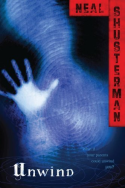
Unwind by Neal Shusterman

June 23, 2011 by Michelle Smith

From the front flap:
In a society where unwanted teens are salvaged for their body parts, three runaways fight the system that would “unwind” them.

Connor’s parents want to be rid of him because he’s a troublemaker. Risa has no parents and is being unwound to cut orphanage costs. Lev’s unwinding has been planned since his birth, as pat of his family’s strict religion. Brought together by chance, and kept together by desperation, these three unlikely companions make a harrowing cross-country journey, knowing their lives hang in the balance. If they can survive until their eighteenth birthday, they can’t be harmed—but when every piece of them, from their hands to their hearts, [is] wanted by a world gone mad, eighteen seems far, far away.

Review:
At some time in America’s future, the second civil war is fought over the issue of abortion. In the end, a compromise is reached. Known as the “bill of life,” the law says that life cannot be touched between birth and age thirteen, but between thirteen and eighteen parents can choose to retroactively abort a child in a process known as “unwinding,” by which the child does not technically die but is instead used for organ donation. Unwinding has now become a common and accepted practice in society.

This is a lot to swallow. One wonders why on earth anyone would agree to such a compromise, and I admit I struggled with the concept. After a while, though, one just accepts it and moves on, enjoying the story Shusterman lays out.

Unwind features three kids who are due to undergo the unwinding process. Connor Lassiter has trouble thinking through his actions and controlling his temper, causing his fed-up parents to decide to have him unwound. Risa Ward is a ward of the state. She’s been living in a state home, working hard to distinguish herself as a pianist, but she’s just not flawless enough to be worth saving, and is scheduled to be sent off to “harvest camp” in order to keep orphanage costs low. Lev Calder is a “tithe,” who was brought up by his parents and church to believe that his eventual unwinding is somehow a holy thing. Circumstances bring the three together, tear them apart, and bring them together again, with no one remaining unchanged.

While the plot of Unwind is certainly fast-paced and frequently surprising, the best thing about it is the way in which the characters are developed. At first, Connor’s lack of foresight and impulse control is maddening. He runs away to avoid being sent to harvest camp, but leaves his cell phone on, making him easy to track. He reacts to a baby left on a doorstep without thinking, saddling him and his companions with an infant they don’t have the resources to care for. In short, he’s more like a typical teen than a typical hero. Very gradually, and with the help from the more logical Risa, Connor evolves. He learns to keep his cool and discovers a talent for fixing things, be they mechanical or societal in nature. He becomes a leader, a genuine hero, and his progress is entirely believable.

Lev also changes a great deal. The youngest of the three, he’s only thirteen, and has spent his whole life being indoctrinated in certain beliefs. When Connor impulsively saves him from his “glorious fate,” Lev is not grateful at all, and turns Connor and Risa in at the first available opportunity. When he realizes that not even his pastor believes that what his family is doing is right, Lev’s world is thrown into turmoil. Separated now from Connor and Risa, he travels on his own, quickly becoming street-wise and meeting up with CyFi, a smart but troubled teen who once received a partial brain transplant from an unwind and is now contending with strange impulses from that other kid. Thrust into the harsh world with no preparation, Lev hardens quickly and learns to think for himself. Through learning of sin and evil, he becomes a much better person than he ever was before.

Risa doesn’t change as dramatically as the others, since she was always level-headed and cognizant of her possible fate. With her, the fact that she’s begun to allow herself to finally hope is what’s significant. I’m fond of her characterization in general, though, especially that she’s capable, competent, and so frequently the voice of reason. Her ability to keep a cool head during medical emergencies is also welcome.

Ultimately, while I could not completely suspend my disbelief in order to buy into the premise of this dystopic future world, I still liked Unwind a great deal. Even though Shusterman makes some Important Points, his approach is still balanced, as he questions whether it’s fair to bring unwanted children into the world in the first place even while his characters struggle so very hard for the right to live. Lastly, I must commend him for a positively chilling depiction of the unwinding process. That will seriously stick with me for a long time.

In conclusion, Unwind is good. Go read it. And Shusterman, get cracking on that sequel (Unwholly, TBA).

Filed Under: Books, Sci-Fi, YA Tagged With: Neal Shusterman

A Spy in the House by Y. S. Lee

June 4, 2011 by Michelle Smith

From the back cover:
Mary Quinn leads a remarkable life. At twelve, an orphan and convicted thief, she was miraculously rescued from the gallows. Now, at seventeen, she has a new and astonishing chance to work undercover for the Agency.

It is May 1858, and a foul-smelling heat wave paralyzed London. Mary enters a rich merchant’s household to solve the mystery of his lost cargo ships. But as she soon learns, the house is full of deceptions, and people are not what they seem—including Mary herself.

Review:
As a convicted thief, twelve-year-old Mary Lang is about to be executed when she is saved by the ladies of Miss Scrimshaw’s Academy for Girls. There, she receives an education and by the age of seventeen is teaching other students the skills they will need to be independent. Trouble is, she’s not satisfied and the few other career options open to her gender don’t interest her much, either. When she mentions this to the two women running the school, they suggest another alternative: the Agency.

The Agency is a covert organization of female spies, operating under the assumption that because women are presumed to be flighty and empty-headed, their agents will be able to retrieve information more easily than a man might, particularly in situations of domestic servitude. Mary quickly agrees, despite the threat of danger, and soon finds herself serving as paid companion to spoiled Miss Angelica Thorold, whose merchant father is suspected of dealing in stolen Hindu goods.

Mary (now using the surname Quinn) isn’t the lead on the investigation and isn’t supposed to actually do much of anything, but she gets antsy, and in the process of snooping meets James Easton. James’s older brother desperately wants to marry Angelica, but James has heard rumors about her father’s business practices, and so is doing some sleuthing of his own to determine whether a family connection would be unwise. He and Mary form a partnership and spend most of the book poking about in warehouses and rest homes for aging Asian sailors and following people on foot or in carriages while maintaining a flirty sort of bickering banter.

Author Y. S. Lee tries to make the mystery interesting, giving us a bit of intrigue between Angelica and her father’s secretary as a distraction, but ultimately it feels very insubstantial to me. Nothing much comes as a surprise and two story elements that could’ve been highlights—Mary’s month-long intensive training and Scotland Yard’s raid on the Thorold house—occur off camera! Too, Mary is harboring a secret about her parentage which is thoroughly obvious: she’s part Asian. Only towards the end did Lee actually make clear that Mary is keeping this a secret from others because of the foreigner bias of the time, and I must wonder whether the intended young adult audience was reading this going, “What’s the big deal?”

Not that it isn’t nifty to have a part-Asian heroine, of course. Mary is competent and level-headed, though I admit I did get irritated by how often she is favorably compared to “ordinary women,” who would scream or faint in situations in which Mary is able to keep her head. When a mystery stars a male sleuth, do we need to hear over and over how much smarter he is than the ordinary fellow? I don’t think so. On the flip side, the overall theme of the book seems to be “don’t understimate women,” and Mary finds time to inspire a scullery maid to seek out Miss Scrimshaw’s and to convince Angelica to pursue a musical career.

In the end, A Spy in the House is a decent read. It’s not perfect, but I still plan to read the second book in the series in the near future.

Additional reviews of A Spy in the House can be found at Triple Take.

Filed Under: Books, Historical Fiction, Mystery, Triple Take, YA Tagged With: Y. S. Lee

East by Edith Pattou: B

November 4, 2009 by Michelle Smith

eastFrom the back cover:
Rose is the youngest of seven children, meant to replace her dead sister. Maybe because of that, she’s never really fit in. She’s always felt different, out of place, a restless wanderer in a family of homebodies. So when an enormous white bear mysteriously shows up and asks her to come away with it—in exchange for health and prosperity for her ailing family—she readily agrees.

Rose travels on the bear’s broad back to a distant and empty castle, where she is nightly joined by a mysterious stranger. In discovering his identity, she loses her heart—and finds her purpose—and realizes her journey has only just begun.

As familiar and moving as Beauty and the Beast, yet as fresh and original as only the best fantasy can be, East is a bold retelling of the classic tale “East of the Sun and West of the Moon,” a sweeping story of grand proportions.

Review:
Based on the fairy tale “East of the Sun, West of the Moon” (a translation of which can be found here), East is the story of a girl named Rose who agrees to go away with a white bear in exchange for the healing of her sick sister and an improvement to her impoverished family’s circumstances. She is taken to a castle in a mountain where she is well-provided-for, though she’s troubled by a nightly mystery: each evening, after the lamps have been extinguished, a stranger comes and lays down next to her. She has never seen his face, for he’s always gone by morning. When curiosity overcomes her and she uses an enchanted candle to catch a glimpse of the man, she finds she has done him a grievous wrong. He is the white bear and must now travel east of the sun, west of the moon to become the consort of the troll queen. Rose is determined to rescue him.

Pattou adheres pretty closely to the original story—sometimes too closely, as I occasionally found myself waiting impatiently through familiar bits for parts with more action—and nicely captures the magical quality that it possesses. She embellishes many details, like Rose’s large family and the specifics of her journey north, which is far less fantastic here than in the fairy tale. She alternates narrators between Rose, Rose’s father, Rose’s brother, the white bear, and the troll queen, and gradually the full picture of events is revealed. I particularly like Pattou’s interpretation of troll culture; instead of ugly beasts, Pattou depicts them as beautiful and pale, though rough-skinned, and capable of both cruelty and love.

Rose is no passive damsel, which is one of the reasons the original tale is so noteworthy, and makes for a good protagonist, but certain aspects of the story do seem to go on too long. There’s a lot of emphasis on the sewing projects she undertakes, for example, and the description of her journey to rescue the man is extremely dull. I have little patience for long journeys, I admit, but this one had my eyes glazing over; not even the nifty Norwegian setting could save it. Some aspects of the ending are a little irksome, too, but ultimately it wraps up in a satisfying fashion.

I’m left wondering whether I would’ve liked East more if I hadn’t been familiar with the original story. Ultimately, my final recommendation would be to read this first, and then investigate the tale that was its inspiration.

Filed Under: Books, Fantasy, YA

A Great and Terrible Beauty by Libba Bray: B-

July 2, 2009 by Michelle Smith

greatterribleFrom the back cover:
Gemma Doyle isn’t like other girls. Girls with impeccable manners, who speak when spoken to, who remember their station, who dance with grace, and who will lie back and think of England when it’s required of them.

No, sixteen-year-old Gemma is an island unto herself, sent to the Spence Academy in London after tragedy strikes her family in India. Lonely, guilt-ridden, and prone to visions of the future that have an uncomfortable habit of coming true, Gemma finds her reception a chilly one. She’s not completely alone, though… she’s been followed by a mysterious young man, sent to warn her to close her mind against the visions.

For it’s at Spence that Gemma’s power to attract the supernatural unfolds; there she becomes entangled with the school’s most powerful girls and discovers her mother’s connection to a shadowy, timeless group called the Order. It’s there that her destiny waits… if only Gemma can believe in it.

Review:
It’s 1895, and sixteen-year-old Gemma Doyle has finally got her wish and has come to London. It’s not how she’d envisioned achieving this goal, however, as it occurs only after her mother, who’d been steadfastly diverting Gemma’s pleas to leave India and see London for quite some time now, kills herself under mysterious circumstances. With Gemma’s father incapacitated by grief, she is largely left in the charge of her grandmother, who promptly ships her off to Spence, a boarding school where she will be made into a proper (read: obedient) lady.

While all of this is going on, and while Gemma is being bullied by a group of influential girls at school, she’s having disturbing visions and receiving warnings to quit having them from a handsome Indian boy named Kartik. Eventually she both befriends those girls and decides to disregard Kartik’s warnings entirely. The girls learn of a powerful group of women, the Order, and decide to reenact some of their rituals, not realizing at first how very real it all is. Things get out of hand, as magical dabbling often does, and the consequences are rather grim.

I’ve got mixed feelings about A Great and Terrible Beauty. On the negative side, it takes quite a while before the story makes sense. It’s not clear, for example, whether Kartik’s warnings ought to be heeded and Gemma is a fool for disregarding them, or whether he is simply trying to keep her from developing her powers as she should. As a result, I couldn’t tell whether I ought to find Gemma willful and annoying or cheer her on, which was a problem again later when she is shown some magical runes and then promptly told she mustn’t ever use them, yadda yadda. Well, you just know she’s going to, and at least I found her rationale for finally giving in kind of sympathetic, but we’re subjected to all kinds of petulant wheedling before that point. The ending is also rather strange in that I don’t understand how Gemma doing one thing causes another to happen.

On the positive side, I like the atmosphere of the school and its grounds as well as the evocation of the time period. The book is at its most compelling when it focuses on the plight of women in this era: little is expected of them save for placid compliance—no real academics are taught at Spence, for example—and they are often used as bargaining chips in marriages not of their own choosing. Each of the four girls in the new Order is unhappy with her lot in some degree, summed up nicely in a ghost story as told by former bully, Felicity:

Once upon a time, there were four girls. One was pretty, one was smart, one charming and one… one was mysterious. But they were all damaged, you see. Something not right about the lot of them. Bad blood, big dreams… They were all dreamers, these girls. One by one, night after night, the girls came together and they sinned. Do you know what that sin was? No one? Their sin was that they believed, believed they could be different, special. They believed they could change who they were. Not damaged, unloved, cast-off things. They would be alive, adored, needed, necessary.

But it wasn’t true.

I listened to A Great and Terrible Beauty as an unabridged audiobook, and I’d be remiss if I neglected to praise the excellent narrator, Josephine Bailey. She does a truly amazing job in giving each character a distinctive voice—so much so that it’s hard to believe at times that it’s one person behind them all. Her performance is one of the most impressive I’ve ever heard and I’ve heard quite a lot.

At this point, I am unsure whether I wish to continue with the series. In its favor is the fact that I already own the other two books in the trilogy, but since I find the plot rather muddled and the protagonist quite irritating at times that’s about all it has going for it at the moment. Besides my completist nature, that is.

Filed Under: Books, Historical Fantasy, Supernatural, YA Tagged With: Libba Bray

Forever Princess by Meg Cabot: C+

February 11, 2009 by Michelle Smith

From the front flap:
It’s Mia’s senior year, and things seem great. She aced her senior project, got accepted to her dream college(s), and has her birthday gala coming up… not to mention prom, graduation, and Genovia’s first-ever elections.

What’s not to love about her life? Well…
* Her senior project? It’s a romance novel she secretly wrote, and no one wants to publish it.
* Prince Phillipe’s campaign in the Genovian elections isn’t going well, thanks to her totally loathsome cousin René, who decided to run against him.
* Her boyfriend, J.P., is so sweet and seemingly perfect. But is he the one?
* And her first love, Michael, is back from Japan… and back in her life.

With Genovia’s and her own future hanging in the balance, Mia’s got some decisions to make. Which college? Which guy? How can she choose? Especially when what she decides might determine not just the next four years, but… forever!

Review:
Nearly two years have passed since the events of Princess Mia, and now it’s just a week until graduation. Mia has spent the intervening time working on a steamy romance novel for her senior project, but has lied to her friends, telling them it’s about Genovian olive oil processing. She’s also lied about various other things, as well, including hiding the fact that she got accepted into quite a few prestigious colleges.

I found the first half of the book to be very annoying, as Mia’s constant justifications of why she can’t just come out and tell people things are quite frustrating. She says stuff like, “I course I couldn’t tell Tina the truth—that my senior project is not a history of Genovian olive oil processing but in reality a romance novel, because it has sex scenes, and she’ll wonder how I researched them.” Both K and I were confused as to why this was a problem, since Tina is a big romance novel fan. My theory was that Mia thought Tina would realize she had broken their “let’s lose our virginity on prom night” deal and had already had sex with J.P., thus providing insights for her novel. It turns out, though, that the big mystery of how she researched them is… by reading copious amounts of romance novels. She and J.P. have evidently not gotten beyond first base in two years of dating. (!)

The second half is a bit better, though. Michael returns and J.P. finally shows his true colors. Both Mia and Lilly have grown up, too, so are able to patch things up. Does Mia realize how much she is to blame for all that went wrong, like I’d hoped? Not really, but she does at least have a decent conversation with Michael about how she screwed everything up. Mostly, her failings are attributed to her immaturity at the time rather than to any lingering personality issues, like chronic indecision.

I also like that she’s very responsible about sex and subsequently firm in her convictions that she could say no if she wasn’t ready. I just wish she weren’t prone to declaring “I suck!” when being equally firm and reasonable about the nature of the publishing contract for her romance novel (the excerpts of which are laughably bad, by the way). She’s well within her rights to want the book to be considered on its own merits, but still feels bad for refusing a lucrative offer J.P. wrangles purely on the basis of her celebrity status.

Anyway, the ending is satisfying, with various important conversations finally transpiring and loose ends wrapped up. It even gets a little amusing: my favorite line is, “Hey, quit sniffing me a minute.” Ultimately, however, my primary emotion is relief that I can now go a very long time without reading anything by Meg Cabot.

Filed Under: Books, YA Tagged With: Meg Cabot

Princess Mia by Meg Cabot: B

January 8, 2009 by Michelle Smith

From the back cover:
It’s so typical: Mia can’t even attend a performance of Beauty and the Beast with her best friend’s boyfriend without it ending up in the New York Post. And that’s the last thing she needs after her dramatic breakup with Michael.

But that’s the life of a princess. And to make matters worse, Mia’s been asked to deliver a speech for the Domina Rei women’s society—and she has absolutely no idea what to say! Still, being down is no reason for her parents to force her to see a therapist. And just when things couldn’t get any worse, Mia discovers the long-hidden diary of a teen princess and stumbles upon revelations that will make everything else seem like a walk in the park.

Review:
My first inclination is to complain that “nothing much really happens in this book,” but that’s really not true. A good deal happens, but it’s just mostly inner stuff. Mia is still reeling from her breakup with Michael, and stupidly agrees with his suggestion to be just friends, rather than voicing any objections to this plan. She spends a week in bed, and eventually begins parent-mandated therapy sessions that ultimately help her realize that she’s waiting for other people to solve her problems for her. This leads to some good things and some bad things.

I’ve long wondered why on earth Mia likes Lily, when Lily often engages in really crappy behavior. In Princess Mia, Lily is giving Mia the silent treatment for various angsty reasons, and I was happy that this prompts Mia to wonder whether she even wants Lily’s friendship back. Mia’s not portrayed as entirely in the right, though, as Lily’s complaints about Mia aren’t invalid. Mia may not have intended to do various things that hurt Lily, but that doesn’t stop the fact that they happened anyway because of her wishy-washyness. I like that their relationship is not mended by the end of the book, and hope that, in the next and final installment, Mia will realize how she is actually at fault in some measure.

I also liked that, when Mia receives a love confession from J.P., she responds by saying that she needs to take some time to figure out who she is without Michael before she starts going out with someone else. Unfortunately, this doesn’t last long, and by the end of the book, maybe a day or two after her stated need for time, she is seeing him as acceptable “moving on” material and snogging him in a freak September snow flurry. It’s not that I think teen romance needs to last FOREVER AND EVER OMG, but J.P. is just so boring. I can’t imagine that anyone reading this series really wants her to end up with him and not Michael.

While seeing growth from Mia is nice, she’s also incredibly annoying sometimes, like when a week of missing school results in heaps of make-up work and she whines a lot about how unfair it is. She also continues to be oblivious to obvious things, like J.P.’s feelings and the fact that Boris has been in communication with Michael. I guess I just didn’t find her very likable this volume, even though she definitely made progress.

Cabot’s writing style also continues to be annoying. Here’s an example:
1. Mia goes on a shopping trip with two popular girls from her school, Lana and Trisha.
2. Then she goes to hang out with Tina fewer than ten pages later.
3. Mia does not tell Tina about the outing “You know, with Lana and Trisha.”

Um, yes, I do happen to recall that! It was fewer than ten pages ago! I am not a moron. I seriously think Cabot has a word count that she’s contractually obligated to meet, so she just sticks those kinds of needless reiterations in as padding.

Princess Mia is not bad, and I appreciated the emphasis on inner growth. The challenge ahead for Forever Princess is an interesting one—it should be atypical and feature Mia realizing that she is responsible for allowing certain things to happen but be typical and satisfying by having her back with Michael at the end (or, at least, not dating the dull J.P.). At least, that’s what I want to see.

Filed Under: Books, YA Tagged With: Meg Cabot

The Tiger in the Well by Philip Pullman: B

May 5, 2008 by Michelle Smith

From the back cover:
It’s 1881, and life has been good to Sally Lockhart. Unlike most Victorian women, Sally is completely independent, with her own successful business and a comfortable home for her young daughter, Harriet.

But Sally’s whole world is about to collapse. A stranger emerges, claiming to be both her husband and Harriet’s father and threatening all that she has—her business, her child, her very sanity. Sally realizes with growing horror that there is a guiding hand behind this deceit: someone who hates her so passionately that he has devoted years to bringing about her ruin. And there’s only one man that could possibly be…

Review:
No tears this time, but the best ending line ever made me crack up. Pullman has a real knack for unexpected perspectives. In the last book, it was Chaka the dog, and here it was Harriet, Sally’s two-year-old daughter. The (lamentably few) sections from her point of view were among my favorites in the book.

Structurally, The Tiger in the Well was similar to the first book in the series, The Ruby in the Smoke. For quite a while, things didn’t make much sense. There were two different story lines going on and because it wasn’t apparent why I should care about anything not involving Sally, the second story (involving Jews and socialists) was very boring. Pullman did bring everything together eventually, but it took rather too long for my tastes.

Another difference about this book from the others was that Sally largely had to face the peril alone. The threat of losing custody of Harriet drove her out of her comfortable existence and into hiding in parts of London she’d never had cause to visit, caused her to encounter poverty, misery, and exploitation that she’d not previously been exposed to. She also had to care for Harriet on her own and realized how much she was missing by choosing work over Harriet and leaving her in a nurse’s care.

That said, I really missed her friends, especially Jim. Without them, too, Sally wasn’t always as fearless, and sometimes let herself be swept along, as with a patronizing solicitor, longer than usual before finally snapping back to her determined self. These lapses were hard to endure, and sometimes even felt a little out of character.

My last complaint is that the identity of the villain was completely obvious throughout the entire book. Pullman was forced to include a mention of something near the beginning so that readers who started with this book would later understand the significance of the big reveal. To me, that just gave it all away. Also, the reader received several clues that Sally did not, so when she finally put it together, it was not as climactic as it could’ve been.

Even with all of these things to grumble about, I ultimately did still enjoy the story. It got a lot better in the last third or so, once Sally had some allies to help her out and had regained her spirits. The ending hints at her future happiness, as well. Though there is one more book in the series, it does not actually focus on Sally, so it’s nice to have an inkling about how she’ll spend the rest of her life.

Filed Under: Books, Historical Fiction, Mystery, YA Tagged With: Philip Pullman

The Shadow in the North by Philip Pullman: A-

April 17, 2008 by Michelle Smith

From the back cover:
The year is 1878, and the spirited Sally Lockhart, once again defying Victorian sensibilities, has gone into business for herself. When one of her clients loses a large sum of money in the unexpected collapse of a British shipping firm, Sally sets out to investigate. But as she delves deeper into the identity of the wealthy and elusive industrialist who owns the doomed company, she uncovers a plot so diabolical that it could eventually subvert the entire civilized world—and if Sally’s enemies have their way, she won’t live long enough to see it happen.

Philip Pullman continues the nerve-shattering story of his canny and courageous heroine in this second Sally Lockhart mystery.

Review:
Pullman made me cry like a great big sap again! And more than once, this time.

The Shadow in the North took place 6 years after the first book in the series, and the main characters underwent some changes in that time. Sally, awesomely, attended Cambridge and set up her own financial consulting business. Fred, the photographer, was personally much the same but had been trying unsuccessfully for years to get Sally to marry him, which led to several wonderful half-loving, half-antagonistic scenes between them. Jim, the erstwhile office boy, grew up into a young man with a taste for action and a way with the ladies.

By far, the characters were the best part about the book. I loved each of the three main characters, but found many of the random people encountered as part of the investigation to be interesting, as well. I was also quite fond of Sally’s dog, Chaka. Probably because Pullman took care to show how much the fiercely loyal and protective dog loved her. Okay, yes, this was one thing that made me cry.

I didn’t think the mystery was all that interesting, though. The question was more “how do these things fit together?” and largely dealt with industrial misdeeds. Perhaps that was the point, though. This case, which might seem rather mundane on the surface, ended up impacting the characters most profoundly. And since that is what’s most important to me, I still enjoyed the book very much.

A note on the audio edition: Anton Lesser was again amazing as narrator, but I think the book might actually have been censored. While referencing my paper copy, I noticed that one paragraph, prelude to an act of physical intimacy, was excised and that some lines of post-coital dialogue were altered. The omitted bits were kind of clumsily unsubtle, so it’s possible that Pullman himself did a rewrite at some point, but it does make one suspicious.

Filed Under: Books, Historical Fiction, Mystery, YA Tagged With: Philip Pullman

  • « Go to Previous Page
  • Page 1
  • Page 2
  • Page 3
  • Page 4
  • Go to Next Page »
 | Log in
Copyright © 2010 Manga Bookshelf | Powered by WordPress & the Genesis Framework